
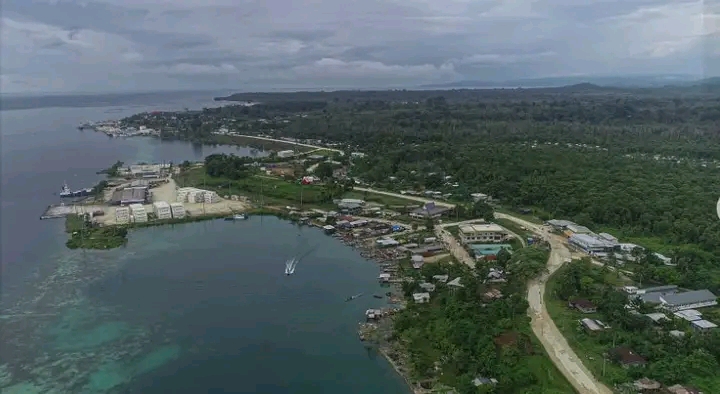
The Western Provincial Government (WPG) has been urged to take early and decisive action to advance plans for the proposed Second National City along the Baeroko–Noro–Munda Corridor, as outlined in the province’s 10-Year Strategic Plan.
The strategic plan identifies the corridor as the future site of a Second National City, a vision aimed at promoting balanced national development, strengthening regional economies, and improving service delivery across Western Province.
Munda-based lawyer and Western Province resident, Edward Biku, said the plan presents a significant opportunity for the province but warned that strong political commitment and early groundwork are essential to turn the vision into reality.
“The Baeroko–Noro–Munda Corridor is clearly identified in the 10-Year Strategic Plan, but plans alone will not deliver development,” Mr Biku said.
“The province must now take practical steps, starting with endorsing an Executive Paper to authorise consultations and establish a clear policy mandate.”
Mr Biku said the upcoming March 2026 provincial budget session would be a critical opportunity for WPG to demonstrate its commitment by allocating resources for a comprehensive and inclusive consultation process.
“Even in the current challenging economic climate, early endorsement remains essential.
“Passing the Executive Paper will signal seriousness and readiness, and will allow structured engagement with the National Government and development partners,” he said.
According to Mr Biku, early action would place Western Province in a stronger position to attract technical and financial support, while avoiding delays that could undermine the 10-year development time-frame.
A senior Western Provincial Government official, speaking to Solomon Star, acknowledged the importance of early consultations and confirmed that discussions are already underway within the provincial administration.
“The Second National City concept is a long-term development priority for Western Province,” the official said.
“We recognise that consultations—particularly with customary landowners and local stakeholders are critical and must be conducted properly.”
The official added that WPG is aware community engagement must be inclusive, transparent, and respectful of customary land rights.
“Resource owners along the Baeroko–Noro–Munda Corridor must be treated as genuine development partners.
“Their concerns and aspirations will need to shape any future ordinances, legislation, and governance arrangements for the City Authority,” the official said.
Mr Biku echoed these sentiments, stressing that customary landowners must be fully informed and involved from the outset.
“Consultations should not be rushed or treated as an afterthought,” he said.
“Communities need clear explanations about how the City Authority will be established, how it will operate, and how local people will be represented and protected,” he added.
He added that civic education should be a core component of the consultation process, helping communities understand how governance systems will function in practice and how they can participate in decision-making over time.
Meanwhile, Western Province Premier Billy Veo has reaffirmed his government’s commitment to implementing a comprehensive 10-year strategic plan aimed at strengthening service delivery, improving economic resilience, and addressing long-standing development gaps across the province.
Speaking during the Western Province Day celebration held in Seghe, Marovo Lagoon, last December 12, Premier Veo said the Provincial Government’s 10-Year Strategic Plan was informed by the Ward Profiling exercise, which identified key needs and priorities across all 26 wards.
He said the plan, covering the period 2026 to 2035, would enable the province to systematically address service gaps and make informed decisions on how limited provincial resources are allocated.
“We aim to develop Western Province into a province that is economically vibrant, fair and sustainable, while socially advancing the livelihoods of our people,” Premier Veo said.
“The plan draws on past experiences to help us navigate the challenges ahead and move confidently into the future.”
The Premier explained that the plan was first validated in Gizo before being socialised with Members of Parliament in Honiara, and later vetted and endorsed by the Western Province Executive.
If implemented within the intended 10-year time-frame, the Second National City initiative is expected to become a nationally significant development for both Western Province and the Solomon Islands as a whole.
By ULUTAH GINA
Solomon Star, Gizo