
At $450 per head, it isn’t cheap, but +81 Sushi Kappo satisfies Brisbane’s demand for high-end Japanese experiences. Take a look inside.
Good things come to those who wait. And Hitsake Kamori makes good things.
His family business bought Lone Pine Koala Sanctuary in 1988, making it the one property Kamori Kanko Corporation ran outside Japan, which these days, amounts to an enviable portfolio of high-end resorts and hotels, plus amusement parks.
You can probably imagine the local trepidation about the purchase back in the late 1980s, when significant Japanese investment in south-east Queensland (and other parts of the West) was often met with an outsized, occasionally xenophobic, anxiety about some sort of economic or cultural takeover.
But almost four decades on, Lone Pine’s reputation has arguably never been stronger. It’s the place locals suggest as an alternative to tourists who might be considering battling up the highway to Australia Zoo.
“Our family has been connected to Lone Pine Koala Sanctuary for four generations,” says Kamori, who has lived in Brisbane since 2010. “We made a clear commitment to the local community that we were here for the long term. That commitment hasn’t changed.”
Restaurant reviews, news and the hottest openings served to your inbox.
It’s a similar commitment Kamori is now making to Brisbane’s food scene.
In late 2024, he opened BY.ARTISANS, an immaculately designed gin distillery opposite Davies Park in West End. He quickly followed it with Aizome, an intimate cocktail bar in the same converted warehouse that has gone on to become an award-winner.
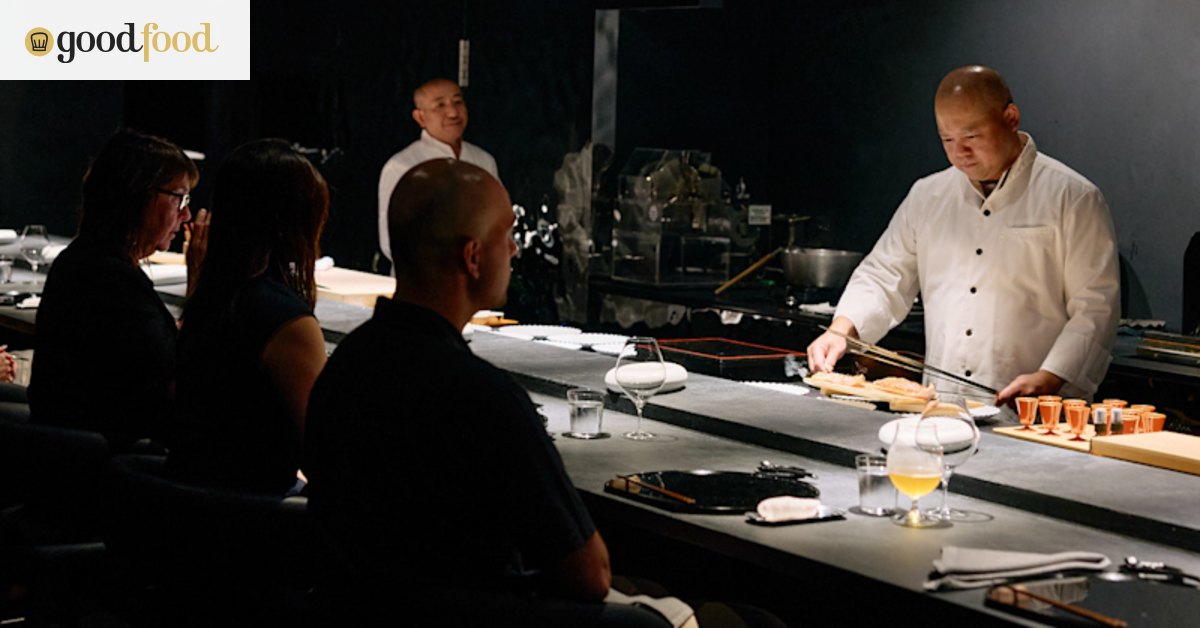
Now comes +81 Sushi Kappo, a dramatic 12-seat omakase restaurant that slots neatly into the space between BY.ARTISANS and Aizome. Originally intended to be unveiled early last year, Kamori decided to sit on +81’s opening while he waited for visa approval for his chosen chef, Michelin-trained Ikuo Kobayashi.
“We could have opened earlier with another chef, but I believe Kobayashi-san was the only one who could bring my vision to life,” Kamori says. “It took time, but it was absolutely worth the wait.”
Kobayashi cut his teeth as an apprentice at the iconic Ginza Kyubey, and was later part of the opening team at Sushi Kanesaka, before going on to work at Sushi Saito and Sushi Iwa. All have appeared in the Michelin Guide at one point or another (Sushi Kanesaka currently holds two stars in the guide; Sushi Saito held three until it dropped out of the guide in 2019, when it ceased taking public bookings).
Kamori has now worked with Kobayashi for more than a decade.
“What has always stood out is both the depth of his classical training and the consistency of his execution,” Kamori says. “His food is precise, balanced, and deeply satisfying, without ever feeling showy.”
The defining moment for Kamori came when he asked Kobayashi to rethink sushi rice, which is particularly important in Edomae-style sushi, which utilises traditional Edo-period preservation techniques – curing, marinating and simmering – to create a flavour profile that’s more intense than other styles.
“I asked him to strip it back, remove mirin, introduce spirulina and rebuild it in a way that still respected tradition while pushing it forward,” Kamori says. “That’s not a small request for any chef of his calibre, particularly one grounded in such a disciplined culinary lineage.
“That combination is extremely rare: a chef with a proven track record, impeccable taste, and the confidence to challenge himself without losing integrity. That’s what made it clear he was the right person for +81.”
Kobayashi’s menu at +81 starts at a not-insignificant $450 per diner, but for that price, you receive at least 11 courses that tap some eye-popping produce from both Australia and abroad.
The menu will evolve with the seasons, but dishes on the night this masthead visited included an otsukuri plate of Queensland coral trout, Tasmanian southern bluefin tuna chutoro and New Zealand nanyo kinmedai; a yuzu and kudzu nimono broth of Canadian snow crab, Japanese tofu and summer asparagus; a sake-steamed mushimono of tiger abalone with wakame, tororo yam, okra and liver sauce; and nine-score Marble King eye fillet served with grilled onion, summer broccoli and a house ginger shoyu.
The nigiri courses come scattered throughout, and include straw-seared local bonito, Tasmanian southern bluefin tuna akami, and Marble King wagyu sirloin. Here, Kobayashi’s innovation with sushi rice, or shari, is on display, with two different expressions: a charcoal shari, and a vivid blue shari that’s been enriched with spirulina sourced from VAXA, a clean-energy, indoor farm located in Iceland.
For drinks, there’s a sake list 100 bottles deep, backed by Australian and international wines, and a collection of premium and rare Japanese whiskies. There are also three rotating beverage pairings to match the food.
Then there’s the venue itself. If restaurants are designed to transport us elsewhere, this is absolutely that. Brisbane designer Alexander Lotersztain has given the dining room a minimal feel, with a dark, neutral palette – all the better to keep diners’ attention on the food and its preparation.
“[With the design], what I really wanted was obviously the spotlight [to] go on the food,” Kamori says. “It’s about the food, how it’s presented. So it’s like a theatre for us, and the chef is a performer, but what comes out is the end product of art.
“And it’s not just the food, but also the chopsticks and dishes, or this cutlery that also comes from … craftsmen in Japan. So we wanted to make sure and express appreciation for those people who have set this stage for us.”
The only flourishes are textured, reflective metal surfaces, and the showstopper, which is in a lengthy corridor that runs towards the restrooms: halfway along, a floor-to-ceiling LED comes to life on the far wall, with a Japanese woman in traditional dress walking towards you, turning in unison as you break left for the ladies or gents. It’s a real gee-whiz moment.
“Dining here is fulfilment, in a way,” Kamori says. “I really want people to be fulfilled in many aspects, not just the food, but the care we go through [to present] the food as well … I want people to be fulfilled in the heart and the experience.”
Open Tue-Sat , seatings at 5.30pm and 8.30pm
 Matt Shea is Food and Culture Editor at Brisbane Times. He is a former editor and editor-at-large at Broadsheet Brisbane, and has written for Escape, Qantas Magazine, the Guardian, Jetstar Magazine and SilverKris, among many others.