
For the first time, third-generation owner-chef of Abdul’s Lebanese Restaurant reveals the reason behind December’s shock closure.
It isn’t over for Abdul’s Lebanese Restaurant, third-generation owner-chef Omar Ghazal revealed this week. “We’re coming back stronger,” he said.
The pioneering Surry Hills restaurant, founded by his grandfather Dib Ghazal in 1968, quietly closed in December following a year of health and financial difficulties. First, Ghazal’s mother, Nizam, suffered a debilitating stroke. Then, in May, the business went into liquidation, owing more than $70,000 to creditors.
“It was killing me,” Ghazal said. “I didn’t tell anyone until the final 48 hours [before closing], not even the staff. I didn’t want to hurt anyone. They’re family, too.”
Ghazal wrote a simple goodbye message on the restaurant’s website, but word didn’t spread until “For Lease” signs appeared in the window this month. Diners were shocked – the no-frills, family-owned restaurant had been one of the first to introduce Lebanese dishes such as falafel, hummus and lamb kofta to Sydney, and, after nearly 60 years in business, it was considered a true culinary icon.
“I got a lot of supportive messages from customers, some I didn’t even know. I told them, ‘Just wait until mid-February, and I’ll have [sorted things out], have carers in place for mum, and then I can … get cracking on the business’,” Ghazal said.
Restaurant reviews, news and the hottest openings served to your inbox.
The company had been reported to ASIC for eight potential breaches of the Corporate Act, including trading while insolvent and failure to act in good faith, but Ghazal said he was working with the liquidator and his landlord, and that he hoped to reopen Abdul’s in its original location “with a clean slate”.
He dreams of a renovated restaurant, where the next generation can serve his grandfather’s falafel: “We use the same recipe. Honest to God, I never changed a thing,” Ghazal said. “I will hold on to that recipe for life.”
But outside the kitchen, change is inescapable.
The area around Cleveland Street in Surry Hills and Redfern was once referred to as Little Lebanon. It had “the most concentrated, convenient and popular strip of Lebanese restaurants” in Sydney according to The Canberra Times in 1973.
“My dad told me that all the restaurants used to have queues out the door, and people used to have to sit on top of potato sacks or onion sacks because they’d run out of chairs,” Ghazal said.
Numbers have since dwindled. Nada’s Lebanese Restaurant closed in June after 48 years, following the death of owner-chef Albert Elsouri; Hibibi Lebanese Restaurant, next door, closed in 2015. Others, such as Azar’s on Crown Street and the Lebanese Restaurant and Club on Cleveland Street, have been lost to history.
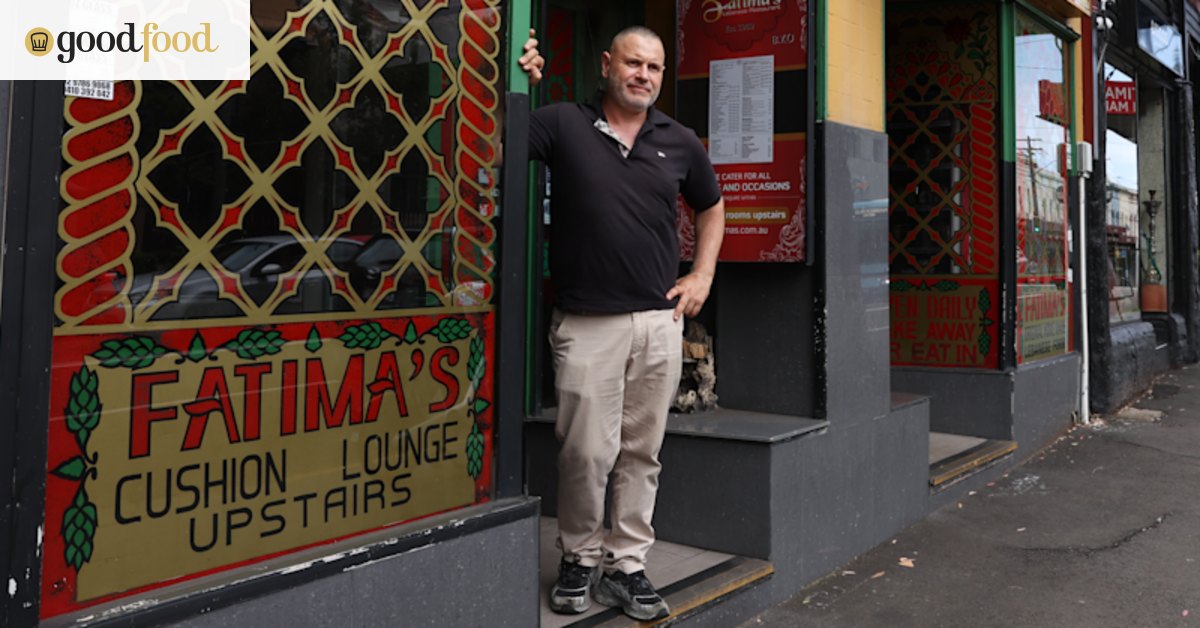
“It’s crazy. It’s like you’re in a battle, and you just look around and you realise you’re on your own,” said Abraham Zailaa, the second-generation owner-chef at Fatima’s Lebanese Restaurant. It opened in 1981, and he practically grew up in its kitschy pastel pink and mint-green dining room, taking over when he turned 18.
“These restaurants are our whole lives,” Zailaa said.
He takes great pride in the food he makes, the quality of ingredients he uses, and the high-profile clientele (Rose Byrne, Russell Crowe, the Hemsworth brothers) that frequent his restaurant. But Zailaa said economic conditions post-COVID had pushed costs up, big businesses were “sucking our blood dry” by undercutting prices, and it was a struggle to make ends meet.
“People everywhere in Australia need to support their local business because it does make a big difference,” he said. “We’re lucky that our customers are so loyal.”
That’s what keeps John and Samia Perez going at Wilson’s Lebanese Restaurant on Pitt Street. Council records show brothers Victor, Marcel and Wilson Mroueh applied to open the restaurant in 1964, making it one of Sydney’s first Lebanese diners. Perez, who came from the same small town in Lebanon as the Mroueh brothers, took over with brother Pierre in 1980. The 71-year-old has been on the tools ever since. He now works alongside wife Samia.
“We know all of our regular customers, and they are our friends,” Perez said. “We are happy to do it. We don’t want to stop cooking because we enjoy it, me and my wife.”
Newcomers have limited success – restaurant chain Al Aseel closed its Elizabeth Street store in 2009, and Nomad’s Middle Eastern-inspired cafe and wine bar Beau & Dough closed within 18 months of opening, in 2024.
But there also remains hope in next-generation restaurateurs and chefs such as Paul Farag of ESCA Group (which runs hatted Middle Eastern restaurant Nour and Lebanese chicken shop Henrietta on Crown Street), not to mention Cleveland Street staples including Emad’s and The Prophet.
Perez doesn’t know what the future holds. The area has changed as streets widened, rents have risen and the Lebanese community has moved westward. When it’s time to retire, there won’t be anyone to take over Wilson’s.
“Before, you used to have to travel to Surry Hills for a decent, nice Lebanese meal, but now, in the suburbs, there are all of these beautiful restaurants, and they do good food,” Ghazal said. “It’s everywhere now.”
The omnipresence of Lebanese food in Sydney, from charcoal chicken shops to hatted restaurants such as ESCA Group’s Aalia in the CBD, is a testament to the legacy of Little Lebanon and its restaurants. When they opened, many Sydneysiders had never tried pita, falafel, hummus or shawarma, Ghazal said. Now those dishes are part of the common vernacular.
“There are all of these amazing restaurants with traditional Middle Eastern cuisine, whether that’s Turkish or Lebanese, whatever it may be,” said Farag.
“I try to put my own spin on it, and make something new.” People told him it was a risky move, but it was worth the pay-off. Farag was named Chef of the Year at the 2024 Good Food Guide Awards.
“If I were to die tomorrow, I’d die a happy man,” he said. “Because, I guess, for my little input into this cultural dining scene in Sydney, and to see how people’s vocabulary for ingredients and dishes has changed and opened up.”
 Bianca Hrovat – Bianca is Good Food’s Sydney eating out and restaurant editor.