
She wants people to see the beauty of movement forward.
“And the respect for indigenous navigation techniques and histories. These were very precise and were also adopted by European navigators on their journey across the Pacific. This attributes the depth of knowledge we have and recognises our connection to the natural environment,” Darlison said.
“My hope is for our people to create an Aotearoa rooted in rich culture, identity and histories.
“That my children can walk alongside everyone else’s with a sense of identity and respect for all living things.
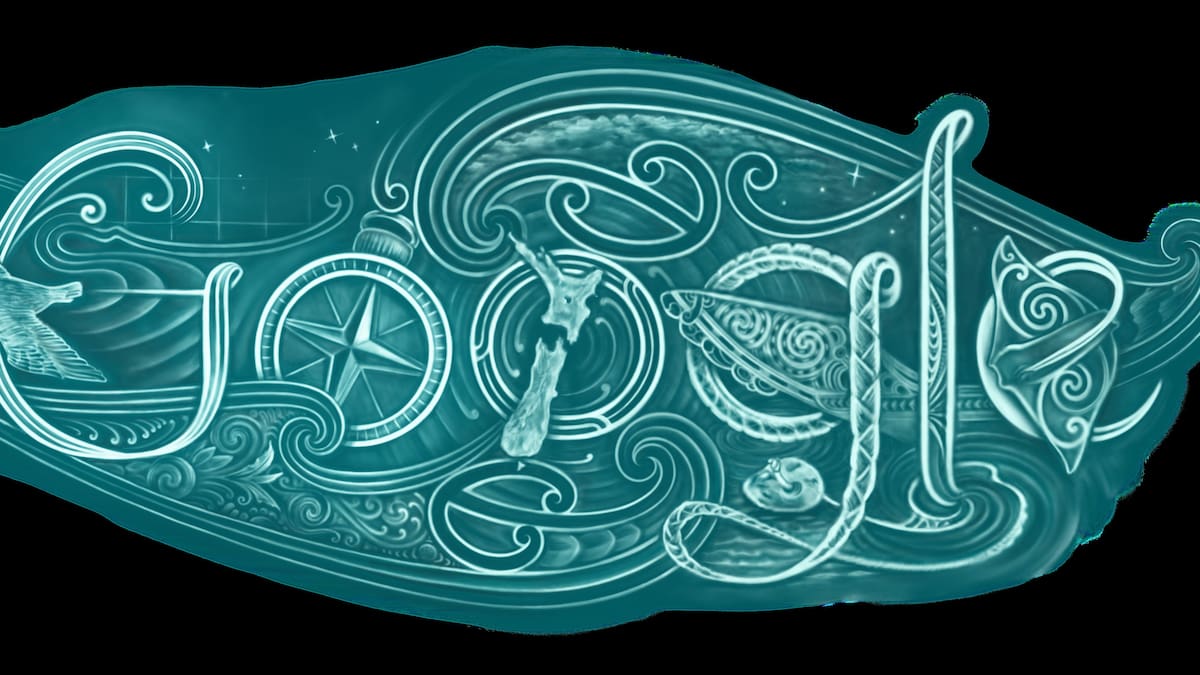
The doodle features:
● The ‘G’ holds a kūaka [bar-tailed godwit] that undertakes a major migration from Northern Alaska, returning annually, connecting to the Pacific migration routes that would have been followed on journeys to New Zealand.
● Alongside, the ‘o’s hold a western-style compass and a map of New Zealand.
● Below the “g,” is a pūnga [anchor], which represents the story of landing and putting down roots, intentionally tethered to the “l” to convey a sense of settling.
● The “l” includes a Pacific motif, symbolising the dispersal of people across the Pacific during the journey and the shared collective histories and similar cultures of the region.
● The final “e” contains a whai [stingray], symbolising Pacific migration journeys, and species seen along the way.
Whai also symbolise kaitiakitanga, representing the idea of having someone look after you on your journey.
The Waitangi Day Google Doodle will be visible on the Google homepage, on desktop and mobile devices, for New Zealand audiences and available on the Doodle website, which is visible globally for anyone to explore.
“We expect strong engagement with the Doodle due to New Zealander’s connection to this day and the shared history,” a Google spokesperson said.
Google has celebrated Waitangi Day through a Google Doodle since 2018.