
Kim Wilson
You have reached your maximum number of saved items.
Remove items from your saved list to add more.
Save this article for later
Add articles to your saved list and come back to them anytime.
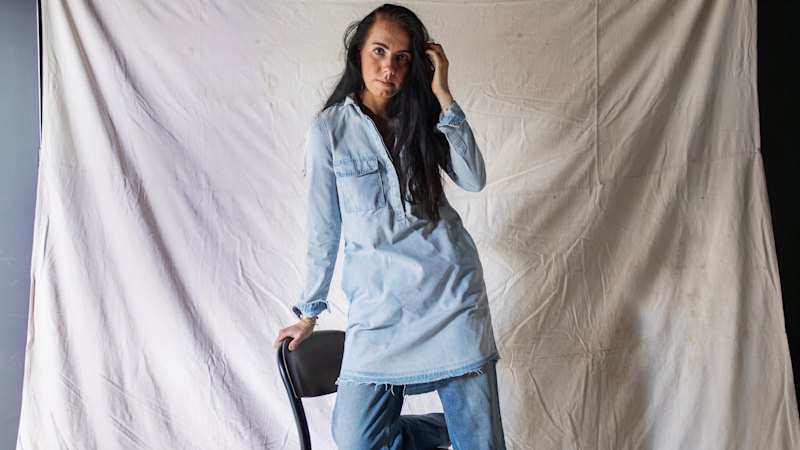
When Lara Hamilton answers the phone from the French Pyrenees, there’s an unmistakable air of anticipation in her voice. The Winter Olympics in Milano Cortina, Italy, are creeping up, and her chosen sport of ski mountaineering will make its international debut there.
Hamilton, 27, is Australia’s female representative in this new – and fiercely demanding – Olympic discipline. Yet, for a woman whose life has zigzagged through classical opera singing, university lecture halls, US athletics programs, DJ sets and mountain summits, embracing the unfamiliar has become something of a signature.
Ski mountaineering, or “skimo” to those inside the sport, demands that athletes race both uphill and downhill on skis, with some dizzyingly fast transitions. “You start at the gate, get counted down from 10, push through the wand and go all out,” Hamilton explains in rapid, expert detail. “You hit a series of ‘diamonds’ – they simulate kick turns – and pick your own path depending on slope aspect and snow quality.”
Then things get wild. “You unclip your skis, throw them into your backpack and run uphill with them. By the top, you’re probably delirious.” She laughs. “Then you detach your skis, let them fall to the ground, step in, lock the bindings, grab your poles and keep climbing. And that’s all before the downhill.”
The sprint course is short, often under a kilometre, but brutal. “Men finish in about three minutes; the top women in about 3½ to four minutes,” she says. “It’s extremely intense. And because it’s a series of knockout rounds – time trials, heats, semis, finals – anything can happen.”
The mixed relay, held on a different day, doubles the climbs and descents. “You and your male partner alternate laps, two each – it’s full gas,” she says.
As skimo’s profile has grown, so too has participation: “More people want access to the [snowfields] back country without heavy gear,” says Hamilton. With that growth comes a greater focus on safety equipment, avalanche education and risk-assessment, especially as athletes train outside controlled ski-resort areas.
Hamilton knows this type of terrain intimately, having spent seasons in Colorado, where avalanches are common. “You need partners who share your risk tolerance. Everyone needs avalanche gear, beacons, probes, shovels, and you read reports every day. It’s not something you can just wing.”
Hamilton’s path to skimo began in Australia, through Nordic skiing at Perisher and Thredbo in NSW and Falls Creek in Victoria, before long-distance trail running added a new layer of endurance. But the true turning point came in 2019 when, after finishing her undergraduate degree at the Sydney Conservatorium of Music, she moved to Boise State University in the United States on a master’s scholarship that allowed her to combine music and running. “Music’s still a big part of my life,” she says.
But sport pulled Hamilton in parallel directions. She raced strongly before the pandemic derailed everything and lockdowns, quarantine, injuries and instability made 2021 “my worst year”.
At the age of 23, Hamilton received the diagnosis that would reshape her life – ankylosing spondylitis, an autoimmune condition that causes inflammation, tendon degradation and sometimes severe stiffness.
“It’s very hard to diagnose,” she says. “Scans showed nothing obvious, but things wouldn’t heal.” Eventually, MRIs revealed degradation of her sacroiliac joint, tendon edema and partial muscle tears. Then, she says, “My rheumatologist trialled medication and it worked. It gave me my life back.
“Mornings are bad – I’m often very stiff. Running gives me sharp pains in the spine or pelvis until I warm up, if I can warm up that day. Transitions in skimo are hard because of the flexibility required. And I’m 177 centimetres, which is tall for this sport.”
Even the medication itself is not without challenges. “Meds wear off and have side effects, and injections can be painful,” says Hamilton. “But they remove the worst pain.”
Asked what keeps her going, she pauses. “I don’t know what else I’d do. I’ve always done sports. As a little girl, I wanted to go to the Olympics – surfing first, then Nordic skiing, then track, and now skimo. It’s a privilege to train outdoors, to be in nature, to challenge myself. I won’t be able to do it forever, so I keep going because I love it and because you don’t have to give up just because there are obstacles.”
As a little girl, I wanted to go to the Olympics – surfing first, then Nordic skiing, then track, and now skimo.
LARA HAMILTON
Opera singing and ski mountaineering may seem like opposites, but Hamilton sees them as complementary disciplines. “I enjoy the nerves and the challenge,” she says. “Music helped keep me grounded when life got chaotic. DJing became something portable. I can travel with a small deck and make sets on the road.”
Performance, in all its forms, has trained her mind for high-pressure environments. “I know how to perform under pressure because of music. You control what you can. You breathe. You reset. It’s the same in sport.”
Since June, Hamilton has lived alone in a small flat in Font-Romeu in the French Pyrenees, a training haven for endurance athletes. It’s her base for altitude work and the solitary grind of Olympic preparation. “I love my terrace. I can look across to the mountains every day and see the sunrise.”
Single and “married to my sport at present”, she has built a life structured around training, recovery and discipline. But distance from Australia comes at a cost. “I miss the people, especially my mum and dad, my sister, my dog Elsie, my best friend, and the beaches.”
For the Olympics, though, home will come to her. “Mum and Dad are coming to watch me. It means everything to me because I don’t see them often. It’s a long journey and expensive for them to come from Australia, but I know they wouldn’t miss it for the world.”
In skimo, the likely male Australian representative, Phil Bellingham, brings experience as a three-time Olympian. “If he qualifies for both Nordic and skimo, that would be incredible.”
Hamilton tries not to get ahead of herself. “I think it won’t hit me until much closer,” she says. “Right now, I’m locked in, journalling, recording every session, focusing on controlling the controllables. High-level sport is full of type-A personalities, and I’ve leaned into that during crunch time.”
Skimo, Hamilton emphasises, is a thrilling sport for spectators, even those watching from their living rooms. “Anything can happen – mistakes cost seconds, skis can fall off, people collide. Multiple racers go through gates at once. It’s chaotic and exciting.”
Success, for her, will have less to do with medals and more with mindset. “If I go in focused on doing my best and trusting my training, that’s success.”
The 2026 Olympic Winter Games will screen February 6-22 on Channel 9 and 9Now. Nine is owner of this masthead.
Get the best of Sunday Life magazine delivered to your inbox every Sunday morning. Sign up here for our free newsletter.
You have reached your maximum number of saved items.
Remove items from your saved list to add more.