
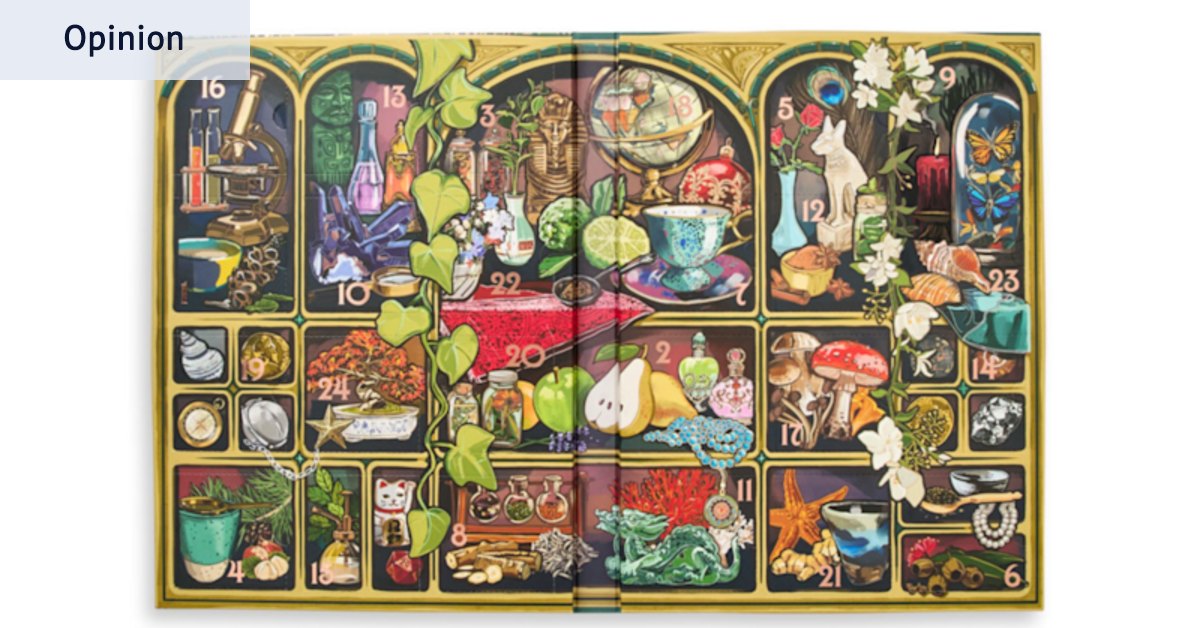
With the coming of Advent, the Western Christian church begins the first season of its liturgical year.
Advent starts on the Sunday closest to November 30 – today – and concludes on Christmas Eve. It’s a time of preparation for the birth of Christ. This ancient season’s name derives from the Latin word adventus, meaning arrival, approach or coming.
While the community becomes increasingly louder and happily engaged with festivities, the church quietens and readies itself to welcome the long-awaited Christ. As one seasonal bidding prayer puts it: “to prepare ourselves to hear again the message of the angels, and in heart and mind to go even unto Bethlehem and see this thing which is come to pass, and the Babe lying in the manger”.
Advent, the time of year preparing for Christmas, is yet another period commandeered and commercialised by capitalism.
Like Lent, that other season of preparation, Advent has a centuries-old, complicated history and various traditions and rituals. In worship, its scriptural readings describe Christ’s birth and prophesise His second coming. The music and prayer of Advent foreshadow the nativity of the Prince of Peace.
Seasonal imagery conveys light coming into a darkened troubled world. Many churches have an Advent wreath. Its circular shape denotes God’s unending love. The wreath holds five coloured candles, with four forming a boundary surrounding one central candle. Three are purple or violet, the liturgical colour of the season. The candle for the third Sunday, known as Gaudete Sunday, meaning rejoice, is usually rose.
On each of Advent’s four Sundays a candle is lit and a prayer said. The first candle symbolises the patriarchs, the second the prophets, the third John the Baptist and the fourth the Virgin Mary. They can also represent hope, peace, joy and love. The central white candle, the Christ candle, awaits lighting on Christmas Eve or Christmas Day.
Loading
Essentially, Advent is about waiting. Most people are well acquainted with waiting. Our lives are punctuated by periods of waiting, and the expectation of future events. We wait to grow up, to begin school, to finish school, for holidays to vote, to start work, to retire, and for all sorts of personally meaningful occasions along life’s way. The world waited for the COVID-19 pandemic to end and continues to wait for wars to cease.
Our waiting is usually hopeful. Having hope suggests a future of possibilities, that our tomorrow will be somehow different, better than today. Our experiences and observations teach us, however, that hoping alone isn’t enough to ensure positive change and outcomes. Hope isn’t a personal talisman against hardships and suffering or against being born into circumstances of disadvantage, conflict and injustice.