
Their lawyer, Dan Squires, told the court that police can use the technology in more than half of public areas of London without clear enough reasons for the selected locations.
The police’s lawyer, Anya Proops, argued the case was “entirely lacking in merit” and could have “very dramatic implications” if it limited use of the technology to locations connected with people being sought.
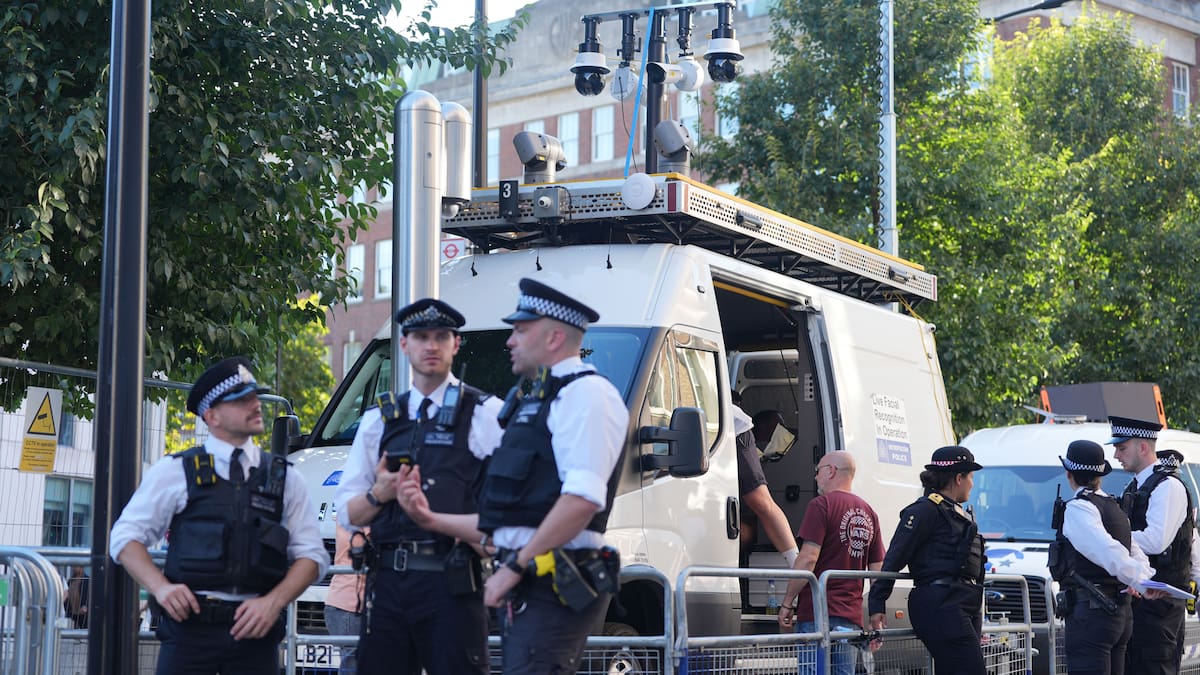
The Met’s policy allows it to deploy the cameras in crime hotspots and at critical national infrastructure such as key roads and transport networks. The two sides disagreed on how much of London this covers.
The judicial review hearing is due to finish tomorrow with a judgment at a later date.
Two judges are tasked with assessing whether the Met’s policy on using facial recognition technology provides adequate constraints or is arbitrary.
False alerts
The police force said in its written argument that last year 801 arrests were made as a result of LFR.
“The primary value of live facial recognition for the police is it is an immensely effective and powerful tool enabling us to locate people when we don’t know where they are,” Proops said.
The technology operates “at incredible speed with enormous numbers of people, and the numbers have grown exponentially”, Squires said, calling it “an unblinking eye”.
The issue is “the mass scale of the innocent people whose biometric data is taken”, Squires added.
Last year, the Met used live facial recognition more than 200 times, capturing around four million faces, the lawyer said.
On average, there is one “false alert” per 33,000 people viewed, or around 10 false alerts per month, Squires said, claiming that what happened to Thompson was not “extraordinary”.
The Metropolitan Police said the technology only “minimally” intrudes into the privacy of the public because it is required to be clearly signposted.
-Agence France-Presse