
I’m five minutes early to meet celebrated writer Kathy Lette at Crafted, the restaurant at the Art Gallery of NSW – and I’m feeling a little nervous. The previous evening, I’d watched her Australian Story profile – it ends with footage of a recent launch of one of her books, where she invites everyone to come up on stage and dance. She’s also famous for serving up a “Disco Diet” at her many London dinner parties, with participants bopping for hours after dessert.
Would this lunch go the same way? As a founding member of Inhibited Anonymous – and the last person to join a Gloria Gaynor flashmob – I sincerely hope not.
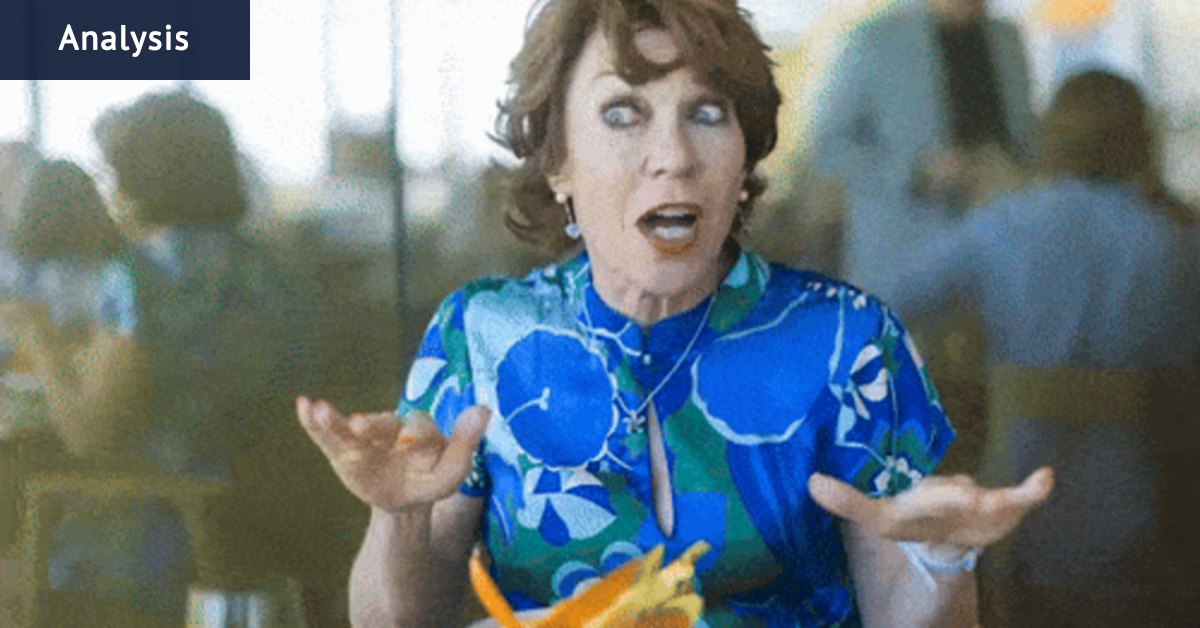
Suddenly, Lette arrives, dressed in a trademark brightly patterned frock with matching lipstick and a pair of stilettos. She has chosen the restaurant because the gallery is currently showing an exhibition of Australian women artists, which is firmly in her wheelhouse. I’m conscious she is going to visit her 91-year-old mother that afternoon, so we quickly peruse the menus and order what I call a “Standard Girl Lunch” – vegetables, fish and mineral water. Lette orders bottarga with crudite vegetables. The beetroot salad is calling me and we both order the barramundi.
I clearly radiate AA vibes as none of my lunchers ever orders a drink. Of course, eliciting personal secrets from interview subjects by getting them tipsy is a well-worn journalistic technique, but it turns out that here, it’s redundant. The 67-year-old author is quite capable of telling you her most intimate life stories – over a glass of water.
Lette has been famous since 1979, when a book she co-wrote with the late Gabrielle Carey rocketed onto the Australian literary scene. Puberty Blues, about two very young women growing up in a surfer community in Cronulla, became a cause celebre for its graphic portrayals of underage sex and drug-taking, including heroin. Two years after publication, it was made into a movie directed by Bruce Beresford.

Herald journalist Helen Pitt wrote about the movie on its 40th anniversary in 2021, saying it “was criticised for whitewashing the feminist themes of the book, in relation to rape, abortion and miscarriage … The original movie shows a culture in which gang rape is incidental and unremarkable, and mindless violence is amusing. And yet it serves as a valuable timepiece”.
I asked Lette, who grew up in Cronulla, how many of her 21 books were based on her own life.
All of them, she says.
“It’s cheaper than therapy – putting it on the page is a way of making sense of the drama. I’ve written about everything: being a single girl around town in Sydney, trying to find a man who wasn’t married or gay, moving to LA. I’ve written about pregnancy, motherhood, raising a teenage daughter, raising an autistic son. I’ve written about divorce, I’ve written about affairs, I’ve written about midlife trauma, and now I’m writing about women post-menopause, because I think that’s the most interesting time in a woman’s life.”


A woman’s 60s are liberating, she says.
“We’ve had the marriages, the divorces, we’ve raised the children. We’ve had the betrayals, the affairs, the heartbreak, the backstabs, all of that and the financial ups and downs. That material is so rich. And women survive it with such a good sense of humour,” she says.
Lette says hormones are key to women’s lives, joking that she’s book-ended her writing career with tomes about puberty and menopause.
“I think women don’t come into their true selves till post-menopause, because women are brought up to be decorative and demure. But then after the menopause, when your estrogen drops, we no longer care what people think about us,” she says.
“And so I just find women this age fabulous, funny, fascinating. I’m trying to encourage women my age to go forth and be fabulous because if not now, when?”
The author is a generous interviewee, talking in long sentences that give me time to eat my heirloom beetroot salad, which has whipped sunflower seed, mustard greens and pieces of orange – and is absolutely scrumptious. She doesn’t have time to touch her entrée of whipped cod roe, bottarga and crudités and asks to take it home to give to her partner, Irish-born musician Brian O’Doherty, whom she describes as a “brilliant cook”.
We have both ordered the barramundi, which is on the menu as a special. It comes out as a thick wedge of beautifully tender fish topped with a crisp rectangle of skin, surrounded by a mélange of mirepoix spring vegetables and crunchy seeds. For the thousandth time, I wonder why my own amateur kitchen offerings cannot achieve this perfect balance of textures and flavours.
After a few mouthfuls, we return to a perennial topic – when are our unmarried offspring going to give us some grandchildren? Lette reveals that she has given her daughter a gift of egg freezing for her next birthday. She has written about it (with her daughter’s permission) for a British newspaper.

“I used to think women could have it all. I still think women can have it all, but it’s not all at once,” she says.
Lette says that when she gives talks in schools, she tells the young women to choose their partner carefully.
“Because if you choose an alpha male, he’s going to have a big career. If the child is sick, who do you think is the one who has to pull back? Yeah, it’s always the woman,” she says.
“I’ve had two alpha men, whom I adore (her former husbands ABC chair Kim Williams and London barrister Geoffrey Robertson, KC). I still love them both, and I’m very close to them. Right now, I’ve got a beta. My mantra for him is that he adores me, doesn’t bore me, and does all my chores for me. And it’s incredible to have a beta man, and he wants me to be shining, and I earn more money, right? That’s OK.”
I’ve cyberstalked Lette’s social media, finding photos of her going on holidays with Robertson and the children.
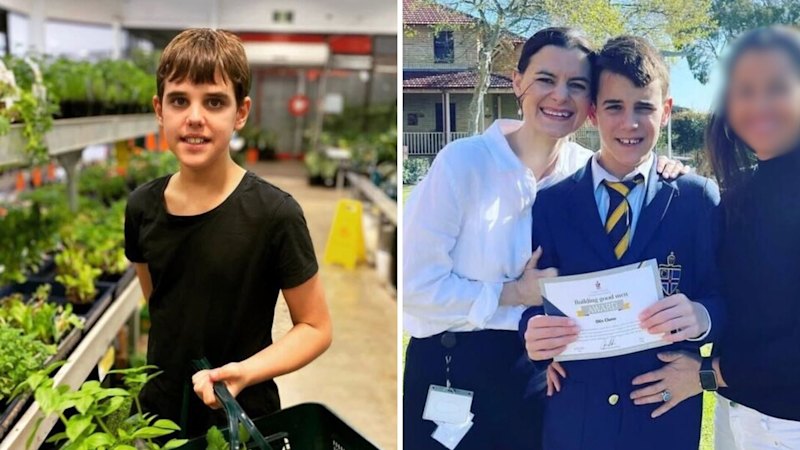
“Geoffrey’s and my divorce was pretty amicable. We’ve got two kids, one who has special needs (their 35-year-old son, Julius, is on the autism spectrum) so we’ve got to stay friends,” she says. “And I always say to my girlfriends, ‘there was something about that person you loved and it is still there’. Once you get over the pain and the wrangling, you can find that in that person again and try and concentrate on that. So especially if you’ve got kids, it makes it much easier.”
Lette lives between a house in London and a light-filled apartment in Sydney’s inner east. Being an Australian means you can escape the worst aspects of the British class system, she says.

I ask her about her well-known friendship with the King and Queen.
“When I’m with a member of the royal family and I say something cheeky, there’s an audible gasp from the minders – ‘did she really say that to the King?’ But he always finds it funny and so does Camilla. I mean, I always say to them, ‘I really like you, even though I don’t believe in you.’ I am a republican.”
How do they take that? I ask.
“They’re pretty sanguine,” she says. “I mean, look what they’ve been through.”
We get ready to leave, but it takes a while as during lunch, Lette learned the names of every single person who served us – and now she has to thank them and say goodbye. Photographer Sam Mooy receives some life advice and a huge hug.
Just as I’m packing up, a lovely woman from another table comes over, politely apologises for the intrusion and tells Kathy that she loves her writing. Lette responds warmly, asking her name and thanking her profusely.
Five minutes later, I say goodbye to the author – another hug – and ask her if she needs transport. She says that I should leave because she’s going to spend a few minutes chatting with the lady from the nearby table and her two friends. Did they do a conga line around the restaurant after I left, kicking up their heels to I Will Survive? I certainly hope so.
Kathy Lette’s new book, The Sisterhood Rules, is out now.
Start the day with a summary of the day’s most important and interesting stories, analysis and insights. Sign up for our Morning Edition newsletter.