
Smith Street has long been defined by its diversity and grungy energy. But things are changing, with decade-old fine-diner Ides closing and fast-casual chains and retail giants moving in.
Quincy Malesovas
You have reached your maximum number of saved items.
Remove items from your saved list to add more.
Save this article for later
Add articles to your saved list and come back to them anytime.
In 2014, Good Food published “a foodies’ guide to Collingwood”, pointing to a renaissance along Smith Street – an inner-city strip then best known for casual noodle houses, pasta joints and “three-buck spanakopita”. Openings such as Shop Ramen and Sydney export Messina, which launched its first Melbourne store there that year, set a new pace, defined by youthful, pared-back branding and a streamlined focus on one core product.
A more ambitious style of dining soon followed. Scott Pickett’s Saint Crispin (now Smith Street Bistrot) brought a higher-end offering to the street, and other notable operators came next. Victor Liong opened Lee Ho Fook later that year, and in 2016, after Lee Ho Fook moved to the CBD, Ides – the trailblazing pop-up-turned high-concept diner by chef Peter Gunn – opened in its place.
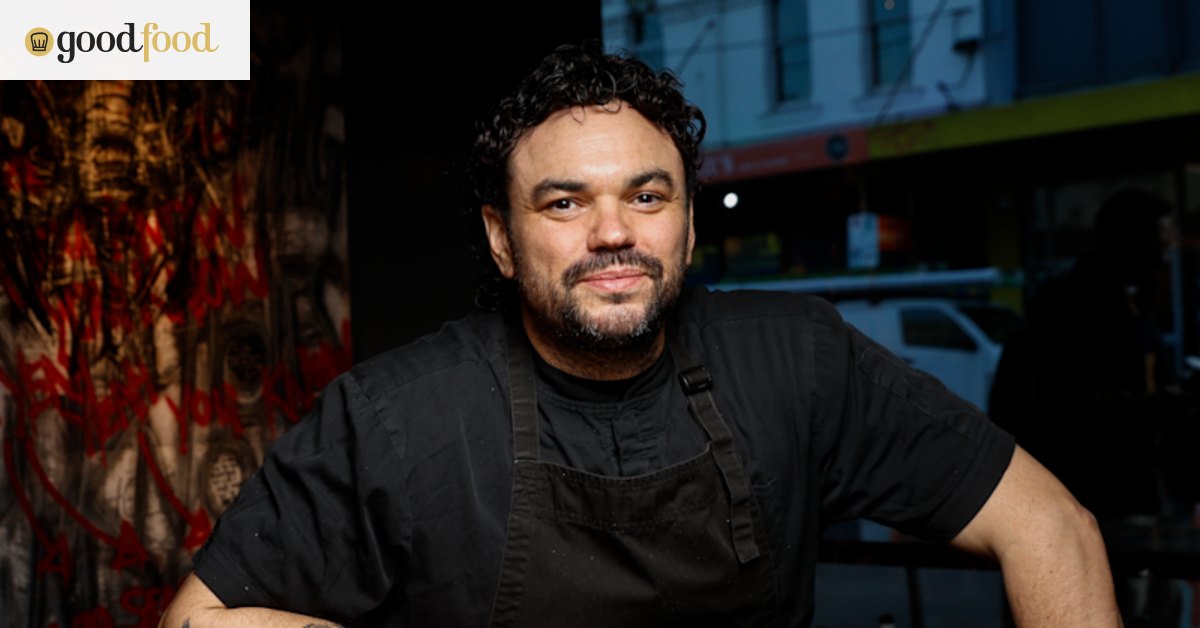
But a lot can change in a decade. On March 14, 10 years to the day since it first opened, Ides will host its final dinner service. As diners rush to secure a table one last time, Gunn has reflected on the conditions that shaped the restaurant’s rise, and what might lie ahead for Smith Street.
When Ides opened, the street still carried a roughness around the edges. A commercial strip for more than 150 years, Smith Street has cycled through periods of boom and decline, but has long been defined by its diversity and grungy energy.
“I think we had a natural fit for the area,” Gunn says. “We didn’t take ourselves too seriously. The restaurant was f—ing shiny, sure – a diamond in the rough – but I lend myself to the business owners and the people in the area quite well.”
Restaurant reviews, news and the hottest openings served to your inbox.
Gentrification is often used loosely, usually negatively, but it simply describes how neighbourhoods shift alongside investment and residency. That process was already under way when a new generation of diners began shaping expectations around where, and how, they ate on Smith Street. It is accelerating now as developers move to capitalise on that evolution. At least three major apartment projects by DKO Architecture, CASA Property and Milieu are in the works, with the large Fitzroy Woolworths supermarket at 243 Smith Street part of the collateral damage. It permanently closed on January 31st and is now earmarked for redevelopment as apartments.
“When they knock down these old buildings and put up new apartment blocks that are required to have retail outlets down the bottom, and rents are ridiculous, that’s when we see this influx of restaurants that you wouldn’t associate with Collingwood or Smith Street,” Gunn says.
For much of the past decade, even the street’s more casual food options were largely independent, or at least locally rooted – with the notable exceptions of Nando’s and Subway midway up the street, and McDonald’s at the southern end. Today, the balance is shifting. A KFC is moving into the former Fonda site, Guzman y Gomez is under way, and retail giants such as Lululemon – which Gunn likens to the retail equivalent of a fast-food chain – have arrived.
Then there are short-lived openings that attempt to trade on the area’s reputation as a cool suburb without understanding what the neighbourhood wants – places like Blk and Whyte, a cafe designed to look entirely two-dimensional, which closed almost as quickly as it opened, and Canadian plant-based chain Copper Branch, which lasted one year.
“I don’t know how to say this politely; you can’t force yourself into Collingwood,” Gunn says. “You can’t acquire Fitzroy or Collingwood grit just by having a business idea. You’ve got to have a bit of personality and make-up that fits in before you just show up and think you can be a hit.”
Gunn notes the past 24 months have been the first time Ides’ stretch of Smith Street has had every shopfront occupied. There are still openings he finds compelling, particularly in bars and casual venues. Further up the street, The Age Good Food Guide’s New Restaurant of the Year, Zareh, stands out as one of the few recent openings offering a more polished style of dining.
Though Gunn’s time on the street is over, he does not see Ides’ closure – or the rise of chains – as a simple marker of decline. Nor does he think it is driven by changing local tastes alone. Instead, he situates the closure within a broader shift in dining culture that mirrors widening economic divides, and diners seeking experiences at either end of the spectrum.
‘You can’t force yourself into Collingwood. You can’t acquire Fitzroy or Collingwood grit just by having a business idea.’
Peter Gunn
After a decade at Ides and five years prior as sous chef at Attica, he is stepping away from fine dining. He’s not yet ready to share what comes next, but says it will mark a decisive shift towards a more relaxed, flexible style of eating.
“I don’t believe fine dining’s dead,” he says. “There’s just a desire for less of it, not more.”
He does, however, see waning appetite for venues like Ides, which sit around the $200 mark. “I think that sort of price point is fading,” he says. “Set menus are either the highest of the high, or lowest of the low. I believe middle-range restaurants are the ones suffering the most.”
That, he argues, helps explain why Smith Street is increasingly filling with chains that can afford to secure sites on one of the city’s fastest-changing strips, even if they don’t reflect what many locals want. The longer-term cultural impact is still unfolding.
“The edge of the street still exists,” Gunn says. “But maybe in a few years’ time, as these bigger brands push in, that’ll take some of the culture with it.”
Ides will host its last service on Saturday, March 14 at 92 Smith Street, Collingwood, idesmelbourne.com.au
You have reached your maximum number of saved items.
Remove items from your saved list to add more.