
“I’d just think to myself, that’s not happening. I’m not having that life. I’m not going back there. I’m not living like that.”
Paul’s mother left when she was young; she thought it must be because of something naughty she or her brother had done. After that, life got harder.
“I only knew one other girl who didn’t have two parents and she actually lived in an orphanage.”
Her father did the best he could, she says, but “God bless him, he had no clue really how to look after two small children”.
He came from that era where men didn’t show a lot of affection, she says.
“We weren’t even allowed to talk about my mum leaving. I had no clue what was going on there.”
At her primary school, Paul’s teachers assumed she wasn’t bright because no matter how hard they tried she couldn’t understand numbers. They simply didn’t make sense.
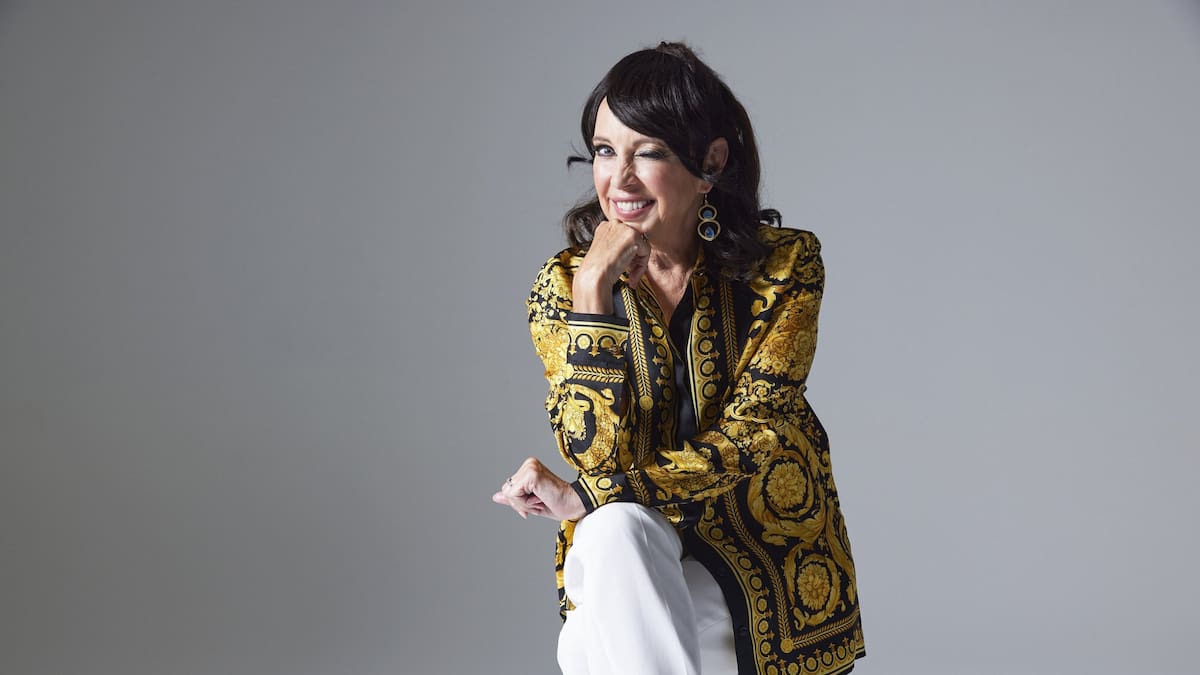
It would be years before Paul was diagnosed with dyscalculia, a form of numbers dyslexia, which meant mastering maths was completely beyond her. Even now, numbers get the better of her. Paul says she has to work out, and write down, simple things like what time to leave to get to the studio in time to record her foodie podcast Fork’s Sake with singer, entertainer and TV presenter Andrew Papas.
She has no idea how to do a tax return. And yet, she was judged bright enough as a young teenager to be sent to an upper-middle-class secondary school two hours away by bus that gave Paul her first taste of how the other half lived.
“It was like arriving in another world.”
On her first day, a girl asked for her phone number. Paul had to lie about why she couldn’t share her number with her new friend. Paul’s family simply couldn’t afford to own one.
“We never had a car, we never had a phone, we never had a bath or a shower or an inside toilet.”
So Paul took to bluffing.
“It was ‘where you going on your holidays?’ … And they all went to Spain and France or something. And you know, we didn’t go anywhere,” she says.
“And they were like, ‘where’s your photos?’ ‘Oh, blooming camera. Got the photos developed. Nothing, you know?’ It was all a lie.”
But the charade didn’t last long.
“After the first year it became obvious. I was the only one in my class with the same uniform from the year before. And the next year. And the next year. I had the same school uniform when I left as the day I started. It just got smaller and shorter.”
The experience gave her a “fighting spirit” she says. She, too, wanted to have enough money to be able to buy the nice things in life.
When Paul left school, her options were factory or shop work. She opted for the latter, and it was then she discovered she had a gift for sales.
“I realised I quite liked it. I liked chatting to people, and I found I was quite good at it.”

Commission-only sales rep jobs from the age of 18 forced her to work long hours and never give up hope of a sale. On some days, she couldn’t afford the bus fare home or food for dinner. Other days, she would strike the right product at the right time and make enough to keep going.
Paul headed to New Zealand in the late 1980s, one of three visits before she settled permanently. She sold vibrating massage pillows until she ran out of stock because her container didn’t arrive.
“I think it fell off the back of the ship or something.”
After her third arrival in 1991, Paul sold heavy Kirby vacuum cleaners, lugging them door to door, hoping to be allowed in to vacuum the carpet.
“And then ask them to take the sheets off the bed so I could vacuum the mattress to get the fleas and the dead skin up. Thinking about it was vile, but if you sell one, they were a thousand dollars a pop, you know.”
She haunted stall-holders at Auckland’s Easter Show, asking if they needed help to sell their product. Finally, a man called George gave her a break. He was selling metal polish and asked her to mind his stall while he got something to eat.
“So I worked for an hour on his stand and when he came back, I’d sold more in that one hour than he sold the whole day before.”
Word got around that the woman from England could outsell George. She was offered selling jobs and eventually went into partnership. They sold products wherever there were people, including shopping malls, and then along came the all-in-one powder, with its thousands of luminous spheres.
It sold well at shows and malls, but Paul couldn’t persuade pharmacies to buy stock even though she knew it would sell. She and her business partner decided a TV ad would help tell the world. Paul wrote the ad with the idea of getting a known face like Jude Dobson or Lana Cockroft to front it.
“Then it turned out we couldn’t afford, you know, either of them.”
Paul’s business partner said: “Well, you’ll have to do it.”
“Oh my God, I didn’t want to do it. It was like a nightmare.”
Paul remembers the pre-shoot nerves – throwing up, being unable to eat or sleep. And then shaking with terror when she was being filmed.
“I remember holding up the pot of it and the director saying: ‘Cut. Can you hold it still?’”

In Paul’s view the ad was terrible but it was the only one they had. There was no money left to reshoot. The day it aired she was already privately making “what next” plans, convinced no one would buy Natural Glow on the back of a bad telly ad.
“Um, next minute the phone started ringing and history was made.”
But life as an infomercial icon still had its ups and downs after that. She danced her way to victory on Dancing with the Stars, but suffered a very public bankruptcy after the failure of her Māori cultural theme park venture.
At 69, an age when most are either easing up or retired, Paul shows no signs of slowing down. She still creates manifestation boards and insists she’s “not finished yet, not by a long shot”.
She still pep talks herself each morning.
“I’ve got this, I can do this. This is gonna be brilliant. I’m amazing. I’m wonderful. I’m marvellous,” she tells herself.
Tell your subconscious and it will believe it, Paul says.
“It’s up to you. Nobody can tell you how to think.”
Listen to the full conversation between Suzanne Paul and Paula Bennett on Ask Me Anything, available on the iHeart app or wherever you get your podcasts.