

“Get me a coffee, iced,” I called out from the table to my son in the kitchen.
“Please,” he responded.
“Ok, mate, please – why? Wouldn’t you get it if I didn’t say please?” I said.
“It doesn’t kill you to be polite, does it?” he said, and brought the coffee.
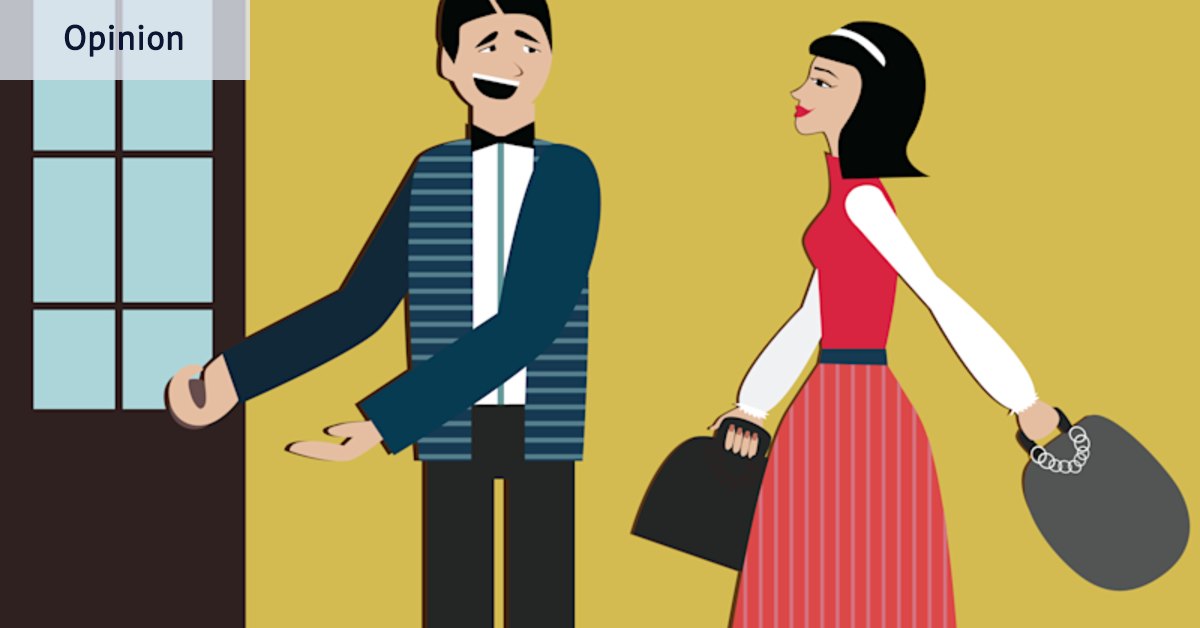
I believe that there is no need to be overly polite to those you love. Respectful (if possible), caring, kind, gracious, and loving – yes. Yet politeness connects most of us who inhabit these vast urban spaces, not bound by tribe, clan, or village. Politeness is the minimum obligation for maintaining civic cohesion.
On New Year’s Eve a young woman in the bottle shop gave me a free wine bag and said, “I feel bad charging for this – it’s New Year’s anyway.” She went beyond mechanical politeness by not charging me $1.50. A small gesture full of grace that shifted my mood.
I had been irritated that evening, and ready to unleash words full of contempt neatly wrapped up in faux politeness. Yet, that young assistant’s gesture assuaged my anger. “Yep, it’s New Year’s Eve,” I said, and at home told my wife the story.
“See? It pays to be polite and nice,” she said. In her mind, it was a lesson to me.
Getting it right is tough. Love, truth, kindness, and respect don’t need politeness. And politeness doesn’t need them. One can be polite and cruel.
Is it wrong to lie for love and respect? One can be polite and tell the truth and again politely accept the pain that truth may cause. In 1993, I was 30 and had left Adelaide for my first big job in Melbourne. My late parents marked the occasion with a gift — a massive black leather briefcase, something an MI5 operative might carry in a 1960s British spy film. It could fit 20 kilos of stuff, lunch, codebooks, pens, a handgun and a rotary hand phone.
Walking down Smith Street as the new executive officer of an arts organisation, lugging that thing, was absurd. Yet, love for my parents — the fear of hurting their feelings – stopped me from saying, “Guys, this is not cool – can’t have it.” Eventually, it became a storage case under my bed for the detritus of letters, cards, and artefacts from my life.
Then, there’s empty corporate civility. For example, on a call for an hour waiting for a bank to sort out a mess they made, pushed from one manager to another, listening to pre-recorded messages about how aggression and disrespect “won’t be tolerated”.
The customer wants to yell “get f—ed!” – but the one who needs to hear that is someone on $15 million per annum, not the customer service officer with 12 post-grad degrees in the Philippines.
On the other hand, nodding in gratitude to the Chemist Warehouse guard – on his feet all day – is a justified recognition. Politeness is recognition he has a tough job. Boring, lonely in a crowd of shoppers, and on his feet all day. Yet, his story, which began in Sudan, Armenia, or Iraq, is worthy of an epic novel compared to mine.
Politeness can be used to mount an attack. Last year, in a servo, I waited behind a young tradie at the ATM – doing withdrawals, deposits, and examining receipts – endless transactions all at 9.15am. He finished, turned, and said, “I’m really sorry, mate, took me ages.” And he meant it.
“No stress, man,” I said. I could have stopped there. But, I said, “Mate, a little advice, best not to do all your banking at a 7-Eleven.”
He laughed, genuine, in recognition of my rapier wit. As he exited the servo, he turned and shouted out, “Mate, go f— yourself!” I was polite, but …
Polite, is from polis, the Greek word for city. It is in the city that we became polites, citizens of the state and agreed to unwritten codes of behaviour. Here, politeness is essential, to help manage a complex division of labour.
Without politeness, community bonds may weaken. According to 19th-century French sociologist Émile Durkheim and once common purpose erodes, we get anomie – from Greek, meaning “lawlessness”. This is a condition in which we drift on the margins, weighed down by a hopelessness, stripped of purpose, and no sense of belonging. Then we start to feel aggrieved, victimised, and civic responsibility diminishes.
The little things that annoy, or anger, can be very dangerous if they accumulate. They can create a palimpsest of behaviours that tear at society. For example, the idiot gunning it at 80km/h in a 40km/h school zone; the privileged mum double-parking her new BMW road truck outside the school because her child, apparently, is the only one that matters; or the fit young passenger on a packed train, sitting, glued to a device, as an elder stands; or those determined to board before passengers can squeeze out. These small breaches accrue, into a state of normlessness.
Politeness can be cruel and cold. The whisper of class wraps phrases like “polite families” or “good people” – often code for “not poor.” As my late-aunty Fotoula would say, “They come from a ‘polite’ family.” Here, polite is code for rich.
I see good people not as those who are polite, but who seek “intrinsic good”, as Aristotle said. Intrinsic good, may also be harsh, painful but necessary if the result benefits not only you.
My wife often reminds me that when our son was a baby, it was in the main heroin users who stepped down to help her lift the pram onto the tram. The other “good citizen” inside did little to help. Maybe, heroin users were conscious of their ever-growing shadow, and an act of kindness and politeness was a small ray of light filtering through from the civic world they’d left behind.
Fotis Kapetopoulos is a journalist for the English edition of Neos Kosmos, a leading Greek-Australian masthead.
The Opinion newsletter is a weekly wrap of views that will challenge, champion and inform your own. Sign up here.
 Fotis Kapetopoulos is a journalist for the English edition of Neos Kosmos, a leading Greek-Australian masthead.