
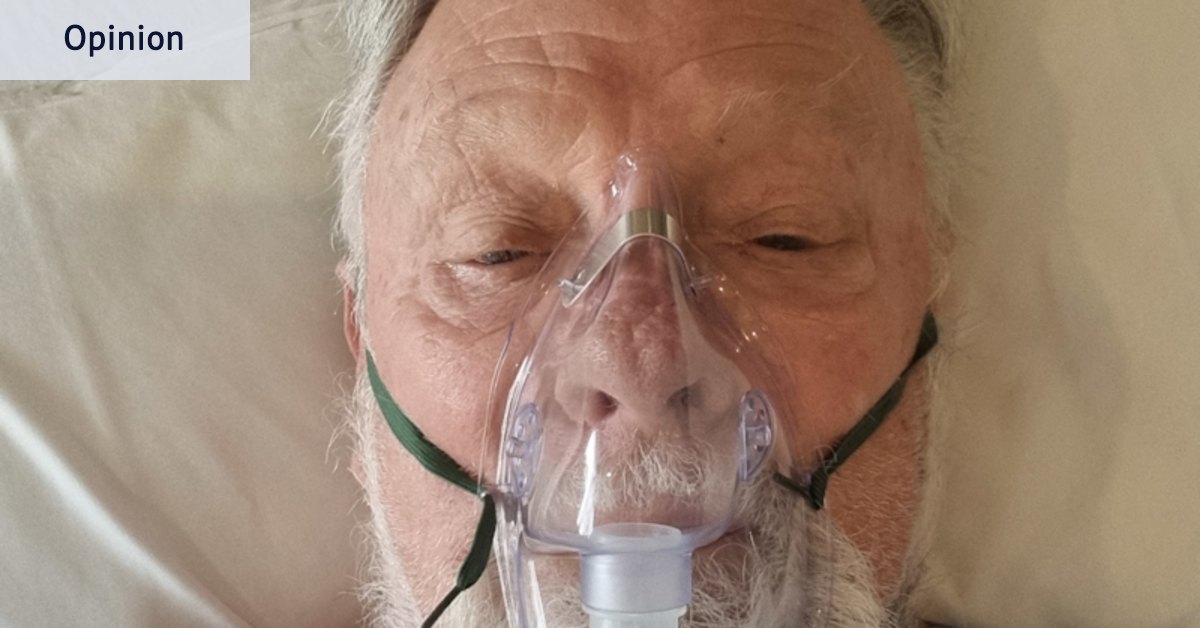
A few months ago, I was out walking my dog Oscar when the first warning popped up. Oscar and I usually walk around our local dog park until one of us decides it’s time for a rest. If it’s me, I usually sit down under a shady tree.
I did this earlier than usual on this day because I was feeling a little out of breath. It’s worth noting I am 86 years old and a sufferer of type 2 diabetes. Twenty years ago, I had two stents put into my coronary arteries, a procedure that essentially unblocks blockages. Back then, the symptoms had included breathlessness. So I was a bit concerned as I sat under the tree, with Oscar happily walking and sniffing around nearby.
But I didn’t feel like my heart was about to pack it in. I didn’t have any other warning signs. No chest pain. No feeling of pressure or tightness radiating to my arms, back, neck, shoulders or jaw. No dizziness, cold sweats, nausea or indigestion.
After a few minutes under the shade of the tree I felt fine, and Oscar and I headed home.
But fortunately for me, there were more warnings. I had to take another breather after walking a few minutes. Later I needed a break after 10 minutes in the garden.
That’s when I decided this was a bit more than old age catching up with me.
So it came as no surprise when my cardiologist ordered an angiogram. He thought I needed more stents.
I’ve had angiograms before getting my stents. But stents wouldn’t cut it this time. This scan revealed three serious blockages. I was booked for bypass surgery at Cabrini Hospital in Malvern three days later.
I won’t go into all the gruesome details. But I was on the operating table for four hours and the surgeon found another blockage that hadn’t shown up on the angiogram. So I had four blockages, any one of which could have killed me in a heartbeat.
There is a procedure called coronary artery bypass grafting, or CABG, which is colloquially called cabbage. This involves grafting veins from your own body and using them to reroute blood around blocked arteries. My surgery involved four cabbages. Serious stuff.
I was woken up three hours after the operation and told that all was well. All I wanted to do was sleep. There followed days in ICU. I had two long scars from where my vein grafts were removed. In a sense, I had given an arm and a leg. There was also a sutured wound in the middle of my chest, where the surgeon had wielded his buzz saw before laying his hands on my heart.
I was given what the nurses called a teddy bear. But it wasn’t very cuddly and had no arms or legs. It was a tightly rolled bathroom towel secured with adhesive tape. When I coughed or sneezed – which was very painful – I was to press the teddy bear to my chest. This eased the pain considerably. In the next few days I grew to love that teddy more than Tinker, my childhood teddy bear.
After ICU, there were days in a coronary ward. That was followed by an ambulance ride to the hospital’s rehab centre in Brighton. I had physiotherapy and occupational therapy. There were all sorts of exercises and all sorts of pills.
The worst of it was the constant discomfort. Not only in my coronary zone but along the length of my left arm and down my right leg. The scars would take weeks to heal. And on the psychological side there was the undignified process of being showered and dried by a different nurse every day. I consoled myself with the thought that the sight of an 86 -year-old male body would be just another day at the office for them.
Then I was home and in the care of my loving wife. She is a former nurse, but not so gentle as the hospital nurses. She doesn’t stand for any nonsense or complaints from me. But I am on the mend. My heart is pumping away and my scars are healing. And I know I’m far from alone in my experience – some 17,000 Australians have bypass surgery every year.
So take my tip. Heed the warnings.
Oscar and I are back walking to the dog park.
Damien Ryan is a retired journalist who worked for the ABC.
Get a weekly wrap of views that will challenge, champion and inform your own. Sign up for our Opinion newsletter.
 Damien Ryan is a retired journalist who worked for the ABC.