
I have thousands of unread emails. Not because I am busy or important, but because at some point, I lost the will to keep up. Newsletters I never asked for. Calendar updates for meetings that already happened. Automated messages that begin with “just following up”.
Recently, in a moment of false optimism, I decided to clear some of them.
That was a mistake.
While scrolling through the depths of my inbox, I noticed a recurring subject line I didn’t recognise. It appeared once a month, sometimes more. It was polite. Neutral. Entirely non-threatening. Something along the lines of: Welcome to reception.
I opened one. Attached was a photograph of me.
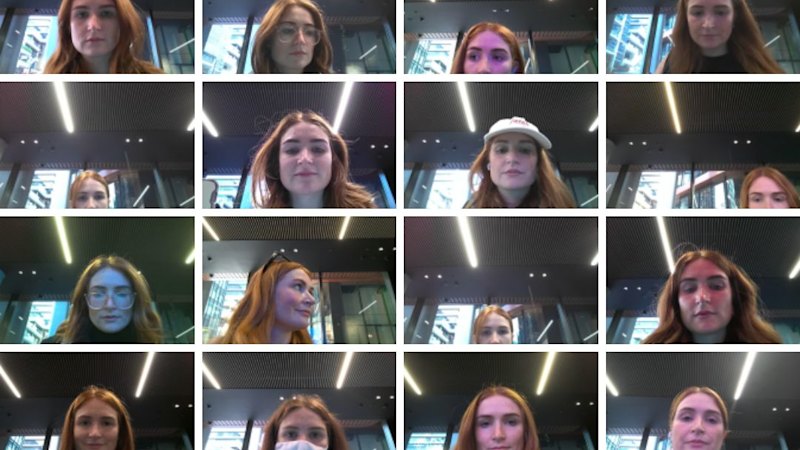
The photo was bad – not in an abstract, “no one looks good in these” way, but in a very specific way. Poor angle. Fluorescent, overhead lighting. My face caught mid-adjustment, as though I had just realised something unfortunate about myself.
I scrolled through my inbox. There was another one. And another. Different dates. Same framing. Same angle. Same expression of mild administrative concern.
It took me a moment to realise what I was looking at.
These were the photos taken every time I forgot my work security pass. With their discovery, I had unwittingly stumbled across a horrifying archive of my worst angles – and, more troubling, a record of my repeated inability to manage a simple workplace process.
If I’d ever had any doubt about what my worst habit might be, it was now sitting in my inbox, staring at me from 37 different angles.
I forget my pass often enough that it has become a rote procedure. I arrive at the reception desk, say, “It’s me again. I forgot my pass,” and the staff recognise me. I’m directed to a small computer kiosk facing outward from the desk, angled slightly upwards, as though it has been calibrated to capture the most unflattering view of the human chin.
I enter my details: my name, the company I work for. Then, a three-second countdown begins.
Turns out, three seconds is enough time to understand that the camera is positioned too low, the lighting is too harsh and, because I am about 5′2″, there is no meaningful way to improve the situation. I have tried smiling. I have tried not smiling. One suggests I am attempting to appear approachable. The other suggests I have already been spoken to by police.
I am handed a visitor badge, similar to my own pass, except, instead of my professional headshot, I see a picture of Homer Simpson and the word “D’oh”. I wear it for the rest of the day. Colleagues comment. I return it when I leave.
I had assumed the photos disappeared.
They do not.
They have been quietly accumulating in my inbox, dated and archived, waiting for me to notice them like desperate fans at the stage door.
The archive appears to span at least five years.
There are cameras everywhere now. In offices, on streets, on doorbells attached to houses I have never been inside. Most of them capture you mid-movement, mid-thought, mid-mistake. In 2026, it’s not news that we live under constant surveillance. What is new is being confronted with it via 37 unflattering images of yourself, carefully archived and timestamped.
What troubles me is not just that the photos are unflattering, though they are. Together, they suggest a pattern. They make me look like a person who cannot be trusted with small systems. If someone unfamiliar with me were shown these photos, they would conclude that I work here, but probably not in a decision-making capacity. It’s a reminder that in systems built on records and images, perception hardens into fact – and somewhere, without my consent, I am being defined by my worst days.
I asked security what happens to the photos. The images are stored automatically, they said, and kept “for years”.
This did not make me feel better.
If this is what I look like when I know the photo is coming, I am uneasy about the footage where I’m caught by surprise.
In an attempt to reduce my appearances in the archive, I attached a Bluetooth tracking tag to my work pass. Colleagues find this excessive. I disagree. It has helped, though not completely. Turns out all it took to break my worst habit was receiving the most unflattering photo of myself I’ve ever seen.
I still forget my pass sometimes, but I remain optimistic that, eventually, one of the photos will be good.
Make the most of your health, relationships, fitness and nutrition with our Live Well newsletter. Get it in your inbox every Monday.