
The French eat them every day, Australians stand in long lines for them and, at Good Food, we ate nearly two dozen in one sitting in a quest to rank Melbourne’s best. We’re talking about croissants, found in nearly every bakery’s cabinet but at vastly different levels of quality.
“They’re quite simple, but they’re also quite hard things to make,” says Michael James, one of Melbourne’s leading bakers, who founded Tivoli Road Baker with wife Pippa and has written two baking books.
With the explosion in artisan bakeries around Melbourne (at least 11 have opened in the past 12 months), croissants are no longer just crescents of stretchy dough. They’re wheel-shaped and dipped in icing, or piped with squiggles and studded with berries. But before you can run, you’ve got to walk and, for a baker, the equivalent of taking your first steps is turning out a golden, plump croissant with a crust that rustles beneath your fingertips.
Sitting down to really examine a croissant and how it eats puts you in a different state of mind. “What do I like in a croissant? Is more crunch always better? When does buttery become greasy?”
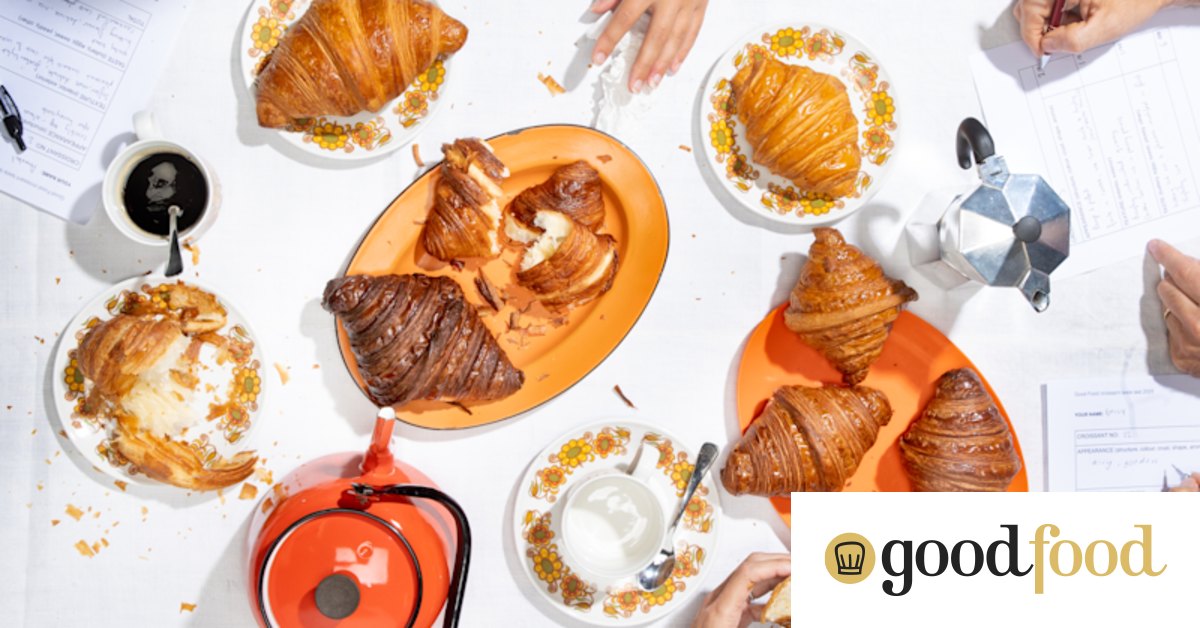
We got into that level of obsession on a recent Wednesday afternoon. Good Food’s Melbourne team fanned out across the city to pick up freshly baked croissants from 23 bakeries, purchasing them just as any regular customer would. We gathered around a boardroom table and − well, we made a mess. (Apologies to everyone who had to use that room later.)
Bakeries were chosen to represent a good cross-section of what Melbourne has to offer: the old, the new, the inner-city, the outer, the big names and the lesser-known. We could have visited another dozen or two, but had to draw a line in the interests of our palates and our appetites.
On the panel was Good Food associate app editor Emily Holgate, recipes editor Roslyn Grundy, eating in editor Andrea McGinniss, senior producer Annabel Smith, myself, and our expert, Michael James, who founded Tivoli Road Baker but no longer works in bakeries. James was asked for a list of bakeries he’s consulted in the past two years to avoid any conflicts of interest.
Five signs of a good croissant
● Colour
A good croissant has “a deep golden colour all over the pastry … especially the sides and the bottom as well,” says Michael James. Egg wash is important for colour, caramelisation and flakiness. Dark doesn’t mean a mistake: some bakers like to take their pastries a bit darker, although the pastry still must eat well.
● Crust and flakiness
The crust should be crisp and flaky, not soft, but you don’t want it too firm, which may indicate dryness. Flakiness comes from three things: egg wash, the bake, and strong lamination technique. If you hear a “crunch noise” when you first cut it or bite into it, that’s a good sign, says James.
● Shape and structure
The traditional crescent shape of Europe’s croissants has evolved into something straighter and more domed in Australia. “It’s a modern interpretation of the pastry,” says James. Structure covers both the interior and exterior. On the outside, you want three ridges and then lots of tiny layers in between. That’s a sign of good lamination, says James. Inside, you’re looking for an open, honeycomb-like shape, a feathery texture and no doughiness at the base.
● Aroma
A good pastry that’s been fermented well will have a slightly yeasty smell and, hopefully, a strong aroma of quality butter.
● Flavour
A quality croissant will show a nice, rounded butteriness and a little bit of richness. It shouldn’t be overly sweet. Oiliness is also a flaw, indicating either the prove was too long or the oven wasn’t hot enough. Cultured butter is used by some bakers, ranging from a subtle lactic flavour to all-out funkiness.
We jumbled up the pastries and randomly assigned numbers to each one, ensuring we had no idea which pastry was from which bakery.
To taste, we looked at each croissant before cutting it in half to see the cross-section. Then we sniffed, squished, tore and ate. Our score sheets included 5 points for appearance, 5 points for texture and 10 points for taste. Like all Good Food taste tests, it was conducted independently, and a business couldn’t pay to be included.
Below is our top 10: you’ll notice some key bakeries are missing, including the bakery that kick-started our croissant obsession many years ago. Lune was tasted but, on the day, didn’t score the points to make the top 10. But, at the end of the day, your favourite croissant may not be the same as ours. It’s as personal as how you like your cup of tea.