
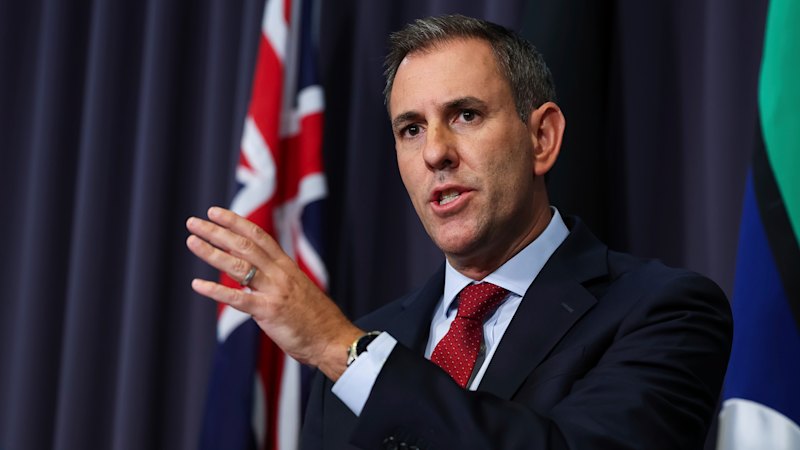
The argument that Jim Chalmers is a reckless “big spender” relies on stripping the numbers of context and ignoring what the spending is actually for (“Chalmers must put the brakes on spending”, February 4). As your editorial states, spending is indeed higher, but that’s because the government is repairing systems the Coalition left weakened or broken: aged care after a royal commission, the NDIS after chronic underfunding, childcare to lift workforce participation, and defence in an increasingly volatile region. Restoring basic capacity is not profligacy; it is delayed maintenance. The argument that public spending is driving inflation also misrepresents the evidence. The Reserve Bank of Australia has been clear that current inflation pressures are dominated by housing costs – rents, insurance and utilities – alongside lingering global shocks. Fiscal policy is acknowledged as a marginal factor, not the primary cause. Public debt has stabilised, deficits are materially lower than forecast and Australia’s fiscal position remains strong by international standards. Notably, the RBA has not called for austerity. The loudest demands for cuts come from business groups targeting the NDIS, healthcare and childcare – precisely the services that support participation, productivity and social stability. That is not economic discipline, it is short-term cost-shifting. Slamming on the brakes may sound responsible. Doing so blindly amid housing shortages and care pressures would weaken the economy far more than disciplined, targeted investment ever could. Denise McHugh, Tamworth
There are two ways to balance a budget – reduce spending or increase income. The Herald’s call to reduce government spending is all very well, but where? Aside from cancelling the stupid AUKUS deal, which would only mean having to buy off-the-shelf subs from elsewhere, I can’t think of a single major area of government spending that could be significantly cut without doing harm to the nation. What is needed is more income: tax foreign corporations properly, charge more for our mineral and gas resources, kill the diesel fuel rebate and reduce and then eliminate subsidies to the wealthy such as the CGT discount and superannuation benefits above a reasonable threshold. Andrew Taubman, Queens Park
I agree with the Herald editorial that the treasurer “needs to tap the brakes”. He could start by dumping AUKUS – billions saved there. Then look at rorts made possible through lax controls over privatised providers of aged care, childcare and disability services. Then the tax system, which gives to those who don’t need a second or third investment property. We’re talking changes to negative gearing and capital gains tax. It’s time to wind these back, save government the lost tax and reduce competition (which inflates property prices) from investors. This would give young people a chance to buy a property they can own, live in and start a family. Janet Cook, Waverton
Strugglers punished again
It seems the interest rate rise is all Labor’s fault. It’s the Liberal doctrine to “cut government spending” (“Chalmers under fire to fix budget as rates rise”, February 4), yet the RBA didn’t mention government spending when it announced the increase. Rather “private demand is growing more quickly than expected, capacity pressures are greater than previously assessed and labour market conditions are a little tight”. A drop in the unemployment rate was the final straw, evidently, even though low unemployment is good. The RBA was too slow to raise rates in 2022 despite a big spending Liberal budget in March 2022, and is perhaps gun-shy now. The only comfort is that banks say 80 to 90 per cent of mortgage holders didn’t cut their repayments the last time rates were cut, so they won’t be paying any more now. Nick Wilson, Palm Beach
Higher mortgage rates won’t affect us because we don’t have a mortgage. Those who will suffer are people like a western Sydney family I know, who work five jobs between two adults to pay a $600,000 mortgage on an $800,000 house. Their combined earnings see them paying the highest marginal tax rate and copping the mortgage increase, while the very wealthy protect themselves from mortgage rises on investment properties through negative gearing while enjoying massive capital gains. Income left over they can flush through a family trust at a significantly lower marginal tax rate than my friends in western Sydney. Clearly, this situation is massively unfair. Bill Shorten tried to come to terms with it with his taxation proposals at the 2019 election. We know how he got on. In this society we have created, who, in fact, is protecting the interests of the underprivileged family trying to make progress? I don’t think Pauline Hanson is the answer, although a lot of people do. Noel Beddoe, Belconnen (ACT)

One has to ask, yet again, why must struggling mortgage holders, most of whom are young families, have to suffer most of the pain in the so-called fight against inflation? They have carried this burden for too long. Rob Phillips, North Epping
According to the RBA, the latest 0.25 per cent interest rate rise is a response to inflation fuelled by “private demand”. Well, I bet that demand is not coming from mortgage holders and renters, who sadly will be the most affected by the rate increase. It’s time for the federal government to sensibly cut spending and widen the tax base to ensure the burden of slowing the economy is shared by all. Rod Butterfield, Kirrawee
The RBA’s decision will hit the wrong target hardest. Consumer price inflation is being created by the increasing number of Boomer retirees, such as me, who have accrued wealth through super and property ownership and as they retire find themselves paying no income tax. We spend on holidays, dinners, renovations, grandkids’ school fees etc, and help push up inflation. Meanwhile, our kids and grandkids struggle to buy homes and get whacked with interest rate increases to control inflation that they aren’t causing. And those rate increases are passed on to renters. The RBA needs to look harder at whether its hammer is hitting the right nail. Steven Lee, Faulconbridge
We’ve recently finished paying our mortgage, so we are unaffected by the latest rate rise. However, in one breath, RBA governor Michele Bullock “empathises” with people struggling to meet mortgage payments while blaming the rise in inflation on “increased private demand”, in other words people with money to spend splashing it around. So once again, the tool to curb discretionary spending is wielded against those least responsible for it. Brett Jack, Bonnyrigg Heights
Teals toil solo
Why would any self-respecting teal want to join with the Liberals, as suggested by correspondent Christine Perrott (Letters, February 4)? The teals and independents have performed admirably. Their ability to act for their electorates in a sensible, mature manner and produce good legislation is something the other opposition parties can only dream of. What is most worrying is the switching of former Coalition members to One Nation. Politicians should be like doctors – in the profession to do good for humanity, not for self-interest. Bob Cameron, Coffs Harbour

Ditch a bad deal
Now that Labor is in such a powerful once-in-a-lifetime position, this is surely the time for Australia to withdraw from AUKUS (Letters, February 4). Apart from Donald Trump’s unreliability as an ally, Australia has almost always been on the giving end of the US-Australia relationship since World War II – Korea, Vietnam, the Middle East, Iraq, Afghanistan, you name it, we obliged. The one and only time we asked for their help was when we were helping East Timor to resist Indonesia’s invasion in the 1990s. East Timor, although neutral in World War II, had helped Australian soldiers survive the Japanese invasion, often to East Timor’s detriment. Australians did not forget what we owed them for that. But when we asked the US to help us in East Timor, what was their reaction? “We’re all Kosovo’d out.” Eventually, they did send about 200 people to help, but only non-combatants. When will we ever learn? Ruth Holmes, Crows Nest
The AUKUS “deal” sounds a bit like this: See an expensive gadget online, click on the link, which looks a bit dodgy, discover you must pay a large part of your savings to a supplier in a faraway, rather unstable country. In return, they will send the gadget in a decade but only if they have it in stock. This is unlikely as they can’t make enough of them. You will have to open your home to large numbers of people involved in gadget-deployment. You will also allow them to bury the noxious by-product of making the gadget in your garden. You may alienate your neighbours, who are suspicious of the gadget – so suspicious they stop inviting you to street parties. And finally, the gadget makers will demand more money, which you will give them, even though you can no longer afford food and health care. On the upside, you may get a job with the gadget maker sometime in the distant future. Alison Stewart, Riverview
Four letter writers agree with Margaret Beavis that AUKUS is a bad idea (“Let’s stop pretending AUKUS makes us safer”, February 3), without one alternate view put forward. Since World War II, Australia has had other alliances with America. The South-East Asia Treaty Organisation (SEATO) and ANZUS come to mind. America will come to the aid of Australia only if its own safety is threatened, so these alliances are never a guarantee of protection from military aggression. Australia should commit to maintaining a capable military force. Having a submarine fleet is an integral component of a defence force. Riley Brown, Bondi Beach
We are terribly sorry, Monsieur Macron, please can we revisit the deal to build French submarines in Adelaide. Also, since we are, oddly, in the Eurovision Song Contest, how about letting us into the European Union. Paul Doyle, Glenbrook
Revenue raising
The government expects to make $1.3 billion from the sale of “some of the nations most historic defence barracks” – Victoria barracks in Sydney, Melbourne and Brisbane (“Government ready to sell off historic Victoria barracks”, February 4). I guess this might go some way to covering the non-refundable $1.6 billion already paid to the Americans, with more yet to be funnelled their way, for the chance we might acquire nuclear submarines under AUKUS – and almost certainly lose our defence sovereignty. Is there something in this picture that doesn’t add up? Mark Tietjen, Redfern

So the government’s logic behind privatising several defence sites is because they are “underutilised and shut off from public access”. If that’s the case, then I expect to see Kirribilli House and Admiralty House on the market soon. Matt Petersen, Randwick
Rather than selling off our defence properties to balance the budget, we could start by offloading Kirribilli House and Admiralty House. Six acres of prime Sydney Harbour real estate could fetch between $500 million and $1 billion in today’s market. After all, why do our leaders need second publicly funded palaces in Sydney when the capital of the nation is Canberra. Bruce King, Malvern East (Vic)
Share energy success
Home battery uptake is skyrocketing (“Power to the people: Home batteries to reshape grid”, February 4). Australian rooftop solar now has more energy production capacity than all our coal‑fired power stations. That’s an extraordinary turning point. Our biggest power station isn’t belching smoke into the sky any more – it’s millions of households capturing sunshine and, increasingly, storing it for when the grid needs it most. Those home batteries are already cutting bills, strengthening reliability and proving that clean energy is the new backbone of our system. The home battery uptake scheme is a genuine win for the Albanese government. Can Labor now please make renewable energy accessible for renters and confront the massive climate impact of the coal and gas pollution Australia exports overseas? Sarah Brennan, Hawthorn (Vic)

Tired of suffering
Like many people of advanced years, I am in the same situation as Barry O’Connell (Letters, February 3). I am in pain, I can’t work, walk or do much anything. I am just a nuisance to the health service and would really just prefer it to be all over. Some people can use voluntary assisted dying if they are expected to die within 12 months, but what about Barry, myself and others like us who are not terminally ill? The answer is that we must just keep suffering. Peter Mayes, Petersham
Recent letters to the editor about voluntary assisted dying prompt me to ask what makes life worth living. For me, being loved and being able to love makes life worth living. This has been made even more salient by my cancer diagnosis. Mark Porter, New Lambton
Keep reports simple
School reports in general have become onerous, jargon-laden tomes that require a fresh approach, with a greater emphasis on the personal and social attributes of students (“The plan to fix school reports”, February 4). By comparison, those in the past were clear, concise and easily understood. Take for example, the teacher’s comment I received in year 3 for conduct: “Very good! (Impishness wins the day, occasionally!)” Simple, honest and, admittedly, still true. Cath Hunting, MacMasters Beach

Growing concern
Every time a corrupt politician or public figure is charged, sentenced or loses an appeal, a mate and I gather for a 150 Lashes beer to celebrate. I blame Eddie Obeid and his friends for my waistline (Clear abuse of public trust’: High Court rules on Obeid, Macdonald appeals”, February 4). Geoff Davidson, Ourimbah
Still on board
Bear in mind, Robert, the boot I put into the Coalition’s glaringly weak performance was born of desperation, desolation and despondency, but not yet desertion (Letters, February 4). Rosemary O’Brien, Ashfield
- To submit a letter to the Sydney Morning Herald, email letters@smh.com.au. Click here for tips on how to submit letters.
- The Opinion newsletter is a weekly wrap of views that will challenge, champion and inform. Sign up here.