

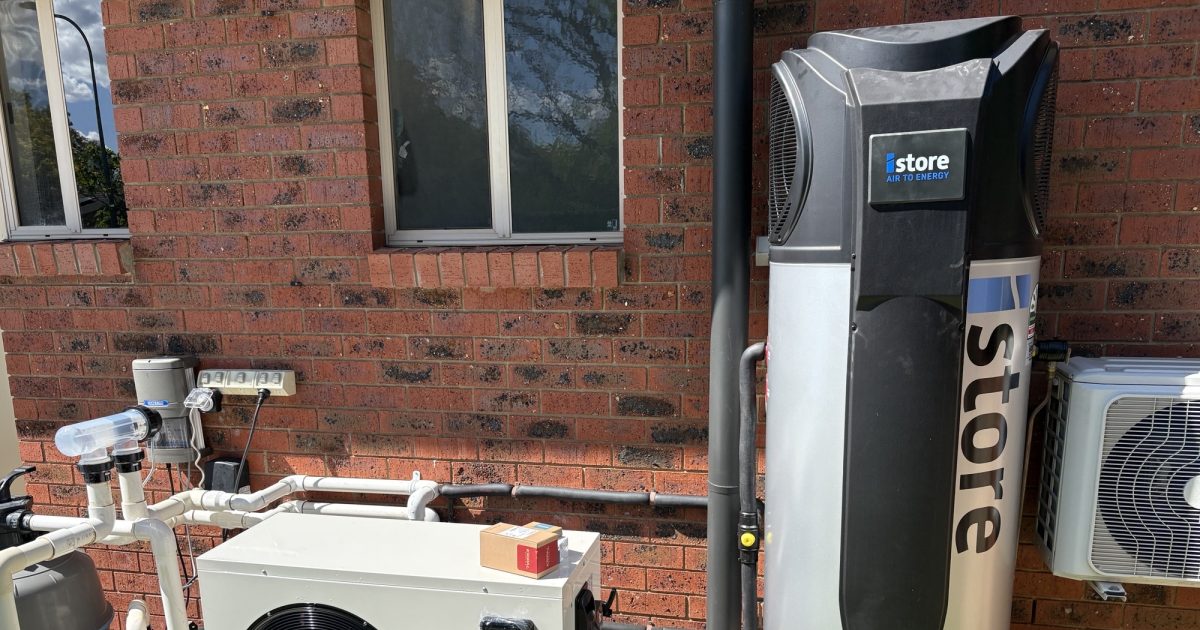
Hot showers shouldn’t break the bank, so here are some tricks to get more out of your current setup. Photo: Jack Fowler.
Hot water is a staple of any modern home but, for most households, it’s still the second most costly system to run.
Power from the grid is only getting more expensive, so what’s the alternative?
If your home was built in or before the early 2000s and you haven’t installed anything new, chances are your hot water comes from a traditional electric resistance or gas system.
Electric resistance tanks store water and heat it with an electric element. This is a simple, reliable way to do things, but it’s generally inefficient and expensive.
Gas systems heat water using natural gas burners. Though currently slightly cheaper to run than their electric counterparts, they are powered by fossil fuels and the ACT is on track to transition away from fossil fuels by 2045, so gas is rapidly becoming a less viable option.
Simply put, solar energy generated at home is the way to go.
Solar-powered hot water heat pumps are the most efficient systems on the market. They work by extracting warmth from the surrounding air and transferring it into stored water via a refrigeration cycle, similar to a reverse air conditioner.
Heat pumps move energy rather than create it, which is far more efficient than either traditional option. Unfortunately, not everyone can afford to have one installed upfront, because they’re between $4000 and $7500 a pop.
These systems are covered under the Sustainable Household Scheme, which offers loans between $2000 and $15,000 for energy efficiency upgrades at 3 per cent interest per annum. But what if you aren’t eligible for the scheme, or don’t want to lock in a government loan? Don’t worry, you can still reduce the quarterly power bill.
“The easiest way is to supplement your electric hot water system with solar power and clever timing,” Huglo Solar co-founder Tim Sturgiss says.
“Even a modest solar array often generates far more midday electricity than a home uses. Simply changing when your existing system heats water could allow you to cover most or all of your hot water generation for next to no running cost.
“Electric tanks are insulated storage systems, so water heated at midday stays hot for evening showers and morning use.”
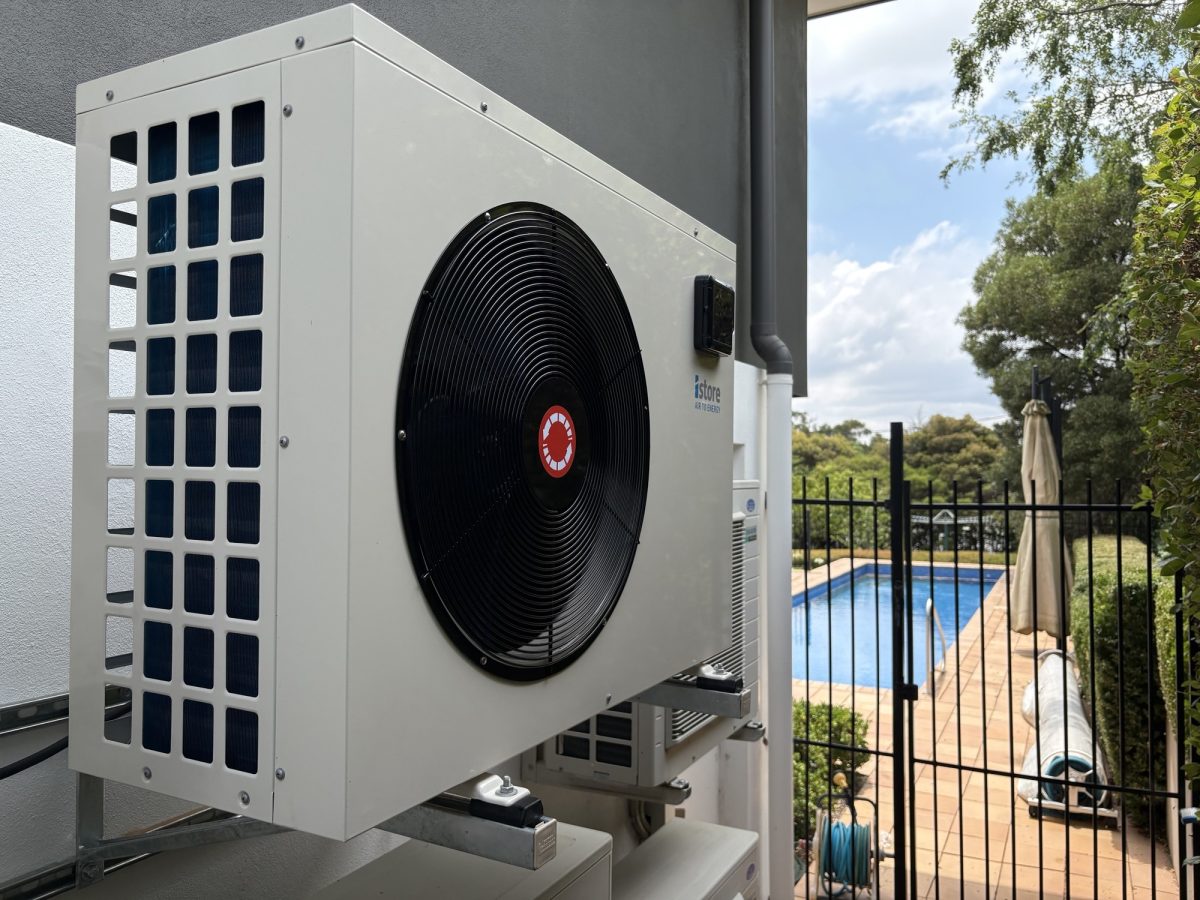
If you have a heated pool at home, solar hot water is well worth the initial investment. Photo: Jack Fowler.
Tim’s recommended approach means no hardware replacements or expensive upgrades. You get to keep your current system and plumbing, just by adding a few extra solar panels and a timer or smart controller.
It’s ideal if your existing system is still in good condition and you already have solar installed, or plan to install it anyway.
“This approach isn’t quite as efficient as a heat pump, but you still get significant savings for a much lower upfront investment,” Tim says.
“It’s a great middle step as more households transition to 100 per cent electric power.”
Another trick is to make sure your hot water tank is properly insulated and the right tank size for your household. This avoids your system overheating or running more cycles than necessary.
If you do manage to find the funds for a heat pump, expect significant savings by your very next bill.
Local plumber Jack Fowler recently upgraded his own system, and says every Canberran who can should think about doing the same.
“Even though my old electric system was powered by solar with a battery, I was still spending $338 a quarter on power. After the first quarter with my new heat pump, I had a $14 credit,” Jack says.
“Electricity is getting more expensive and gas will be phased out soon enough.
“Heat pumps pay themselves off in a few years, so it’s making more and more sense to upgrade as soon as you can.”
Find out more at Huglo Solar.