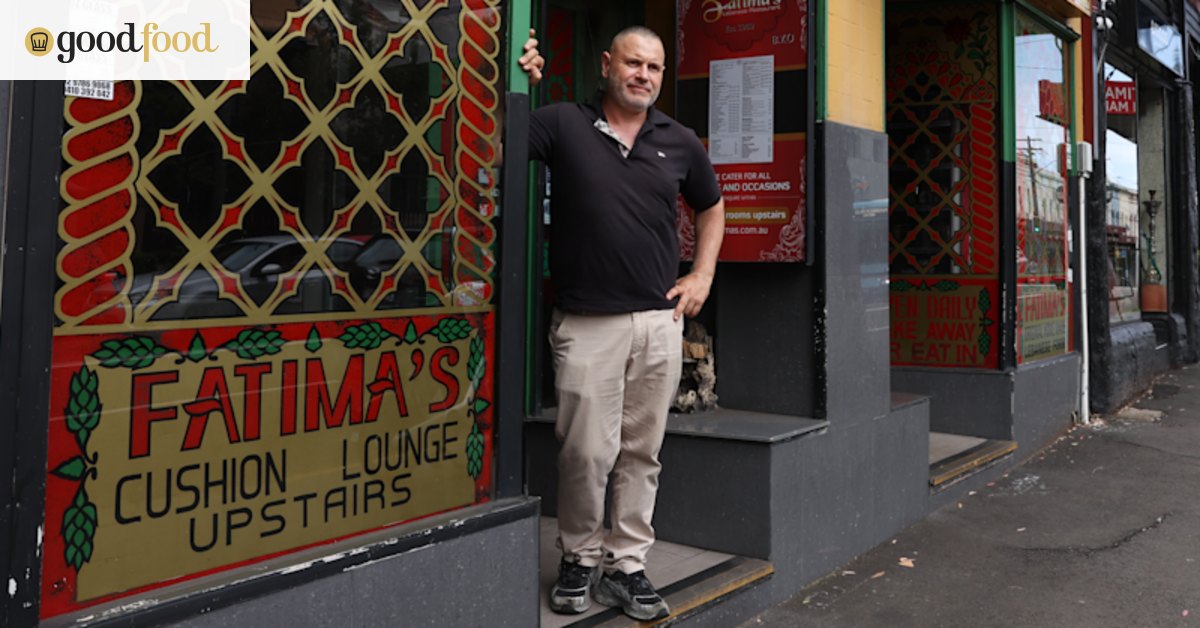

Once a staple, the cafe-meets-lunch bar loved by tradies is fading fast, while pubs and milk bars are riding a wave of nostalgia. Can the old-school Aussie cafe be revived?
Quincy Malesovas
You have reached your maximum number of saved items.
Remove items from your saved list to add more.
Save this article for later
Add articles to your saved list and come back to them anytime.
My first job in Australia was at a place that served big breakfasts, “pasta bake” slightly steamed from the bain-marie, and chicken schnitzel rolls on Turkish bread. I didn’t have the words for it then, but I later came to know this place as a tradie cafe – a lunch bar built for quick, consistent meals for blue-collar workers (and local school kids on hot-lunch day).
As I moved on to working at more fashionable cafes and restaurants – and then writing about them – that spot stuck with me. I thought of it whenever I saw steel containers of shredded carrot or warming cabinets piled with dim sims and potato cakes. Until, slowly, I started seeing these places less.
While milk bars and old pubs are being revived for nostalgia-hungry consumers, these cafes – the Aussie answer to New York’s delis and bodegas – are quietly disappearing, especially in the inner suburbs.
“I think part of the struggle is articulating exactly what they are, and what they grew out of,” says food historian Dr Tania Cammarano. “It’s kind of under-researched from an academic perspective, and there are a lot of myths and perceptions that haven’t really been tested.”
What we do know, according to Jan O’Connell (creator of the Australian Food History Timeline), is that the “pie, pasty and sandwich shops” of the early 20th century gave rise to the lunch bar-cafes we think of today. Often, they were established by migrants drawing on familiar formats from home or inspired by larger cities abroad.
Restaurant reviews, news and the hottest openings served to your inbox.
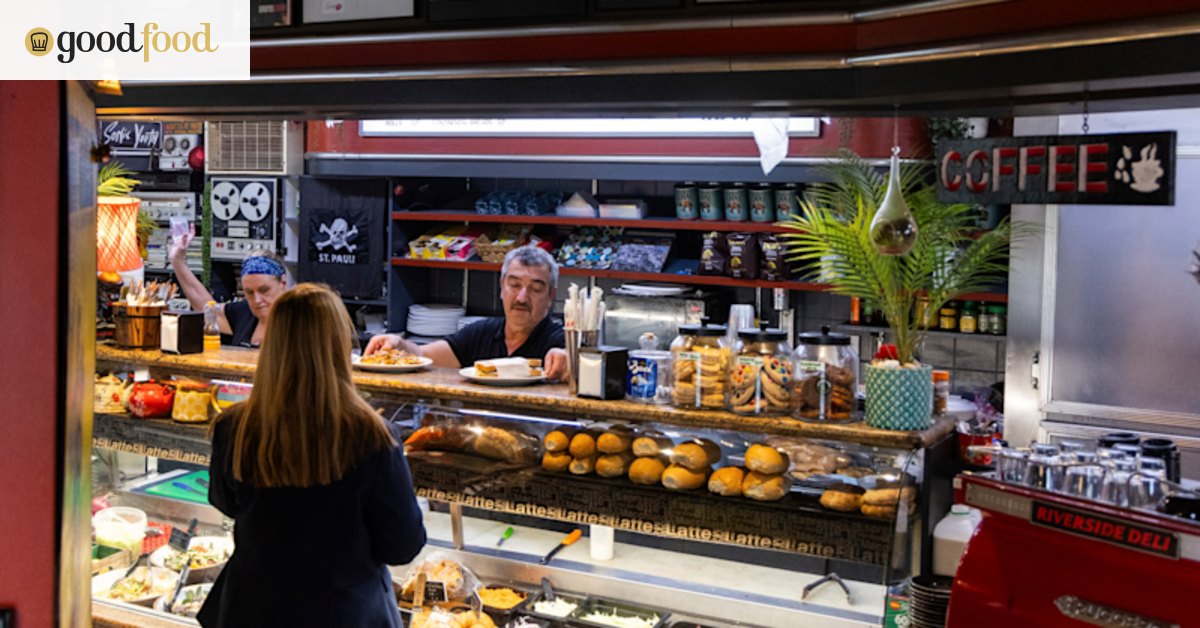
Riverside Deli on Flinders Street was opened by Greek migrant Calistratos Cocossis in the early 1990s and is now run by his son Chris. It’s a self-contained world of casseroles, salads, baked goods and a custom sandwich bar. It has no website or social media, but boasts a 4.9-star Google rating.
Chris, a self-taught cook, makes nearly everything in-house, from sausage rolls to spanakopita and about six rotating hot dishes. “I want a red sauce, a white sauce, a stir fry,” he says. “I just like different colours, you know? On Thursdays, we do Spanish meatballs in salsa. If I don’t [do it], I’m dead. The customers will kill me.”
But he admits interest is waning as fewer office workers come into the city and younger diners drift towards fast food. “People say, ‘Why don’t you get on Uber Eats?’ But I can’t – my menu’s different every day.”
“Everyone else is chasing the next new thing, but we keep it the same.”
CBD Bakery owner Tony Foster.
But at Terrace Deli on Little Collins Street, a group of twenty-somethings who work nearby eat there several times a week, despite being half the age of most regulars. They come for convenience, cost (custom sandwiches start at $9; hot meals at $16), variety and perhaps a touch of novelty.
“They’ve got the changing hot food selection, the sandwich bar, coffee, little bits and bobs,” says one diner, who did not wish to be named. “It’s not a truck stop, but truck-stop energy.”
It’s a fitting description for Embassy Cafe in West Melbourne, a stalwart for tradies, taxi drivers and the Balkan community that has been running 24 hours a day since 1962. First opened by Macedonian migrant Jim Yoannidis, it’s now run by his grandson, Jimmy.
“Our clientele’s been coming since before I was born, and it’s pretty much the same now,” Jimmy says.
At $8.50 for a beef burger and $4 for a ham sandwich, Embassy’s menu hasn’t changed much in price or structure. Jimmy has thought about trying to modernise to capture a younger audience, but says it would ruin the spirit of the place.
“I do really like the deli-style sandwiches that are popping up now, but it feels like a novelty,” he says. “Here, you’ll get people that come five days a week. [These places] are entrenched in Melbourne history.”
Still, despite loyal regulars, the consensus is that this style of eatery is fading with older generations. Customers expect things to stay cheap while labour and ingredient costs rise, and shifting demographics are changing the neighbourhoods around these venues.
One spot bucks the trend, though. CBD Bakery – which opened in 2007, much later than its counterparts – attracts a steady mix of office workers and tourists seeking Aussie classics. It even opened a spin-off recently, CBD Pies, to handle the influx of tradies working on a nearby construction site.
Its format – equal parts bakery, deli and takeaway – has weathered countless trends, sticking with founder Benie Fox’s original recipes and a simple menu. “Everyone else is chasing the next new thing, but we keep it the same,” current owner Tony Foster says.
“I get a lot of people who say it’s nice to have something without an Asian-influenced flavour when you’re in the city,” he adds. “It’s comfort. It’s familiar.”
The irony, of course, is that many of those comfort foods – dim sims, curry pies, schnitzel rolls – are products of migration. And the few venues still keeping the deli spirit alive often have Asian roots. Banh mi shops such as Kenny’s, for example, still offer custom sandwiches, hot lunches and condiment bars much like their European-Australian predecessors once did.
Knowingly or not, they’re carrying on the same tradition of feeding Australia’s working class, one sandwich at a time.
You have reached your maximum number of saved items.
Remove items from your saved list to add more.