

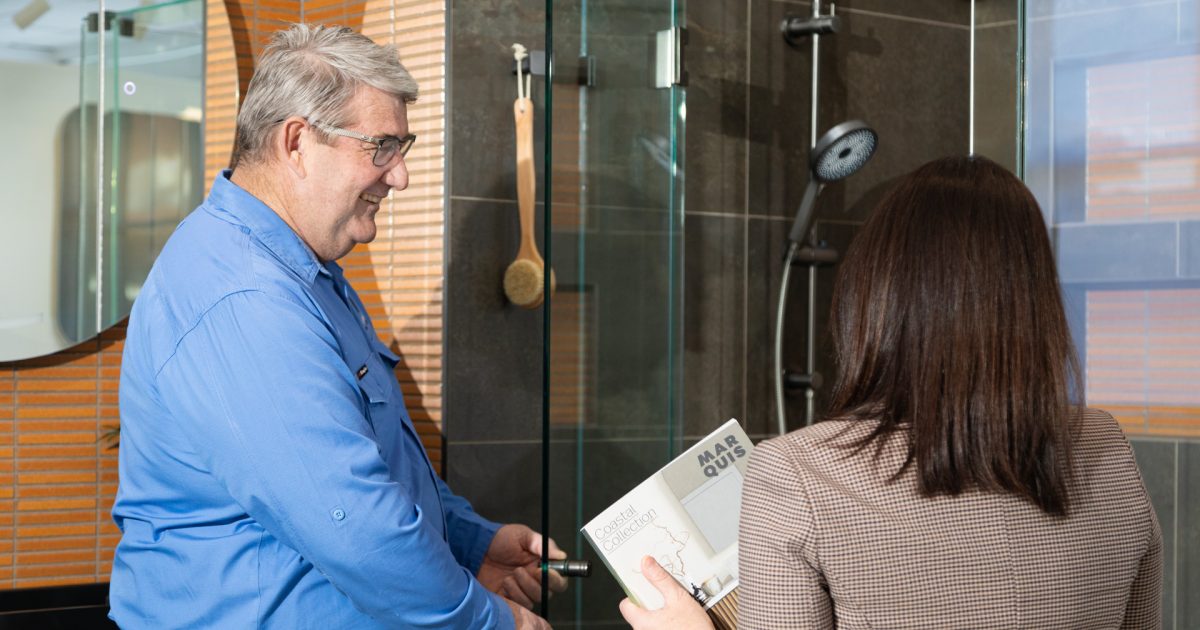
Interior designers translate human needs into spatial solutions, balancing form, function and technical feasibility. Photo: Michelle Kroll.
They have spatial planning skills like an architect, a builder’s understanding of construction codes and, much like a structural engineer, can read a drafting technician’s technical drawings, but interior designers might be the most misunderstood experts in the renovation process.
Angela Bailey, an interior designer at Mark Sheppard Bathrooms & Renovations, says few people grasp the true scope of her job.
“I think most people hear ‘interior designer’ and figure I pick out cushions, or that my expertise is a luxury,” she says.
“Interior decoration is an art form that I formally trained in. But I moved into interior design as I prefer the problem-solving aspects of my profession.”
Interior design is the professional practice of shaping interior spaces to be functional, safe, and aesthetically coherent. Experts in the field are trained to analyse how a space is used, plan layouts, specify materials and finishes, design lighting, and integrate building services, all while ensuring the design complies with building codes, accessibility requirements and technical constraints.
In other words, Angela thoughtfully considers both the function, aesthetics, and use of the home, guiding decisions ranging from the movement of walls to more personal details such as colour selection.
Ideally, an interior designer steps in at the beginning of the renovation process, during the planning stage.
Angela says there are major benefits to working with someone who has a deep understanding of spatial planning, lighting, material knowledge, and functionality, and can coordinate architects, builders, and tradespeople to ensure cohesion on the project from start to finish.
“At the beginning of a job, we spend a lot of time understanding how our client lives in their space, how they cook, how they like to unwind, entertain, and work. Generally, those details inform everything from how to configure a space to the materials and finishes used therein,” she says.
Often the first point of contact for clients, Angela balances clients’ goals, the usability of their home, and their long-term satisfaction, helping them avoid costly mistakes.
“A client might see something on Pinterest and feel inspired. Our job is to look at it from a holistic point of view, sense test everything against liveability and to look for the synergies so we can avoid mismatched finishes and layouts that won’t work well,” she says.
“You might be tempted to buy something on sale because it’s a genuine bargain, but if it doesn’t work for your space, it’s not money well spent. Or you might fall in love with an expensive tile, but it will mean reviewing your spending elsewhere so you don’t blow your budget.
“A good interior designer will help you work out what’s worth it and where your spend will have the most impact.”
In Angela’s line of work, success is often unseen and unheard — it blends into everyday life, like the silence of soft-close drawers.
She says most clients aren’t aware of the value of interior design until they experience a well-designed, functional and intentional space first-hand.
And while aesthetics are critical, when choosing between form and function, for Angela, function wins every time.
“I like to work with a client’s vision. I’m all for something beautiful, but beauty is subjective, and functionality isn’t,” she says.
“The beautiful, enormous fridge you bought for half price will soon lose its sheen if the only place it fits is the wrong side of your otherwise perfect kitchen.”
For more information, contact Mark Sheppard Bathrooms & Renovations.