
“It is without doubt the most beautiful restaurant in Australia,” proclaimed Good Food Guide editor Leo Schofield in the Herald after popping by “Tony Bilson’s new eating post” on the eve of its launch in 1988.
“A stunning location is matched by an equally smashing interior designed with remarkable flair … Sydney should be proud of it. Let’s hope the food lives up to all of this.”
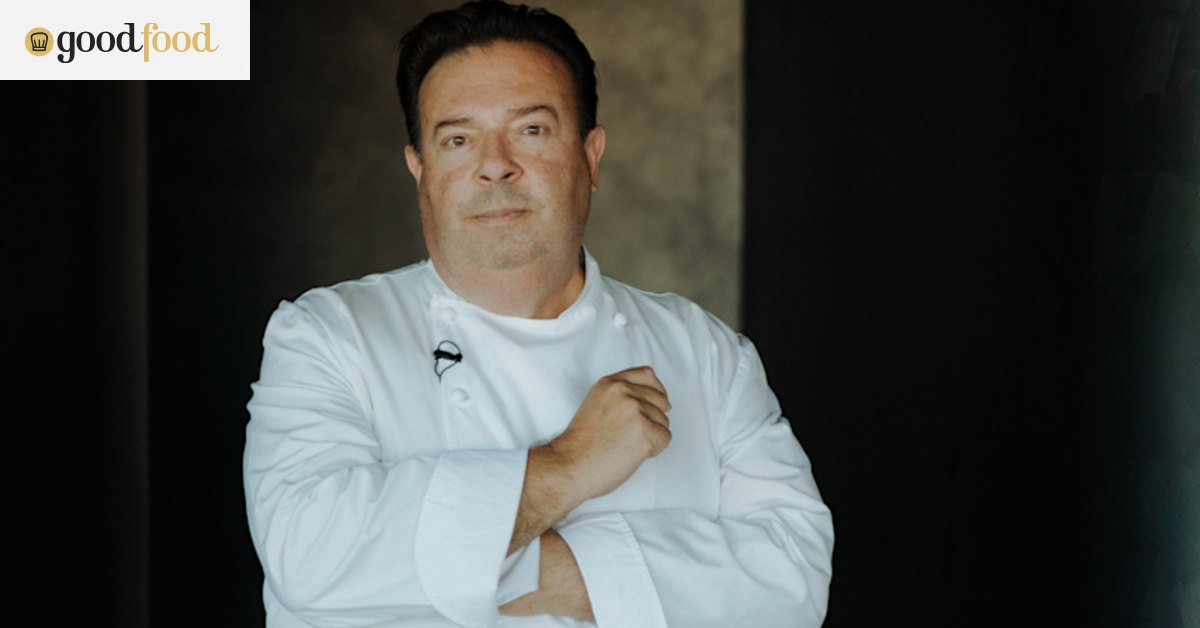
And did it ever. When Quay serves its final course on February 14, it will go out on top with the Good Food Guide’s highest ranking of three hats, a level it has maintained since 2002, soon after Peter Gilmore took on the role of executive chef. No other Sydney restaurant has come close to equalling that three-hat run, but Quay’s real legacy is its influence on Australian cuisine, produce and hospitality.
With respect to owner Leon Fink’s acumen, and those Sydney-on-a-stick views, it seems unlikely the veteran restaurateur could have predicted Quay would last this long. How do you predict a talent like Peter Gilmore, who overhauled a French and vaguely Mediterranean menu to become the benchmark for modern Australian cooking?
Gilmore will serve bone marrow noodles with mud crab, peanuts, sesame and koji as part of a $365 tasting menu in Quay’s last week; a very different pitch from the $24.50 tripes Lyonnaise cooked in beef stock in Tony Bilson’s first year.
Restaurant reviews, news and the hottest openings served to your inbox.
The restaurant isn’t closing because staff have taken their feet off the pedals. Far from it. Rather, according to Fink, it’s due to a combination of sluggish inbound tourism, an explosion of great neighbourhood restaurants since COVID, and an overall shift in Sydneysider eating habits towards more simple food. The rising labour and produce costs of running a fine-dining restaurant are major contributors, too.
Guests who managed to score a booking for the final week will be treated to a return of the snow egg – Gilmore’s masterpiece of granita, ice-cream and toffee meringue served in a stemless chardonnay glass. When it was benched eight years ago in the name of innovation, it felt like Elton John had decided to ditch Tiny Dancer from his set. But it’s Gilmore’s quest for the new – new ingredients, new techniques, new flavour combinations – while staying true to his point of view that has ensured Quay has long been a global leader in its field.
“It’s been a great privilege to have this beautiful venue on Sydney Harbour to represent Australian food,” says Gilmore. “I love that I’ve had the freedom to be able to play around with ideas and flavours. The freedom of cooking in Australia is that we have multicultural influences and amazing produce. For me, it’s about finding layers of texture, beautiful flavours and harmony.
“What I’m probably most proud of is the 700 or 800 chefs who have come through the kitchen at Quay, and hopefully I’ve given them some inspiration, some training, and they’ve gone out into the world and done their own thing.”
Indeed, many of those chefs did take lifelong lessons from the intricacy of Gilmore’s dishes and the meticulous structure of the kitchen.

Sander Nooj (owner-chef of two-hatted Yellow in Potts Point), Christopher Thé (founder of Black Star Pastry and Hearthe) and Analiese Gregory (due to open a 10-seat restaurant in the Huon Valley any moment now) all had career-defining stints at Quay, as did Nicholas Hill, owner-chef at Paddington’s hatted Porcine restaurant and winner of the prestigious Bocuse d’Or Golden Knife 2025.
Having previously worked in smaller, more nimble operations, including The Ledbury in London, Hill recalls how the first thing that struck him at Quay was the setup.
“It was so interesting to see. There were 28 or 30 chefs on the roster, there were four sous-chefs, a whole team for pastry with its own little kitchen. One guy did the snow egg the whole time, one person did the chocolate cake the whole time,” Hill says. “I think at the time I probably didn’t fully appreciate it. I certainly appreciate it now.”

What’s striking about Gilmore’s cooking isn’t just the layering of flavours, it’s the textures. It’s the way the subtlety of koshihikari rice combines with the crunch of sea cucumber, or how, in his hands, scallop and pork jowl can mimic each other.
“The big one for him was always texture,” says Hill. “Many chefs of that level understand flavour, but I remember speaking with Brett Graham [The Ledbury] and Isaac McHale from [London’s two-Michelin-starred] Clove Club and those two guys always said to me that Peter Gilmore had one of the best palates in cooking in the world.
“It’s a restaurant that won’t ever happen again, especially with the heights it got to. I don’t think we’ll ever see another Quay.”
Part of Quay’s success, and its legacy, was down to the relationships Gilmore built with specialty makers and growers. His quest for unlocking deeper layers of flavour led him to Paul and Idylle Lee, who through Table 181, introduced him to small-batch, artisanal Korean sauces, called jangs, along with a range of hand-harvested seaweeds, all of which added depth and complexity to his dishes.
His relationship with small growers, including Palisa Anderson of Boon Luck Farm near Byron Bay, would see the likes of variegated “pin-striped” purple peanuts adorning a two-bite tartlet.
Gilmore’s curiosity meant that Quay was often the first place diners would see previously unheralded or underrepresented ingredients before they became more widespread: just a few months ago, the chef fast-tracked penshell razor clam onto the menu, giving it a starring role in an opening dish of pearl meat, oyster cream, licorice kombu, shiso buds and Murray cod roe. Thanks to him, we’re more likely to see more chefs back the clam’s cultivation.
‘It’s a restaurant that won’t ever happen again, especially with the heights it got to. I don’t think we’ll ever see another Quay.’
Nicholas Hill, Porcine
One of Gilmore’s enduring legacies, though, stems from his deep interest in heirloom varieties of plants. The chef became an avid home gardener, and over a decade working with Dylan Abdoo at Newcastle Greens, worked to bring rare and exotic breeds – red orach, asparagus pea flowers, golden honey snap peas, bronze corn – to commercial viability, by committing to buying out whole crops. “That catapulted our businesses into the numbers and sizes that I’d never seen before, you know 8000 of this, 8000 of that,” says Abdoo.
“Being able to supply Quay has been the cherry on top for us. There are at least 20 chefs in the kitchen, those chefs then move on and go other places, we’re all in WhatsApp groups and talking, so it’s just that carry-on effect,” he says.
“There’s so much business that comes from supplying a restaurant like that, not only from the social media platforms because your stuff’s on those plates, but also from the chefs that move on to other venues, because to them, it’s second nature to use me and to use our business and use our farm.”

But a three-hatter isn’t built on its chef alone, and kudos must also go to Leon and his son John Fink for their vision and execution as restaurateurs. The front-of-house team has long been poised, charming and sure-footed, led by manager Michael McMahon in early 1990s, through to Josef Neumeier today.
Wine director Amanda Yallop, who was named Good Food Guide Sommelier of the Year in 2025, has helped develop one of the great Australian cellars while bolstering not only hospitality talent in restaurants, but also winemakers, grape growers and the drinks industry as a whole.
Then there are the architects, designers, ceramists, chairmakers and artists who have contributed over the years, sometimes with pearl-clutching results. Quay will also go down as the only Sydney restaurant to have a Herald story published about a change of carpet. (Specifically, in 2007, when the George Freedman-designed multicoloured “disco” carpet was replaced with an aubergine deep-pile that took six months to choose.)
The site’s new leaseholder will be Australian Venue Co., which operates Squire’s Landing in the same waterside building, plus Kingsley’s Woolloomooloo and more than 200 other bars and pubs across the country. A spokesperson for the group could not provide any details regarding plans for the site, but it will almost certainly not be as ambitious as the past 37 years.
As for what losing Quay means for the wider restaurant scene? “It’s the longest-standing three-hat restaurant in Australia, and it’s going to be hard to knock that one off – I think Tetsuya’s was the only other one that came close and Pete exceeded that. It’s a knock-on for training, for everything, so it’s a loss,” says Abdoo. “It’s an icon.”