

Opinion
Recently, two of the most popular podcasters in the world sat down to discuss an issue currently preoccupying demographers around the world: what is to be done about declining birth rates.
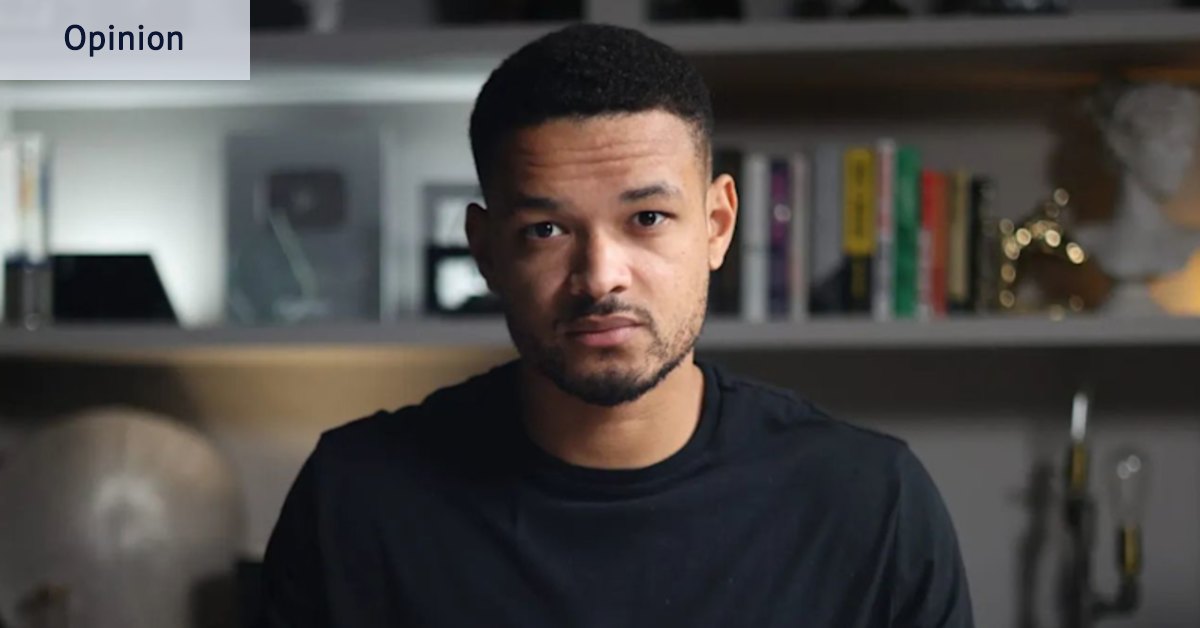
On The Diary of a CEO, which is streamed by 3 million people daily, among the top 10 podcasts in Australia and the second-most downloaded series in the world, host and entrepreneur Steven Bartlett waded into the complex topic with his guest Chris Williamson, a one-time Love Island UK contestant turned podcaster.
“It’s a function of a lot of things,” Williamson said of the decline being seen across Western countries. “Specifically, women’s socioeconomic emancipation into the workforce and higher education means that at 18, the first thing you [women] do isn’t get married.”
To be fair to Bartlett and his band of pseudo-intellectual mindset expert pals, the issue they are seemingly so concerned about is not an imagined one. In many countries across the world, the birth rate is well below the 2.1 replacement figure – the number of births a woman needs to have to maintain a population – and rapidly dropping. According to the Australian Bureau of Statistics, we hit a record low of 1.48 in 2024. In the UK, it’s even worse at just 1.41, while the United States fares nominally better at 1.6.
But this confected simplification of what’s behind the decline (narcissism, selfishness, feminism) and who’s to blame (women, it’s always women), is.
Williamson, who is 37 and child-free, said that “an anti-family message” is also partly responsible, citing the content of a single female TikTok creator from the platform’s 2 billion users as evidence for his position.
Unfortunately for Bartlett, an earlier episode of his podcast on the same topic (but with a different male guest) has resurfaced and paints an even more unflattering portrait.
“A huge amount of men between the age of 15 and 50 will not pass on their genes. They will effectively die out of the gene pool … Many people will go, ‘well that’s evolution’. But I want to understand if there’s a counterpoint to that. Should society intervene?” Bartlett asked last year.
“In the short term, we’re going to have a lot of men who are disillusioned, that become incels, find themselves in pockets of the internet that are resentful – all those kinds of things. But should society intervene to course-correct that? Should we put systems in place to make sure that those men meet partners?”
Bartlett might not have said the quiet part out loud – is he really open to governments restricting women’s bodily autonomy and freedoms in some kind of Handmaid’s Tale remake if it means men can become fathers? – but he didn’t have to. The message came through loud and clear all the same, and it is little wonder people are now asking if one of the world’s best-known podcasters is actually just a Trojan horse for the so-called manosphere.
Podcasters like Bartlett and Williamson have confused the desires of their superego with their id. For them, fatherhood appears to be first and foremost a vanity project that literally allows them to see themselves in others. If you’re someone who is never satisfied, who loves mindset coaching, motivational speakers, is always trying to optimise, and whose income and financial success is tied to how many people like the sound of your voice, having children who see you as their hero and look up to you is probably highly appealing.
But this tradwife utopia is completely adrift from the real world where, overwhelmingly, both parents work not because women are career-obsessed narcissists, but because the current reality means most households with children cannot survive on a single income and flexible working arrangements for men are miles behind what’s offered to women. It ignores the existing experiences of mothers, and the fact that it’s not just women who are making different choices from their parents’ and grandparents’ generations.
In Australia, the decline can be explained by two predominant demographics: women who are choosing to have no children at all, and people who are having children later in life.
Other common reasons cited by these women for the decision to either not have children or to have fewer children and start their family later in life include the cost of raising a family, the impact having children has on their career, the availability and affordability of childcare, climate change, and the difficulty of finding a partner and maintaining a healthy relationship long enough to get to the point of having children.
The problem with this last point, which experts around the world have reported as being an issue for men and women, is that for Bartlett’s thriving business model to continue to work, he needs men to give him around six hours of their free time each week to listen to him and his mates. Time that, if they were to go out and form real-life offline relationships, could be jeopardised.
Like most social issues, the real reasons driving people’s decisions are varied and complex.
When put in the context of declining birth rates being an issue of male genetics being lost forever, the lack of peer-reviewed research, and absence of subject-matter experts and women offering personally informed counterpoints on The Diary of a CEO actually makes perfect sense. It isn’t accidental, it’s essential if Bartlett wants this deeply flawed argument to stand a chance. Because for this idealised version of fatherhood to exist, the reality of parenthood has to be absent.
Katy Hall is The Age’s deputy state topic editor.
The Opinion newsletter is a weekly wrap of views that will challenge, champion and inform your own. Sign up here.
 Katy Hall is deputy state topic editor. She was previously the deputy opinion editor for The Age.