
You have reached your maximum number of saved items.
Remove items from your saved list to add more.
Save this article for later
Add articles to your saved list and come back to them anytime.
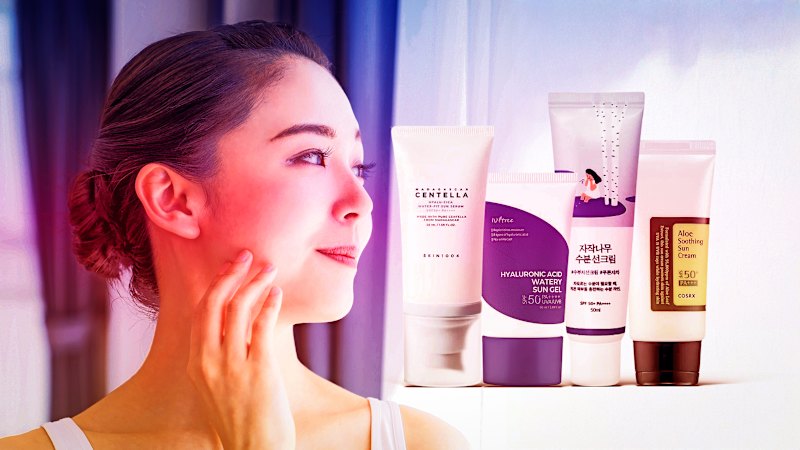
If you’ve walked into an Asian beauty retailer recently, you might have found one category was noticeably absent: sunscreen.
Indeed, despite growing interest in Asian beauty – and South Korean skincare in particular – most of their sunscreens aren’t approved for sale in Australia (though consumers can legally import these sunscreens for personal use).
Australians are the second-largest consumers of Korean beauty products per capita in the world, second only to Koreans, according to a 2024 report from Future Market Insights. The international market is a significant pillar of the South Korean economy, with exports for cosmetics surpassing US$10 billion ($15 billion) in 2024.
Professor Robyn Langham, the TGA’s chief medical adviser, says Australia has strict regulations for sunscreens due to the country’s harsh UV.
“The reason why there is a system in place for therapeutic use of sunscreens is because of the very high rate of skin cancers in Australia, and other sun damage. So it’s really, really important when sunscreens are used in Australia that, where they are claimed to be therapeutic, they have a regulatory framework behind them.”
So, why can’t Korean sunscreens be sold in Australia? How do they differ from Australian ones?
Here’s what you need to know.
How are Australian sunscreens regulated?
In Australia, sunscreens are regulated as medicines, meaning sponsors (the term used by the TGA for manufacturers) must prove their safety, efficacy and stability.
In order to be approved for sale, brands must submit evidence to the TGA from a laboratory of their choosing to show their product meets both the Australian and International standard (ISO 24444) for sunscreens.
A core tenet of this Australian standard (setting it apart from other countries, including South Korea), is that all sunscreens must be broad spectrum (protecting against both UVB and UVA rays).
Australia also has stringent standards around the requirements to market a certain sun protection factor (SPF). In order for a brand to claim SPF50+, for example, it must actually carry an SPF60.
If applied correctly, a sunscreen with SPF30 will filter 97 per cent of UV radiation, while SPF50 will filter out 98 per cent.
How are Korean sunscreens regulated?
Odile Monod, a South Korea-based beauty marketer who writes about the industry’s trends, regulations and history, explains that in South Korea, “sunscreens are legally classified as ‘functional cosmetics’, which is a regulated category distinct from ordinary cosmetics.”
These are “products that provide specific benefits beyond basic cleansing or moisturising and that are intended to alter the condition of skin or hair,” and also includes products with anti-ageing or skin whitening claims.
Brands must submit data substantiating the safety and efficacy of their sunscreens to The Korean Ministry of Food and Drug Safety (MFDS) – their TGA equivalent – who then assesses their validity.
“In particular, efficacy claims must be substantiated through independent testing conducted by laboratories designated by the government (rather than by the brand itself) to prevent any potential bias,” says Monod.
South Korea follows the International ISO 24444 standard for sunscreen testing, which uses human volunteers, and carries inherent variability. Australia follows the same international standard.
In 2021, the industry had its own version of the sunscreen scandal that swept through Australia last year.
While the SPF rating on Australian sunscreens captures both their UVA and UVB protection, Korean sunscreens use the SPF for UVB protection, and the PA (Protection Grade of UVA) system for UVA protection.
PA+ represents some UVA protection, while PA++++ represents the highest level of UVA protection.
Developed in Japan, you’ll find the PA grading system on most Asian sunscreens, as well as in Europe where it is gaining popularity.
The country’s national body in charge of accrediting testing laboratories, the Korea Laboratory Accreditation Scheme (KOLAS), monitors them regularly.
Why can’t Korean sunscreens be sold in Australia?
Rita Sellars, a cosmetic chemist and consultant with cosmetic developers and manufacturers pH Factor, says the key difference is the regulatory frameworks between Australia and South Korea.
An example of this is the advanced chemical filters found in many Korean sunscreens, she says.
“In Korea, sunscreens are regulated as [functional] cosmetics, and so they have access to so many more ingredients and UV filters.”
Because of this, there aren’t as many barriers for getting a new UV filter approved as there are in Australia.
The TGA currently has 30 active ingredients (UV filters) on its approved list.
“The investment that it takes in developing, testing, and launching, it does scare off a lot of brands,” says Sellars of having the TGA approve a new ingredient.
As Korean sunscreens continue to gain popularity in the west, some manufacturers have adapted their products to suit foreign markets.
In the United States, some South Korean brands sell reformulated versions of their sunscreens to comply with FDA regulations. In Europe, where sunscreens are regulated as cosmetics, Korean products can be legally sold.
Langham declined to say if this meant no Korean manufacturers had submitted sunscreens to the TGA for approval, or, if some had but they’d been rejected.
“We don’t have a legislative role in hunting out good products from around the world and bringing them into Australia. Like most regulators, a sponsor must bring a product to be registered,” she says.
But Sellars says her lab has been working with Korean manufacturers “in discussions around the requirements to bring sunscreens into Australia the right way.”
How are Korean sunscreens different?
Generally speaking, Dr Leona Yip, a dermatologist and director of Skin Partners in Queensland, does not recommend Korean sunscreen for use in Australia, which she says is not suitable for our climate and lifestyle.
“Korean sunscreens are formulated and marketed for their cosmetic elegance and lightweight feel, which helps them seamlessly integrate into the daily skincare routine without leaving a white cast,” she says.
“But they also don’t have to really consider a harsh climate like ours, where it’s really sweaty, it’s humid, and we do a lot of outdoor sports and swimming.”
In Seoul, the UV index can climb as high as 10 in summer, whereas in Australia, peak daily values regularly surpass 12. But any UV index above 3 is high enough to cause damage.
Yip also points out that sun safety habits between both countries tend to differ, which in turn informs the nature of sunscreens and the emphasis on things like durability and water resistance compared to cosmetic elegance.
“Asians, particularly Koreans and Japanese, are very disciplined with their sun protection. They’re really good with their sunscreens. They’re disciplined with their hats, the umbrellas, and their clothing.”
By comparison, Cancer Council data found almost half of Australians aren’t using adequate sun protection.
For people who spend most of their time indoors, like office workers, Yip says Korean sunscreens may provide adequate protection.
What about water resistance?
In addition to proving the validity of SPF claims, Australian sunscreen brands must also back up their water resistance claims. Testing must show sunscreens maintain the SPF level advertised on the bottle after water immersion.
“Waterproof” and “sweat proof” are not permitted, as no sunscreen remains completely intact after water immersion, and even brands claiming four hours of water resistance say it’s important to reapply every two hours.
Australian standards are more stringent than South Korea, where regulations are more closely aligned to those of Cosmetics Europe. Korean law regulates two kinds of claims, says Monod:
- “Water resistant” (내수성): The product was tested to maintain at least 50 per cent of its advertised SPF value after 40 minutes of water immersion.
- “Durably water resistant” (지속내수성): The product was tested to maintain at least 50 per cent of its advertised SPF value after 80 minutes of water immersion.
However, Monod points out Korean brands are free to translate water resistance claims into English as they please, so many products will claim to be “waterproof” despite only meeting the requirements above.
How to choose a sunscreen
If you want to be reassured a sunscreen you’re buying has been tested and approved for use in Australia, Langham says consumers should look for “AUSTL” or “AUSTR” on the bottle.
You can also check the ARTG database for your sunscreen.
“It is important for consumers to be aware that there are no guarantees about the safety, quality or efficacy of these therapeutic goods that are not approved for supply in Australia,” said a spokesperson for the TGA.
Given the recent recalls of Australian sunscreens, experts recommend consulting the TGA website for affected products.
Importantly, Sellars says consumers should “not rely on sunscreen alone.
“Sunscreen is just like a filter. And I say that because we call them UV filters. They don’t necessarily protect our skin all day, every day. You can lather up as much as you want, but you need to do that in combination with hat, clothing, shade, and timing. That all matters.”
If you do choose to use a Korean sunscreen, Monod says it’s important to buy from “reputable retailers, as there are many counterfeit Korean beauty products online, particularly on large marketplaces and third-party platforms.”
She also recommends looking for the characters “기능성 화장품” (functional cosmetic) on product packaging, which indicates a product has been approved by South Korea’s MFDS for safety, efficacy, and UV protection claims.
Make the most of your health, relationships, fitness and nutrition with our Live Well newsletter. Get it in your inbox every Monday.
You have reached your maximum number of saved items.
Remove items from your saved list to add more.