
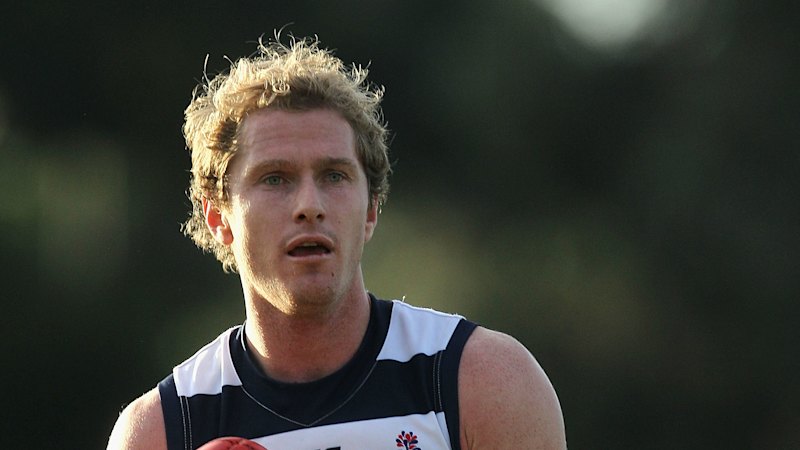
Former AFL star Troy Selwood made a selfless decision to ask for his brain to be donated to concussion research when he died.
Selwood signed off on the request in November 2021, four years before he took his own life, stating that it was his “wish to donate my brain for research for concussion in sport if possible”.
The former Brisbane Lions player suffered a series of heavy knocks to the head during his AFL career.
He is believed to be the first AFL player to have made a request in his will to donate his brain to research.
Selwood, who played 75 games for the Brisbane Lions after he made his debut in 2005, was remembered by his twin, Adam Selwood, a former West Coast Eagles player, as his “built-in best mate” following his death in February last year.
Months after Troy’s death, on May 17 last year, Adam Selwood also died by suicide in Western Australia.
He played 187 games for West Coast from 2002 to 2013, and was part of the club’s 2006 premiership win against Sydney.
Troy and Adam are the siblings of former AFL footballers Joel and Scott Selwood.
The Selwood family is beloved across clubs and the AFL, and the deaths of the twins devastated the football community and prompted conversations about mental health.
Currently, chronic traumatic encephalopathy (CTE) can only be diagnosed after death. It is a degenerative brain disease associated with repeated mild traumatic brain injuries such as suffering head knocks in sports matches.
Its symptoms include cognitive issues such as memory loss, depression, anxiety, suicidal thoughts and changes in behaviour.
Last year, West Coast Eagles premiership player Adam Hunter was posthumously diagnosed with CTE.
Hunter’s mother and stepfather, Joanne and Rod Brown, said the 24-year-old had mentioned several times that he believed he had the condition after enduring countless head knocks and concussions over his life.
They decided to donate his brain to the Australian Sports Brain Bank for research in February last year following his death.
Preliminary coronial findings indicate Hunter died from drug-related heart failure. He was 43.
CTE was first observed in boxers in the 1920s and in the years that followed, research increasingly focused on American football players and, more recently, Australian contact sports including NRL, AFL and rugby union.
A number of AFL players have been posthumously diagnosed with the condition, including Graham Farmer, Shane Tuck and Danny Frawley.
Frawley and Tuck died by suicide, while Farmer died from a long battle with Alzheimer’s.
A class action against the AFL involving 100 former players is under way.
The Selwood family declined to comment.
If you or someone you know needs support contact Lifeline on 13 11 14 or Beyond Blue on 1300 22 4636. In the event of an emergency dial triple zero (000). Support is also available from MensLine on 1300 78 99 78.
 Melissa Cunningham is a crime and justice reporter for The Age. She has previously covered health.Connect via X or email.