

What the science tells us, Walls says, is that overall, eating fermented foods could have health benefits if consumed as part of a “healthy diet”.
And it’s not just about the bacteria. Fermentation also produces certain types of beneficial “organic acids, polyphenols and other compounds”.
Ali Rashidinejad, associate professor at Massey University, says we all should aim to have at least one serving of a fermented food a day.
But in supermarkets and health food stores, some of these products can be priced in the double digits. At Woolworths in Auckland, kimchi costs around $10 to $14, and sauerkraut is between $7 and $14. At Pak’nSave, kimchi costs $9 to $13 and sauerkraut is priced around the same as Woolworths.
While purchasing a ready-made product saves time, it’s not necessary. Homemade fermented foods cost a fraction of what you pay in store, and it’s simple to do; in a lot of cases, you only need two ingredients to get going (the produce you want to ferment plus salt).
Some people believe that fermenting food yourself is unsafe. Rashidinejad says this is not true if fermentation is done properly in a controlled environment. In fact, the technique has been used to preserve food for thousands of years.
The academic also cautions against thinking all fermented foods are “super healthy”.
“In reality, some fermented foods do not contain live microbes by the time we eat them. And, health benefits, of course, depend on the type of food and how it’s made,” he says.
Here are a few fermented foods you can give a go at home, including a guide to how easy – or difficult – it might be, according to Amber Fairweather, founder of Symbiota, a local company specialising in fermented products for the home.
But whatever you try, don’t rush the process.
“Fermentation is about patience and letting nature do its work,” says Rashidinejad.
Sauerkraut
Difficulty level: Easy
Cost effectiveness: 10/10
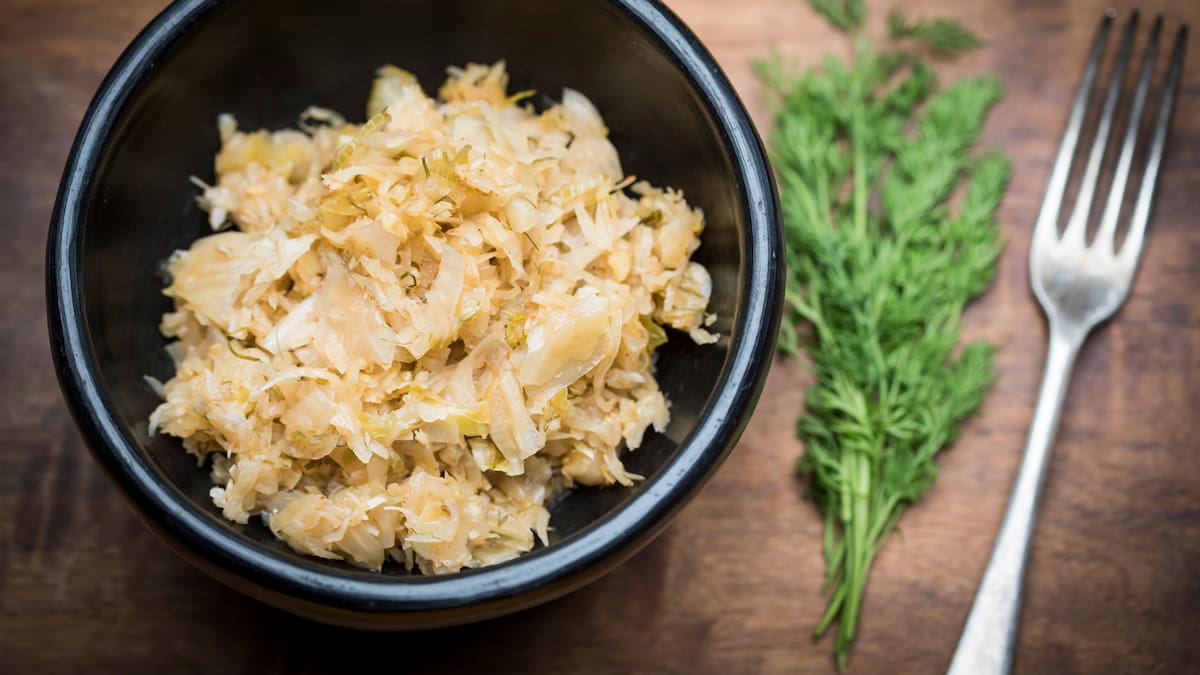
All that is needed is cabbage and salt to make this fermented food, which is thought to have originated in China around 2000 years ago. It’s tangy and a bit salty. You can add it as a garnish to curries or toast toppings, add to sandwiches or just as a side.
Fairweather says the ideal portion of salt is 2-3% of the weight of the cabbage. You can also add other ingredients for flavour, such as caraway and apple. After adding to a clean jar and putting a weight on top, “the cabbage and salt self-brines”, she says.
According to Fairweather, sauerkraut should be ready after approximately three weeks in warmer temperatures and six weeks in cooler temperatures.
Health benefits: According to Wall, sauerkraut produces beneficial compounds through fermentation, like probiotic bacteria, which help food to be more digestible and improve gut health. It also produces organic acids and polyphenols, which are beneficial for immune health.
Kimchi

Difficulty level: Medium
Cost effectiveness: 8.5/10
This salty and fiery Korean concoction of fermented vegetables (and sometimes meat like pork and seafood) has surged in popularity in New Zealand over the past decade, though its recipe is thousands of years old. Its variety of vegetables, aromatics like ginger and garlic, and chilli make it a memorable side dish with a powerful punch of flavour.
Fairweather stresses that food like kimchi is fermented in an anaerobic environment, meaning free oxygen cannot flow. This is to help the microbes that thrive without air.
“In terms of produce, you can use a type of Korean cabbage, like Napa, spring onion, ginger, pepper flakes and salt,” says Fairweather. She suggests fermenting for around three weeks at a temperature cooler than 21°C.
Health benefits: Aside from probiotics and beneficial compounds, Wall says kimchi is a good source of some nutrients, including Vitamin C.
Milk kefir

Difficulty level: Easy
Cost effectiveness: 5/10
Kefir is a type of fermented milk that has the consistency of a runny yoghurt. To make it, you need to buy kefir grains. These resemble small, creamy beads and are made up of beneficial bacteria and yeasts.
While the cost of kefir grains is more than the price of your average vegetable ($30 at Symbiota), they will “last forever if you look after it,” says Fairweather.
Fairweather says to add the grains to milk, and then let it ferment at room temperature for 12-48 hours.
Health benefits: Adding to the probiotic benefits, Wall says kefir is also a good source of protein and provides other bioactive compounds such as organic acids and peptides.
Sourdough bread

Difficulty level: Medium to Hard
Cost effectiveness: 7/10
Not just a lockdown activity – sourdough bread is one of the oldest forms of bread and is believed to have originally come from ancient Egypt.
“Anyone can start sourdough, but there are so many variables to master,” Fairweather says.
If you already have a starter culture (a combination of activated yeast and bacteria), feed it with a bit of water and flour until it becomes bubbly in texture, says Fairweather. Feed it more salt, water and flour for the loaf and it will likely be ready to bake “within one to two days”.
Health benefits: “The probiotics are lost during the baking process. But the organic acids and polyphenols become more bioavailable through the fermentation process,” Wall says of sourdough.
“It is also said that the fermentation improves the digestibility of the bread.”
Varsha Anjali is a journalist in the lifestyle team at the Herald. Based in Auckland, she covers people, culture and more.