

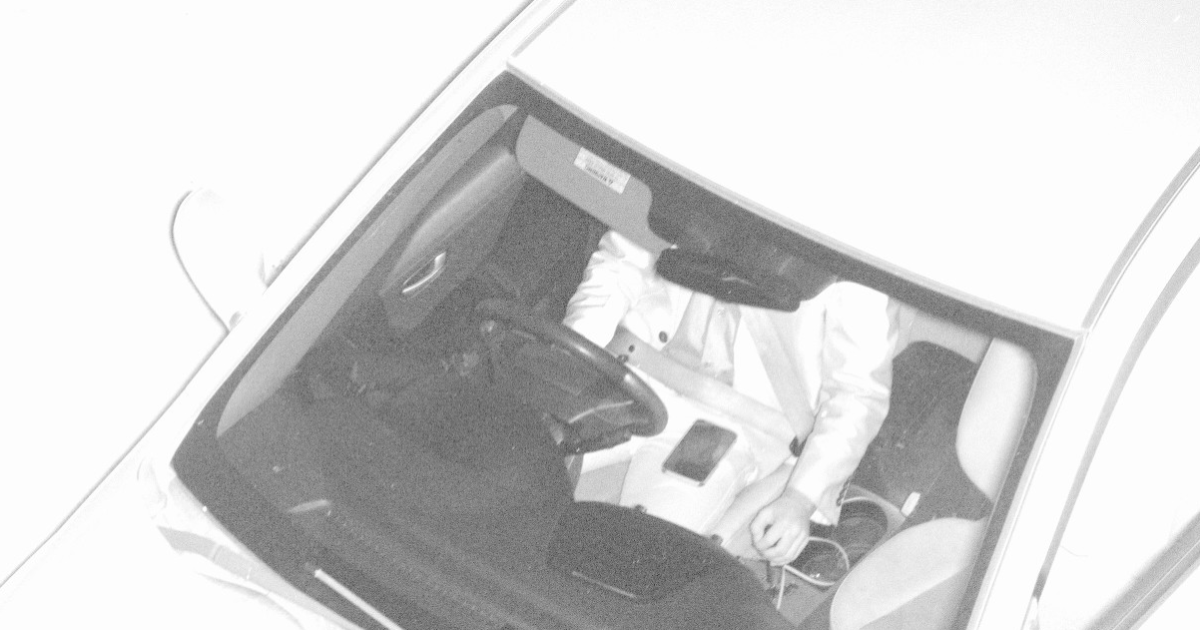
Offenders photographed by Canberra’s mobile phone detection cameras. Photo: ACT Government.
It might feel like you have to mortgage the house when it’s time to renew your rego – and sell your firstborn if you park in the wrong spot – but it could be worse.
You could live in South Australia.
Insurance company iSelect has crunched the data on who in Australia is paying the highest traffic fines for offences like speeding, using a mobile phone, not wearing a seatbelt, and not restraining your furry friend. And it’s not actually Canberrans.
Not that we want to give the ACT Government any ideas …
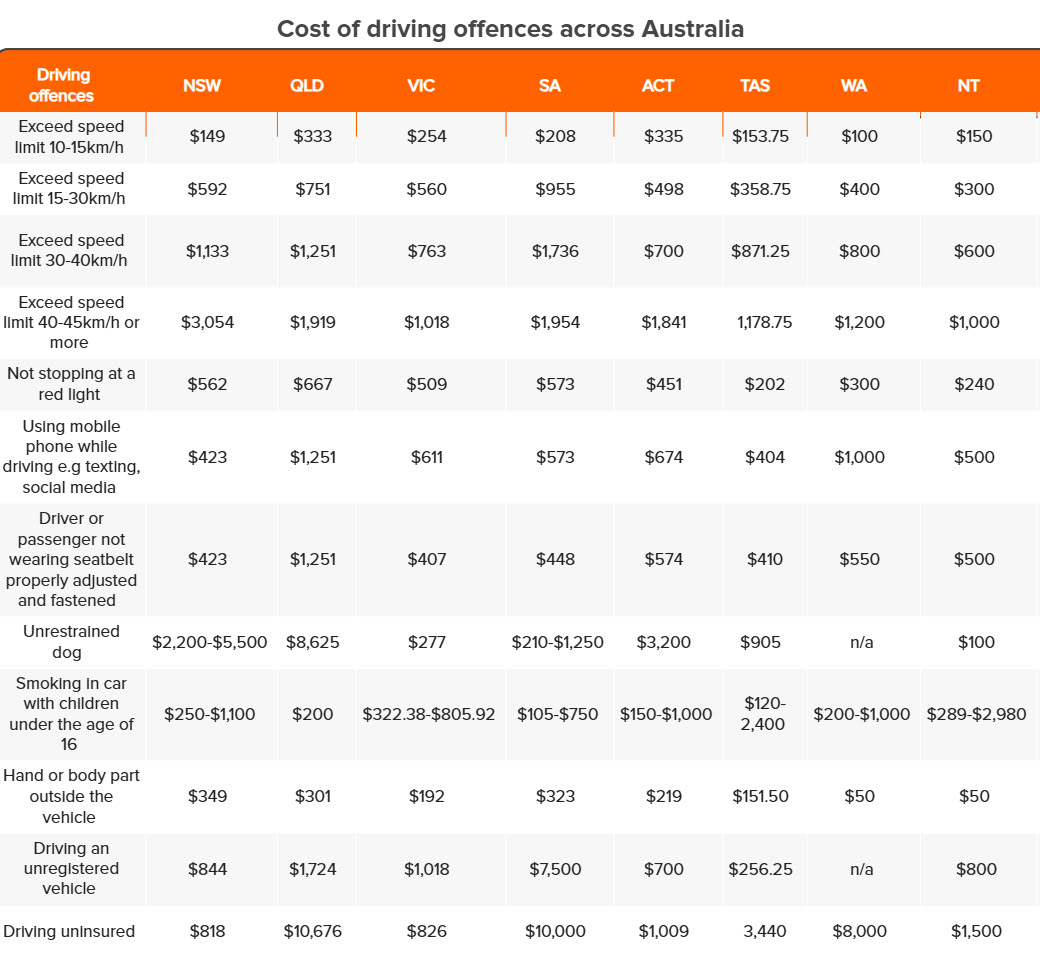
The full data from iSelect on how traffic fines across Australia compare. Image: iSelect.
Speeding fines
Okay, it’s true – for minor speeding offences, the ACT is one of the most expensive jurisdictions in the country.
Exceeding the speed limit by 10 to 15 km/h attracts a $335 fine in the ACT – higher than NSW ($149), Victoria ($254), South Australia ($208), Tasmania ($153.75), Western Australia ($100) and the Northern Territory ($150). Only Queensland is higher at $333.
But then we drop. At 15 to 30 km/h over the speed limit, ACT drivers face a $498 fine, compared with $592 in NSW, $751 in Queensland and $955 in South Australia. Driving 30 to 40 km/h over the limit results in a $700 fine in the ACT – compared with $1736 in South Australia and $1251 in Queensland.
Exceeding the speed limit by 45 km/h or more attracts a $1841 fine in the ACT. NSW has the highest penalty nationally at $3054, more than $1000 higher than any other state or territory.
Red lights, phones and seatbelts
Running a red light in the ACT costs $451, which is lower than NSW ($562), Queensland ($667) and South Australia ($573). Tasmania has the lowest penalty at $202.
Using a mobile phone while driving attracts a $674 fine in the ACT. This is higher than NSW ($423), Victoria ($611), and Tasmania ($404), but lower than Queensland ($1251) and Western Australia ($1000).
Failing to wear a seatbelt or wearing it incorrectly results in a $574 fine in the ACT. Queensland again records the highest penalty at $1251, while NSW’s fine is $423.
Much bigger variations for less common offences
Significant differences emerge for offences such as unrestrained animals and smoking in vehicles with children.
Driving with an unrestrained dog attracts a $3200 fine in the ACT – more than five times higher than the penalty for a human being ‘unrestrained’. Queensland has the highest penalty at $8625, while the Northern Territory records the lowest at $100.
Smoking in a car with children under 16 cops an on-the-spot fine of $250, but can go up to $7500 if challenged in court. In Tasmania, penalties can reach $2400, while in the Northern Territory magistrates can impose fines of up to $2980.
Even relatively minor offences vary widely. Having a hand or arm outside a vehicle window attracts a $219 fine in the ACT, compared with $349 in NSW and just $50 in both WA and the NT.
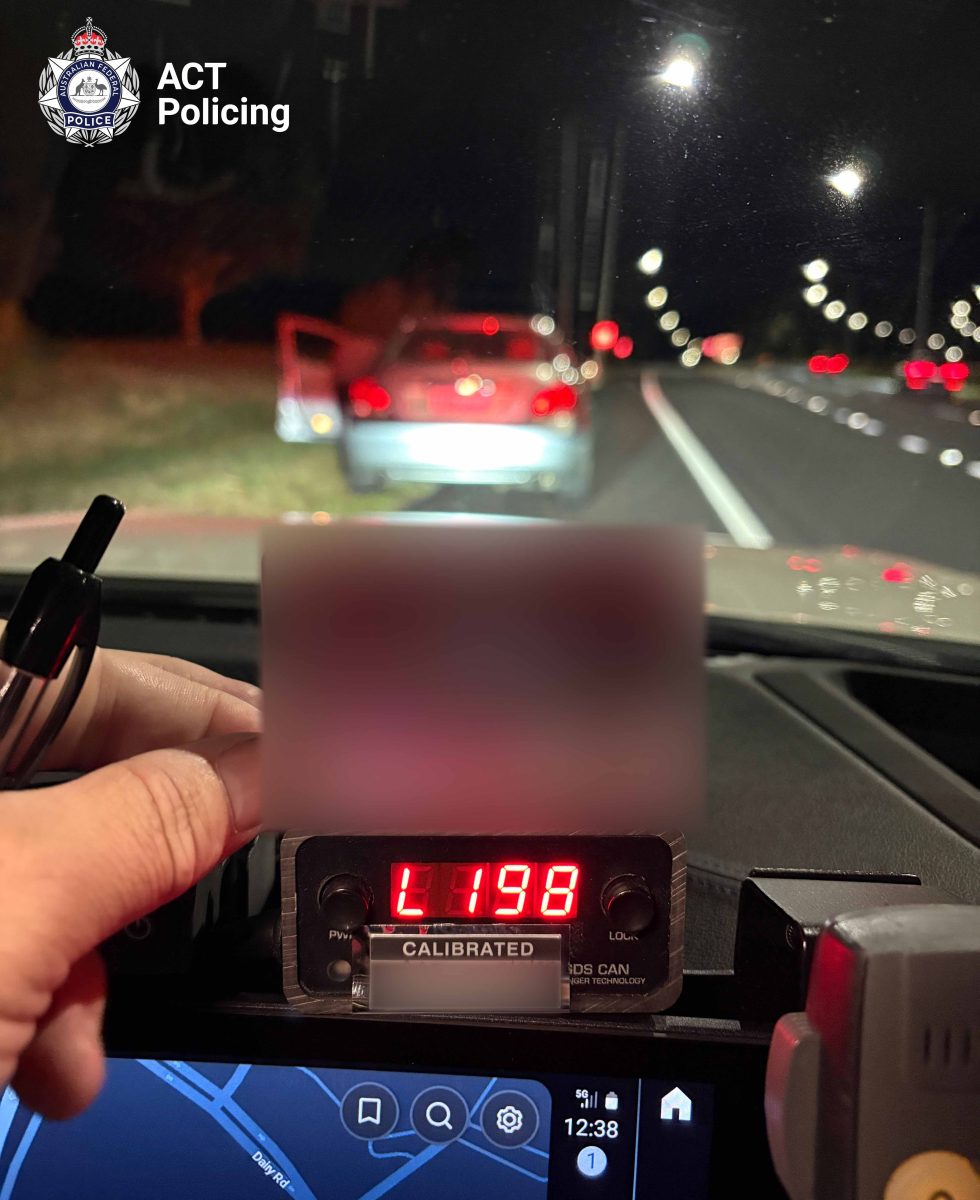
Any speed 45 km/h or more over the limit cops a $1841 fine in the ACT. Photo: ACT Policing.
Unregistered and uninsured vehicles
Penalties increase sharply for unregistered and uninsured vehicles.
In the ACT, driving an unregistered vehicle results in a $700 fine, while driving uninsured attracts a $1009 penalty. Because of how compulsory third-party insurance is included in your rego payment here, you can expect to cop both if you leave your renewal late.
Queensland has the highest uninsured vehicle fine at $10,676, followed by South Australia at up to $10,000 and Western Australia at $8,000. Tasmania’s uninsured fine is $3,440, while NSW’s is $818.

It could always be worse
It goes without saying that if you don’t want the fine, don’t do the crime.
And be thankful you don’t live in Finland. There, motorists are fined based on their income. For businessman Anders Wiklöf, 76, that meant driving 30 km/h over the speed limit cost him $205,000 (€121,000) in 2023.