

You have reached your maximum number of saved items.
Remove items from your saved list to add more.
Save this article for later
Add articles to your saved list and come back to them anytime.
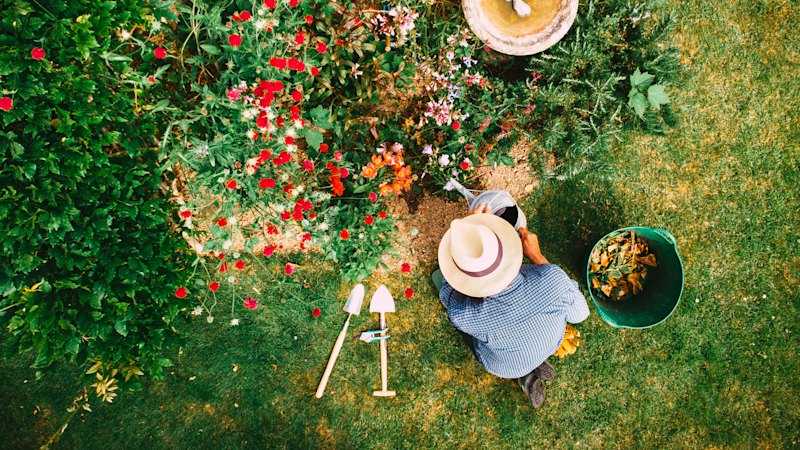
Holidays are good while they last but when they come to an end, nothing brings you back down to earth faster than a neglected garden. After a summer break, plants rarely look as refreshed as you feel. Return home from a stint away and it’s time to give your garden some rest and recuperation.
Start with watering, because many areas will have had little rain. It should be long and deep. Make the moisture penetrate far into the ground to encourage plant roots to grow deeper, too.
A good soaking
Anything wilting should be given a particularly diligent soaking because before you know it, a drooping leaf becomes a crispy leaf and then a dead one. Container plants and recently planted fare yet to become acclimatised to your patch are also particularly prone to drying out fast and will need a good drink.
But you can be more selective with established plants that have coped well in your absence. Resilience in the face of summer dryness depends largely on the type of plant – those indigenous to your area are among the toughest – but it also stems from the sort of soil you have, how much moisture it retains and how hot it gets.
How much water you apply can also be influenced by aesthetics. Brown lawn, if you are up for it, can be left dry for weeks in the knowledge that it is only temporarily dormant and that, when it rains again, it will go green again.
Check the forecast
As for when it does rain, that is also a good moment, counterintuitive as it sounds, to water. By irrigating just before or just after rain, all of the moisture will work its way even further into the ground and make itself count even more.
Just as it’s best to avoid watering during the heat of the day to give the soil and plants more time to absorb the moisture before it evaporates, it’s always good to get in early and water before a string of hot days.
Keeping your soil covered with mulch is also central to slowing down moisture loss. Even though mulch can make it harder for rain to reach the soil, no earth should be uncovered. A layer that is 70mm to 100mm thick is ideal in high summer. Mulched soil stays cooler, moister and more fertile. Even if you applied mulch in spring, it will have started to decompose by now (finely chopped straw disappears especially fast) and it could well need a top-up.
Get clipping
After a summer break, it’s also time to pick up the secateurs. Remove dead flowers and you will be rewarded with new ones. Deadheading – and a little tip pruning – keep the garden feeling lively and dense at a time when many of us are spending long days and evenings outdoors.
But don’t go to extremes. Some bleaching and unruliness can look atmospheric and a sprinkling of drying flowers and seed heads is also good for wildlife. Furthermore, it helps pave the way for more flowers next summer. Nicotiana, scabiosa, sea holly and Verbena bonariensis are just some of the annuals and perennials that will self-seed from those flowers left in place.
While it’s not an ideal time for planting – and by going this late you will need to keep close tabs – dahlias, agastaches and asters are some of the plants that will put on a good show until well into autumn.
In many areas, there is still time to plant and harvest fast-growing summer edibles, such as cucumber, zucchini and basil, as well. But food growers who planted summer crops months ago will already be in full harvesting mode if nothing is to be left to waste.
As for those yet to get back into gardening after a summer break, it’s worth casting your eyes over everything to assess what is and isn’t working at this point in summer. And then, when the weather cools and you have picked up your pace, change things so they suit you better next year.
Gardens can be demanding, but they should be enjoyable too.
Make the most of your health, relationships, fitness and nutrition with our Live Well newsletter. Get it in your inbox every Monday.
You have reached your maximum number of saved items.
Remove items from your saved list to add more.