

The study found that “small and realistic” increases in daily activity were enough to reduce the risk of death in a significant number of people.
The study examined data from almost 95,000 middle-aged and older adults in Britain, and 40,000 people from Norway, Sweden and the US.
Researchers, led by academics from the Norwegian School of Sports Sciences, wanted to assess the impact of small increases in exercise on the least active people and on the general population.
The team also analysed reductions in the amount of time spent sitting each day.
‘Significant effect’
Figures from the British arm of the study found that reducing sedentary time by half an hour a day could reduce between 3 and 7 per cent of deaths.
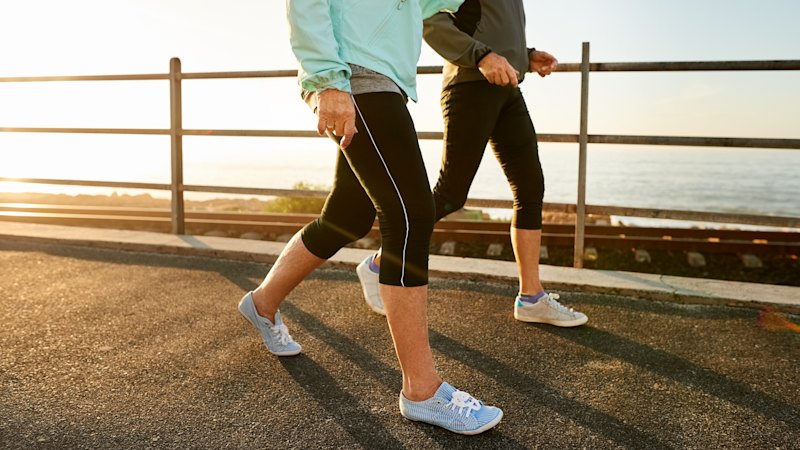
Researchers said “small and realistic increases” in exercise, such as brisk walking, appeared to have a significant effect.
“These estimates provide important evidence on the wide range of public health impacts associated with even small positive changes in physical activity and inactivity,” they wrote.
Dr Brendon Stubbs, senior researcher and physiotherapist at King’s College London, said: “This finding offers hope, especially to the least active. Even small daily tweaks to activity levels can make a meaningful difference.”
Dr Daniel Bailey, reader in sedentary behaviour and health at Brunel University of London, said the findings were “really promising”.
He said the public should be advised that “every minute counts” and it should be feasible for most people to manage an extra five minutes of moderate to vigorous activity daily.
Loading
Even housework counts
He said: “Moderate activities are those that make us breathe a bit heavier and feel warmer. So simple daily activities like a brisk walk, housework or gardening will do the trick.
“And if we want to reduce sitting by 30 minutes a day, this can be swapped for light activities like pottering around the house or a slow walk.
“We should certainly be telling the public that every minute counts.”
The Australian national guidelines recommend that adults do at least 150 minutes of moderate to vigorous activity each week – but only one in five Australians do.
Changes for a longer life
Separate research involving 50,000 older people from Britain found small changes to sleep, exercise and diet could extend life significantly.
The study, published in eClinicalMedicine, identified a number of changes people could make to live a longer life.
Researchers said those who had the best sleep, who exercised most and who had the healthiest diets lived for 9.35 years longer than those with the worst sleep, the lowest activity levels and the poorest diets.
Loading
A “combined dose” of increasing sleep by five minutes per day, just two minutes more of increased moderate to vigorous physical activity and half an extra portion of vegetables could increase a person’s lifespan by one year for those with the worst habits.
Experts led by academics at the University of Sydney gathered information on the levels of activity, diet and sleep of 50,000 people with an average age of 64 who were taking part in the British Biobank study. They were then tracked for an average of eight years.
During this follow-up period, there were 2400 deaths, almost 10,000 cases of heart disease diagnosed, 3000 cases of type 2 diabetes, 7600 cancers, 1500 cases of lung disease and 500 cases of dementia.
“This study demonstrates that small, concurrent improvements in sleep, physical activity, and diet quality were associated with clinically meaningful theoretical gains in lifespan and healthspan,” the authors wrote.
The Telegraph, London