

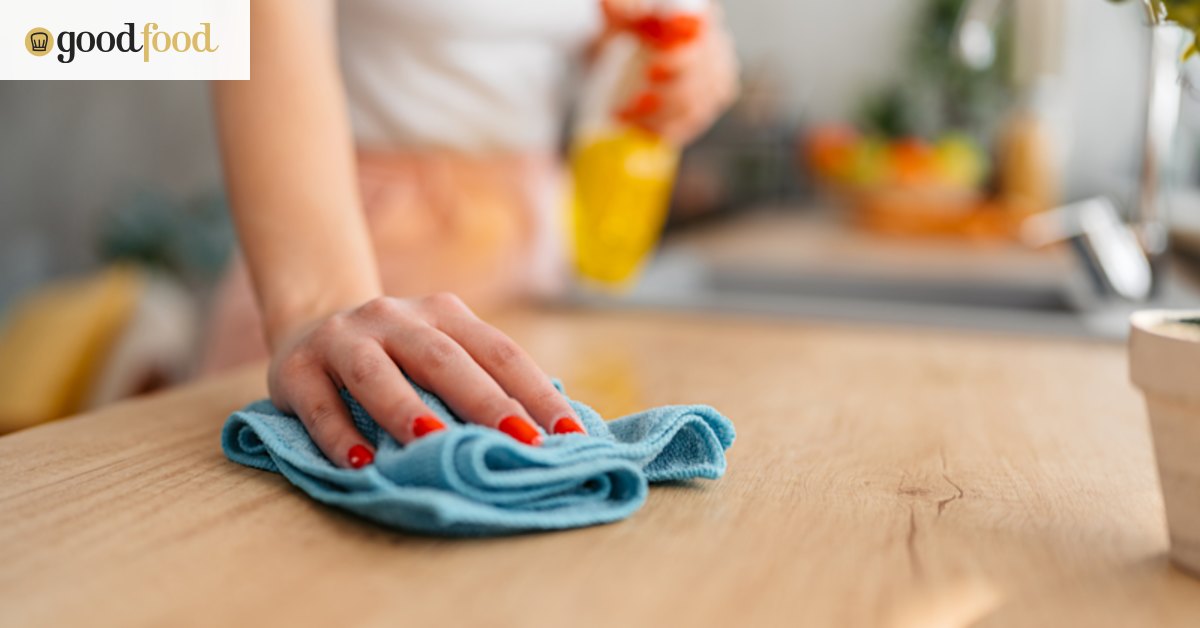
When was the last time you properly cleaned or replaced these potentially germy items? A food safety expert reckons probably not recently enough.
Emily Smith
You have reached your maximum number of saved items.
Remove items from your saved list to add more.
Save this article for later
Add articles to your saved list and come back to them anytime.
You’re spending time, effort and money cooking good food at home – but you might be missing one crucial ingredient: kitchen hygiene.
You might think you keep a pretty clean kitchen. Yet many Australians unknowingly miss the spots and tools in their kitchen that are most prone to contamination by bacteria and other pathogens.
Edith Cowan University food safety expert Nicole Foxcroft says many of our “clean” habits are actually based on myths, and these practices can leave our kitchens crawling with germs and bacteria, even when everything looks spotless.
Bring it back to basics
Foxcroft encourages starting with the simplest hygiene habit of all: washing your hands properly.
“Handwashing is the cornerstone of food safety,” she says. “Make sure you wash your hands regularly when you’re working in the kitchen, particularly before and after handling food, between handling raw and cooked foods, after handling the garbage, after using the toilet or any other personal hygiene actions.”
Key spots and tools you may be missing
Foxcroft says many home cooks unknowingly clean their equipment incorrectly – often overlooking the places where germs thrive.
For example, chopping boards need more than a quick wipe down to eliminate microbes. Dishcloths also collect germs fast, particularly when left damp in the sink.
Even the fruit and vegetable drawers in your fridge, and the containers in your pantry holding spices, flour, sugar and other dry ingredients, are easily forgotten, often being topped up over months or even years without a proper clean.
Two appliances that are neglected most often
Foxcroft warns that blenders and dishwashers can quickly become unsanitary unless they are part of a frequent and rigorous cleaning routine.
People often neglect to disassemble blenders (or food processors) and scrub all the different parts, meaning they’re missing the stuff that gets trapped behind seals or in hard-to-reach crevices. “Microbes can multiply and contaminate the food you place in [appliances] next,” says Foxcroft.
Then there’s the dishwasher, or what she calls “the forgotten workhorse of the kitchen”. “[Communities of microbes] can grow inside the machine if its internal surfaces, seals and filters are not cleaned regularly.”
Her advice: clean your kitchen and equipment thoroughly and often, and replace worn or damaged items when needed.
How often should you replace your plastic containers?
“Any plastic containers that have surfaces that are no longer smooth, badly stained and damaged should be replaced,” Foxcroft says.
She warns against using plastic takeaway containers in the freezer, as they can become brittle and prone to shattering. Instead, choose freezer-safe, food-grade containers.
How often should you replace your dishcloths and tea towels?
Foxcroft recommends replacing dishcloths “when the fibres are starting to come away from the main cloth”.
As for tea towels, it’s time to toss them if they’re “stained (even after being laundered in the washing machine), or holding grease or food particles”.
How often should you replace your kitchen sponges and brushes?
If your sponge or brush is missing bristles or pieces, Foxcroft says it’s time for a new one.
“Be careful of using soft metal scourers, which can break off easily when cleaning and get caught in your equipment,” she warns.
How often should you replace your chopping boards?
“Over time, cutting boards become scored and damaged, which may affect how effectively they can be cleaned,” Foxcroft says. “Once the majority of the board surface is no longer smooth, or it’s retaining grease and blackening in areas, it’s time to replace it.”
And next time you’re searching for a new chopping board, choose the material carefully. Wooden boards have natural antibacterial properties but absorb water over time, allowing bacteria to grow and thrive. Plastic boards are easier to clean in the dishwasher but are more prone to scratches, creating a breeding ground for bacteria. Plastic boards generally need replacing more often.
What if you can’t afford to replace your equipment regularly?
When kitchen equipment becomes damaged or starts to deteriorate, this creates an opportunity for bacteria to grow and hide, says Foxcroft. It’s not always effective to try to clean items when they’re in poor condition or past their expiry date.
This doesn’t always mean buying a new appliance or item, though. Sometimes, replacing the affected part – such as a blender blade or seal – is enough.
“A careful inspection of your equipment before use is a great way to check for cleanliness and any potential physical contamination risks,” Foxcroft says.
While most of us think cleaning means washing away visible food, grease and dirt, this doesn’t effectively eliminate all germs. “This is why sanitising (reducing the microbial numbers) is important.”
The best recipes from Australia’s leading chefs straight to your inbox.
You have reached your maximum number of saved items.
Remove items from your saved list to add more.