
“How is the father?” I ask.
“He will not be alone,” they told me. “He will not be alone.”
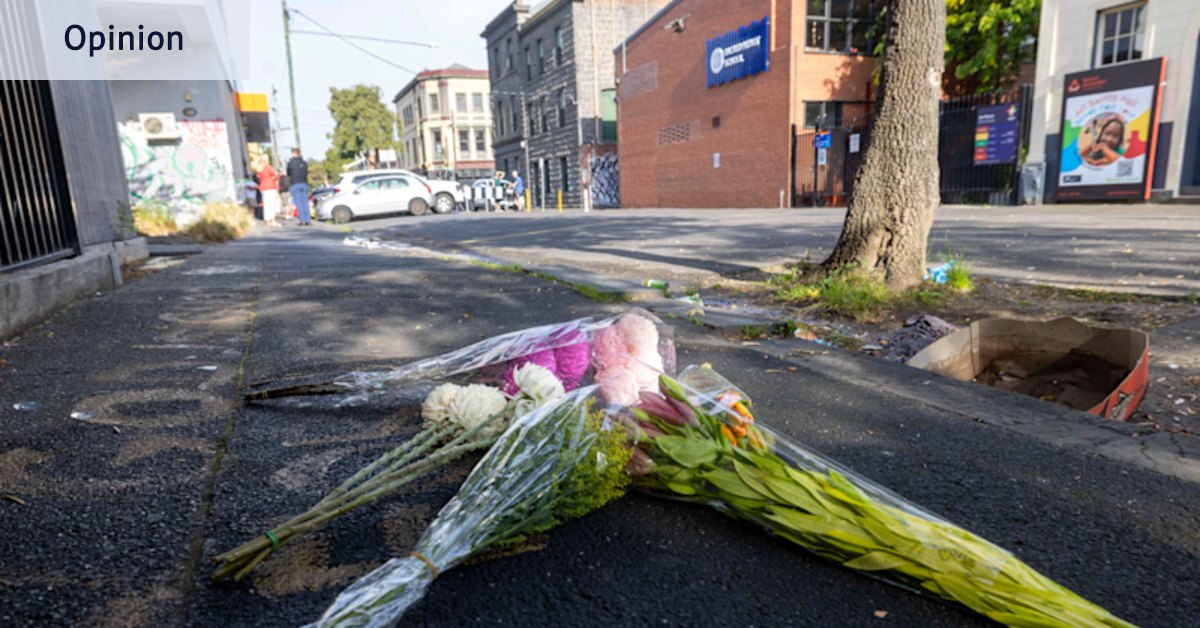
And now I am here, picking up a discarded COVID mask, one blue plastic glove, and a rotting sheet, making space for a memorial for a boy now gone. There is something deeply necessary about this mucky work, it cannot not be done, and yet it also feels conspicuous and ridiculous in equal measure.
How me putting my hands into this drain of sodden detritus helps the father or the soul of the boy is unclear, but I can’t not do it.
When I am finished, I turn my bike toward home and hear a man yelling at a puppy. The dog is tiny and exhausted and the man is cursing at him, lifting him by the lead from his neck.
“Stand up,” he yells. “Stand up.”
I take off my helmet and rest my bike against a pole.
“Can I say hello to your pup?” I ask, and immediately he softens.
“Yeah,” he says. “Yeah.”
“What’s his name?”
“This is Charlie.”
“Charlie’s only a baby,” I tell him. “He’s going to get tired. It’s OK for him to sleep.”
“Yeah, yeah,” the man nods, then picks up his dog and runs for the tram.
A woman walking past – clean as a daisy, with bright, clear eyes – says, “Thank you. Thank you for saying something. I was afraid. I didn’t know what to do.”
“Just say something,” I offer. “But say it with love. That usually works. But always say something, if you can.”
I realise I’m beginning to preach. It is definitely time to go home.
I take one last look up at the towers, where the father sits, in his terrible, terrible grief and I bow my head, for just a moment and then take the lanyard from around my neck and ride off, into the heat of the day.
Alexandra Sangster is a minister, facilitator and Darebin councillor.