

You should also be aware that certain gifts might pose safety risks. That includes anything with button batteries or magnets. Small objects might also pose a choking risk – think tiny Lego for a toddler. When in doubt, follow the manufacturer’s age recommendation.
2. Do have realistic expectations – some gifts take a while to land
Don’t expect a gift – especially a somewhat unexpected gift – to be the one thing that a child wants to play with immediately (the exception, with very young children, is usually the box that something big came in, generally a sure hit). Very frequently, it’s the unexpected item, which lies dormant for a while in the child’s life, that ends up being the thing that’s picked up later and investigated.
3. Do talk it through if the ‘ask’ is too expensive or inappropriate
This is probably the hardest one, and it’s got to be case by case, depending on the kind of gift and the family situation. It’s okay to say frankly to your child that some particular item is too expensive, or costs more than your family would spend on such a thing, but it’s also okay to consider bending the rules a little now and then if the actual cost isn’t the problem so much as the idea of spending it on that particular item. Talk it through and explain your reasoning.
So what should you say if your child says, “Other kids in my grade have one.”? Have this conversation long before holiday gifts come up, and keep on repeating your message: “This is what we do in our family.” Don’t ask what the child would do if other kids in the class jumped off a bridge. It’s a notoriously losing strategy. And be at least occasionally open to negotiation.
4. Don’t be absolutely bound by what the child already has and knows
You should suit your gift to the child’s interests and preferences – we all like to feel seen and known by the people who love us. But it’s also okay to allow yourself to push the envelope a little – a new fantasy series, a different crafts kit. A good gift is something the child will enjoy. A great gift might be something a little unexpected that the child really comes to enjoy.
So go ahead and give gifts that you enjoyed when you were young – the books you loved, the games you played. Don’t assume they will automatically be out of date and uninteresting. They might work or they might not, but many kids will be at least a little intrigued by the idea of a parent – let alone a grandparent – as a child, and at the very least, there can be some entertaining stories told about those long-ago children, and you can always reread the book yourself.
5. Don’t overthink it
This is supposed to be fun for all concerned.
As with many aspects of parenting, it’s possible to overthink the politics and parenting strategies of gift giving. You can worry about whether to give way to a child’s campaign for a gift that is too expensive or “too old for you” or otherwise inappropriate. But while these considerations might occasionally require some thought and discussion, first and foremost, the focus should be on celebration and at least a sprinkling of indulgence. Otherwise, what’s the point?
The point is supposed to be fun, pleasure and enjoying a special occasion. That’s why we ritualise gifts and wrap them and generally make a big deal out of it.
6. Don’t worry about spoiling kids with gifts, but do teach them about gratitude and traditions
The task of setting limits goes way beyond giving and getting (or not getting) gifts, and holiday occasions shouldn’t bear the whole weight of it. A child who is not otherwise super-indulged or problematically entitled is not going to be “spoiled” by a gift here or there.
Do weave messages about gratitude, about understanding privilege, about giving back, all through your holiday season – and indeed through the texture of family life. Better yet, model these lessons for your child. Don’t leave them to be attached only to gifts in boxes.
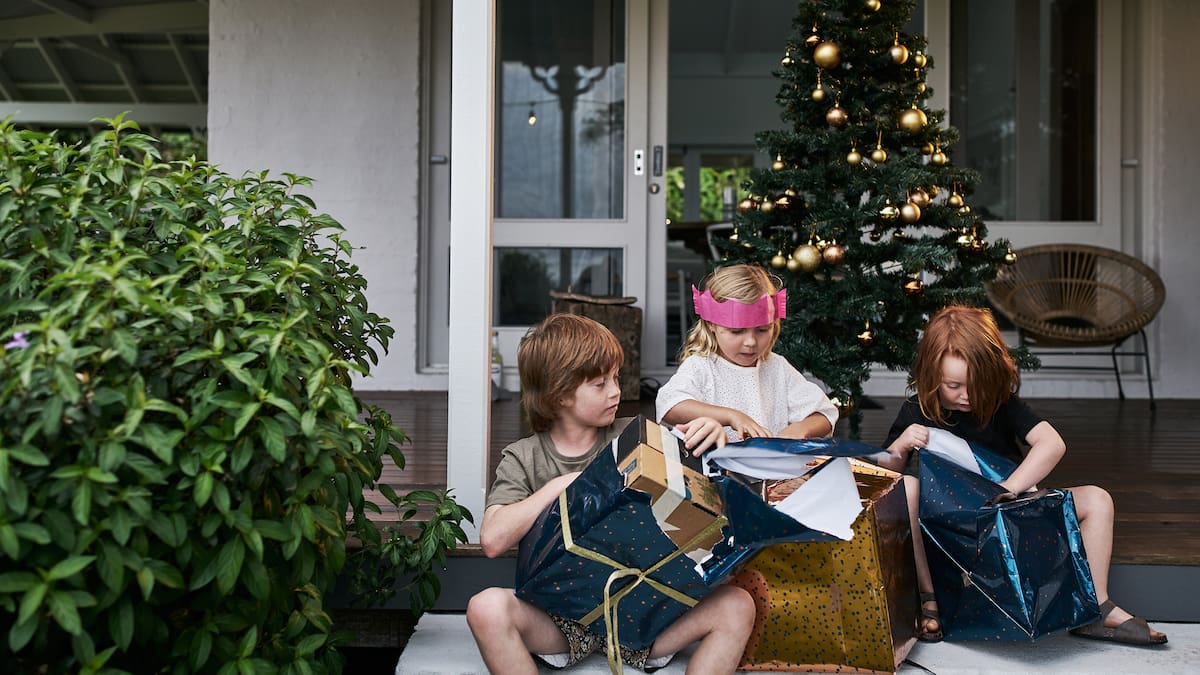
Make it clear that it’s about more than the gifts. Whatever your holiday traditions, the more ritual, the better – and if it’s an occasion where everyone gets presents, it’s always good to stretch it out, unwrap in turn, and admire what others have received.
A child who truly appreciates even relatively lavish and generous gifts – and shows that appreciation properly – is not “spoiled”; worry more about the child who demands gifts, lavish or modest, or grabs them or expects them as an entitlement. And you know the etiquette moral: say thank you and mean it, and there’s nothing like a handwritten thank you note.
Giving gifts to children need not involve teaching them valuable lessons (though they will surely be learning at least a little about generosity, imaginativeness, reciprocity and gratitude). It does not require improving their moral characters (good luck with that). It’s about making special occasions special.