
Towards the end of my interview with award-winning screenwriter Libby Butler, she makes a startling request: to be described as “disgraced” in this article.
“Maybe a public shaming might help me change my ways,” says Butler, whose recent television work includes Ghosts Australia, Surviving Summer and the web series Loving Captivity. “I’m a terrible culprit.”
Butler’s problem is this: as a screenwriter, she hopes audiences will immerse themselves in the richly layered comedies and dramas she has crafted. But when she sits down to watch TV herself, she tends to scroll through emails or social media at the same time – making it much harder to enjoy the program.
“My partner looks at me and says, ‘Lib, this is your job. How can you be on your phone?’” Butler says. “I should be so much better at honouring the art because I work in [the industry].”
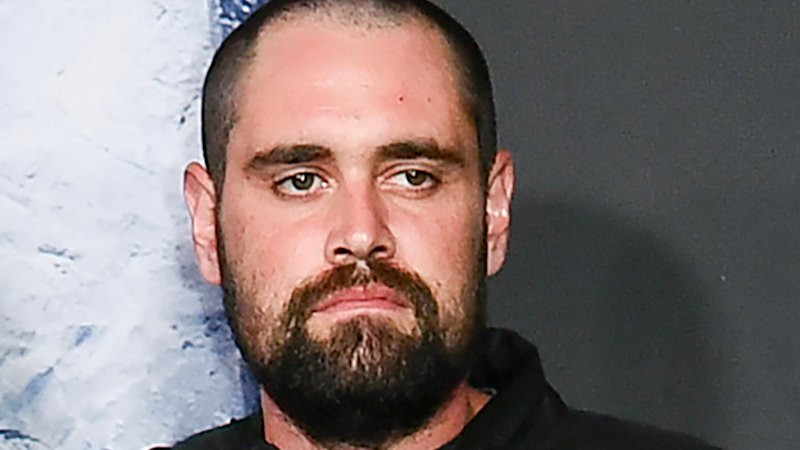
Screenwriter Libby Butler says it pays to approach scripted TV programs as though they’re novels.
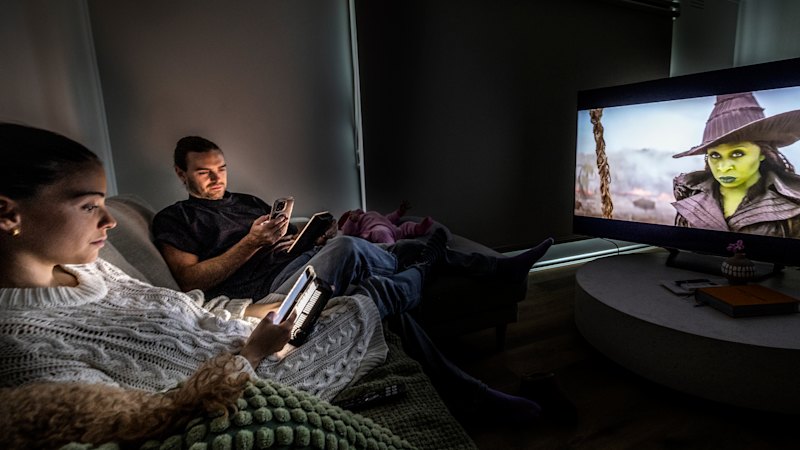
The phenomenon of “second-screening” – using devices such as smartphones and tablets while simultaneously watching TV – is nothing new. Over the past decade, various surveys have estimated that between 60 and 90 per cent of us do it regularly, the practice being most prevalent among Millennials and Generation Z.
What is new is the way these habits are shaping how television is made. Major broadcasters and streaming platforms now instruct writers and producers to cater to increasingly distracted audiences. This results in characters explicitly narrating their actions – inverting the basic storytelling principle of “show, don’t tell” – to help phone-fiddlers follow the plot. It can be especially noticeable within the first couple of minutes of a scripted series, when creators are expected to grab viewers’ attention immediately.
“It used to be that you were allowed about 10 pages of a script to hook people into your show,” Butler explains. “But what I’ve found recently, particularly with the streamers, is that you have to hook them within the first two pages, which basically means the first 30 seconds to a minute.”
Veteran drama producer John Edwards has felt similar pressure from the platforms that commission his programs. “They want the arguments and the premise of the show to be overtly and expressly stated within the first couple of moments,” says Edwards, whose resume includes The Secret Life of Us, Love My Way and Offspring. “They do it all the time; they demand it.”
“I’ll put my phone down but 10 minutes later, I’m back on it without even realising.”
Radio anchor Josiah Shala on the difficulty of watching TV without being distracted by his phone.
Generally, a scripted series requires an “inciting incident”: an event that challenges the main character, setting the story in motion. Older screenwriting guides suggest this should occur in the first 15 minutes; trying to cram it into the first 60 seconds creates unique challenges.
“You don’t yet know who the characters are, and you haven’t had a chance to understand what their lives were like before the ‘inciting incident’,” Butler says. “You haven’t built that connection, so you don’t really know why this incident is such a big deal.”

The otherwise-excellent British sitcom Big Boys explains the obvious in its opening scene, for the benefit of viewers who might be distracted by their phones.
This explains why so many scripted series now open with a dramatic flashback or a glimpse of what’s to come. Often, a narrator will simply introduce everyone by name before stating how they fit into the story. “It’s a formula,” Butler says. “Once you see it, you can’t unsee it.”
The otherwise-excellent British sitcom Big Boys is a good example. In the first episode, we learn that the protagonist, Jack, is grieving his late father. Then Jack’s mother, Peggy, enters the room – but before we have a chance to observe anything about Peggy ourselves, Jack tells us she’s like a cross between the characters Gwen and Pam from Gavin and Stacey, another well-known sitcom. All this happens within the first 40 seconds, sparing viewers the need to look up from their phones.
Sometimes, this kind of clunky exposition can blight an entire production. In the Netflix film Irish Wish, Lindsay Lohan’s character, Maddie, tells her fictitious lover, James, “We spent a day together … a beautiful day filled with dramatic vistas and romantic rain.” It’s a curious thing to state out loud because viewers have just watched the pair do exactly that (unless these viewers were flicking through TikTok while the movie played in the background, in which case, the exposition might be useful).
Loading
Josiah Shala, who anchors Fox FM’s Fifi, Fev & Nick breakfast show, often catches himself looking at Instagram or completing online word puzzles while watching the US version of The Office, one of his favourite programs. “So I’ll put my phone down,” he says, “but 10 minutes later, I’m back on it without even realising. It’s crazy.”
Josiah’s wife, Melita Shala, believed The Office wasn’t her cup of tea – until she gave it her full attention. She soon realised that much of the show’s humour is visual: for example, the glances between Pam and Jim when Michael says something excruciatingly awkward. “Now I love The Office,” Melita says.
Of course, second-screening – when practised judiciously – can enhance the enjoyment of some programs. A viewer might pause a drama based on a true story, for instance, to learn more about the events that inspired the series. And reality shows naturally lend themselves to second-screening.
“When I’m watching Big Brother, I like to look at the comments [on social media],” Melita says. “It’s actually useful because it answers some of the questions I have.”
Julian Cress, executive producer and co-creator of The Block on Nine (owner of this masthead) says second-screening helps maximise the commercial potential of the renovation reality series. Indeed, many viewers with an interest in home improvement find it useful rather than intrusive.
“We might show a high-end oven that can cook a thousand recipes and clean itself,” Cress says. “A lot of our viewers might not be able to afford that model, but they’ll look it up on their phones and that will take them to [our sponsors’ websites], and once they’re there, they see another model that they can afford to upgrade to.”
Dr Catriona Davis-McCabe, a professor at The Cairnmillar Institute and a former president of the Australian Psychological Society, says there are both advantages and drawbacks to second-screening.

Reality shows such as The Block actively encourage viewers to use their phones.Credit: Nine Entertainment
“If you’re looking up information about the actors in a show, it can actually help you engage more,” she says. “But when you’re interacting with two or more devices, that keeps you permanently ‘switched on’ and research suggests that phones in particular have worsened our attention spans and can even alter the physical structure of the brain.”
When second-screening becomes second nature, it comes with a cost.
“It can be overwhelming to process multiple incoming streams of information,” Davis-McCabe says, noting that frequently switching our attention between tasks is strongly correlated with stress. “If you’re constantly moving between screens, you’re not actually switching off and allowing yourself to relax – and that is so important for our wellbeing.”
Screenwriter Libby Butler says it pays to approach scripted TV programs as though they’re novels.
“Most of us feel a deep sense of satisfaction once we’ve read a novel,” she says. “When you focus on a great story, it transports you to another world – and TV can do that too, if you let it.”