
The Italian chef will be in Sydney for three nights only, and shares four easy tips and a recipe to transform the pasta, from getting the eggs right to a secret cheese blend.
Few dishes ignite as much debate as carbonara, where even the mere suggestion of adding cream or swapping guanciale for pancetta (or – gasp! – bacon) can spark national outrage.
Yet in Rome, one young chef has earned widespread acclaim for her subtle, thoughtful updates to the classic pasta dish.
Sarah Cicolini has built her reputation on her fresh, modern interpretations of classic Roman fare.
The rising chef has recently cooked frittata with Roman-style tripe on Stanley Tucci: Searching for Italy, while her trattoria, SantoPalato in south-east Rome, has drawn praise from The New York Times and Conde Nast Traveller, and is currently featured on Italy’s 50 Best Discovery list.
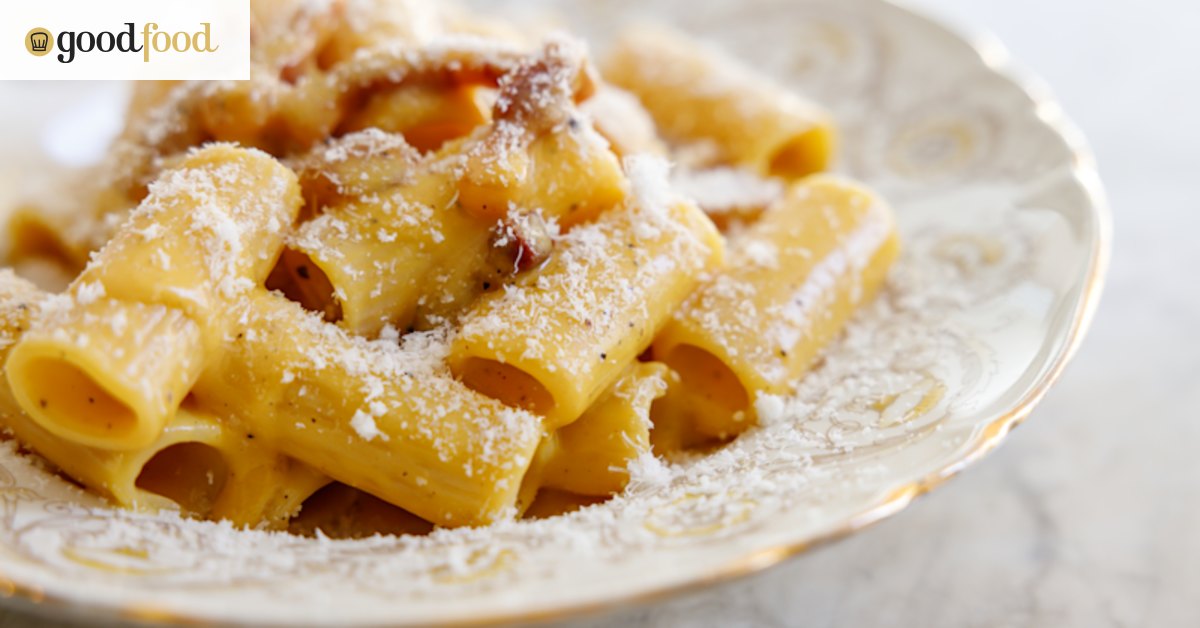
Among her most celebrated dishes is her carbonara. “It’s my most-requested dish,” she says. “The ingredients I use are the same [as the traditional recipe] but the way I cook them is different.”
In the classic recipe, only egg yolks are used, but Cicolini prefers to use whole eggs – whites included. She whisks them gently over simmering water to create a soft, airy zabaione that makes the sauce richer, creamier and more stable.
She has also made changes to the cheese component. Instead of using only pecorino romano, she creates her own blend of 90 per cent pecorino with 10 per cent parmigiano reggiano. “It gives the dish a slight umami taste,” she says.
“At the end of the day, [my recipe] is very similar to the traditional one. If you have tried many carbonaras in your life, you’ll find something different with each one.”
Cicolini is already well known to Australian diners. In 2019 she teamed up with legendary wine importer Giorgio De Maria from Paski Vineria Popolare for a series of Roman-style dinners at Marta Osteria in Sydney, Osteria Ilaria in Melbourne and The Agrarian Kitchen in Tasmania. In 2024 she cooked 1200 servings of carbonara at the Melbourne Food & Wine Festival.
She plans to make it again at a special pop-up at Icebergs Dining Room and Bar, as part of its Summer Series, a season-long celebration of food, drinks and music at Bondi Beach. Cicolini will headline the series with a three-day residency from February 3 to 5, 2026.
Working with local producers and Icebergs culinary director Alex Prichard, Cicolini will create a special menu for the event. No doubt she’ll tweak her carbonara, too, giving it an Australian twist.
“I always try to study the menu of the restaurant that I’m going to and adapt my menu to the local ingredients and culture,” she says.
“Australian producers open up a whole new palette of ingredients and I’m inspired by the chance to blend the extraordinary freshness of Australian produce with the traditions I carry from home.”
Tickets to Sarah Cicolini in Residence at Icebergs Dining Room and Bar are priced at $200 per person, including a three-course menu and welcome drink, and can be purchased from idrb.com.
Four tips for perfect carbonara
- Boil your pasta, in this case rigatoni, in a lot of vigorously boiling water. Cicolini recommends 1 litre for every 100 grams of pasta. This ensures the pasta is constantly moving in the water and therefore cooks more evenly, with fewer clumps.
- Use guanciale instead of bacon. Guanciale is salt-cured and slow-aged meat from the cheek of a pig. Bacon comes from the belly or the back, by contrast. It is fattier and, as such, imparts more depth of flavour.
- Cicolini makes a zabaione with the egg yolks and whites. Zabaione, or zabaglione, is normally a dessert made with egg yolks, sugar and a sweet wine (often marsala) beaten in a copper bowl over a boiling water bath to pasteurise the eggs. (This means the eggs are warmed – and any bacteria is killed – without being actually cooked.) Here, Cicolini employs a similar technique to create a foamy, egg-based sauce. If you don’t have a copper bowl, heatproof glass is the next-best choice. Stainless-steel bowls heat too quickly and you’ll end up with scrambled eggs.
- Cicolini likes to use a blend of 90 per cent pecorino and 10 per cent parmigiano reggiano to add a subtle umami note to the dish.
Sarah Cicolini’s carbonara
INGREDIENTS
- 300g guanciale, cut into small cubes (pepper-covered skin removed)
- 5 egg yolks
- 60g egg whites (about 1½ eggs)
- 180g grated pecorino romano blended with 20g grated parmigiano reggiano, plus extra to finish
- 500g rigatoni pasta
- black pepper
METHOD
- Fill a big saucepan with water, add some salt and bring it to a boil. In proportion there should be 1 litre of water for every 100 grams of pasta.
- While the water boils, place a cast-iron pan over medium heat and cook the guanciale for at least 10-15 minutes, carefully turning every cube to make it crispy. Save the fat and put the guanciale cubes on paper towels to drain a little.
- Now it’s time to make the savoury zabaione. Put the egg yolks and whites in a copper or glass bowl, add some of the guanciale fat and the pecorino and beat it with a whisk until it becomes smooth. Still whisking, carefully place the bowl over a saucepan of gently simmering water, like a bain-marie or double boiler, to pasteurise the eggs without cooking them. Whisk for several minutes.
- Cook the rigatoni and remove it 2 minutes before the suggested cooking time. Save 1 cup of the pasta cooking water.
- Put the remaining guanciale fat in a large, deep frypan over medium heat, add the drained rigatoni and some of the cooking water (½ a cup to start) and stir it for 3 minutes.
- Turn off the heat and put the egg and pecorino and parmesan mixture in the pan, then stir it again with the rigatoni to make it as creamy as possible, adding a little more cooking water if necessary. Divide the pasta among 4-5 bowls, add some of the crispy guanciale to each, and finish with grated cheese and freshly ground black pepper before serving.
The best recipes from Australia’s leading chefs straight to your inbox.
 Erina Starkey – Erina is the Good Food App Editor for The Sydney Morning Herald and The Age. Previously, Erina held a number of editing roles at delicious.com.au and writing roles at Broadsheet and Concrete Playground.