
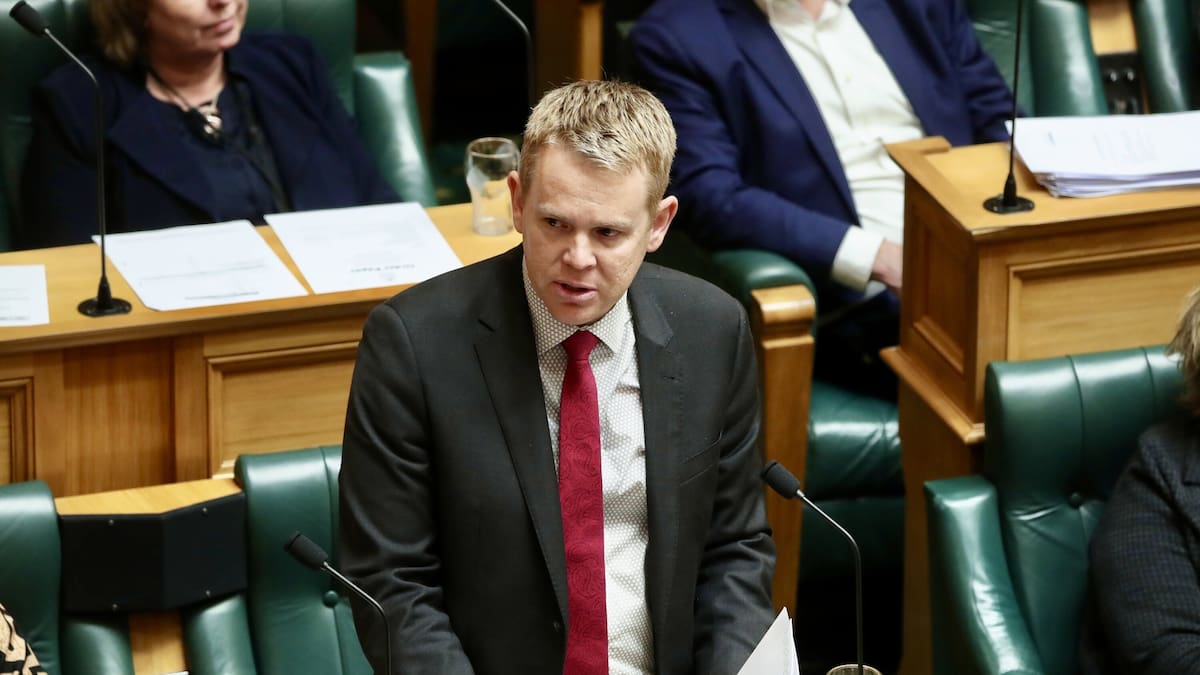
Hipkins tells Maniapoto he was wrong and now believes Māori never ceded sovereignty in the Treaty of Waitangi – he is the first Labour leader to admit that.
“It’s pretty clear that if you follow the various court rulings over time, if you follow all of the academic research, if you actually follow the Treaty settlement process, that the answer to that question is no,” declared Hipkins. “That doesn’t mean that the Crown doesn’t have sovereignty now,” he added, “but Māori didn’t cede sovereignty in signing the Treaty.”
He said given Te Tiriti has always been about recognising the unique constitutional arrangement between rangatira (on behalf of iwi and hapū) and William Hobson (on behalf of the English Crown), he now sees that playing out in contemporary times?
“I think the way we exercise our authority to reflect the principles, and that includes article two of the Treaty which recognises tino rangatiratanga, that that’s been the conversation. That’s what we’ve spent the last four or five decades, working out how to do that,” Hipkins says on Te Ao with Moana.
“Now, it doesn’t encapsulate into nice, neat little sound bites because there are going to be areas where it’s a bit messy as we work our way through what that looks like. But simply saying, let’s just stop all of that and start again in a way that writes Māori out of the picture, which is what the Treaty Principles Bill based on the reports we’ve had so far suggest Government want to do, I think it’s just the wrong approach.”
When asked how he might deal with “dog whistling around co-governance”, the former Prime Minister insisted he would challenge it “head on”.
“I think that was something that we were reluctant to do as a Government, and I think we’ll do a lot more of it. Where I see things that are designed deliberately to scratch a racist itch, I’ll call them out and I’ll call them out in strong terms. You can’t solve these intergenerational challenges with slogans. You’ve actually got to be more thoughtful than that.”
Hipkins admitted Labour failed to allay the fears of New Zealanders in the lead-up to the election.
“In areas like water reform and that debate around co-governance, I think as a Government we let that one get away on us. And what we were doing there was justifiable. It was explainable, and we didn’t make the public case strong enough, and we should have.”
Labour has watched many of its policies and strategies dismantled in just under nine months. The scale and pace of change have seen the Government break records for the number of laws it has passed in the first 100 days, according to Sir Geoffrey Palmer, KC, who in 1985 initiated major consultations around legal recognition of Māori rights under the Treaty. Palmer expressed concern that more than 30 bills have been introduced under urgency. These include the repeal of fair pay legislation, the disestablishment of the Māori Health Authority, the changes to the smoke-free legislation, the gang legislation, the Local Government Act around Māori Wards and the Fast-track Approvals Bill.
Asked if that’s “just what new Governments do – itch everything from previous Governments” – Hipkins disagrees.
“I think it’s a feature of this Government. But if you look at the Key Government taking over from the Clark Government, Ardern taking over from the Key Government, we didn’t see that. We saw a lot of the things that were happening continue. Yes, there was a shift in emphasis sometimes about how we moved forward, but we didn’t just come into Government in 2017 and just jettison everything the previous Government had been doing. We sought to build on it, where there was a good foundation to build from.”
In an interview, Greens co-leader Chlöe Swarbrick had signalled her intention to make the Greens the lead party in Opposition. It’s a move Hipkins described as “optimistic”. Given young voters will be scrutinising parties to see which ones will be “brave and bold”, Hipkins was asked what Labour will do.
‘I think a lot of young New Zealanders also want to know that the plans that we’re putting forward are credible and we’re going to deliver on the things that we say we’re going to do. So my goal for the next election is that we are going to have a bold plan for New Zealand’s future, but it’s going to be credible and it’s going to be deliverable.”
When asked if he intends to lead the party into the next election or is “the caretaker”, Hipkins was once again unequivocal.
“No, I’m absolutely in this to win the next election. I had nine months as Prime Minister. I learned a lot during that time. That means that I’ll be ready to hit the ground running after the next election.”
Te Ao with Moana tonight, Whakaata Māori, 8.30pm.