

There’s a dizzying array of options here. People with sensitive skin or allergies may gravitate towards dye- and perfume-free detergents. Exercise fiends might prefer something strong that will chase the stink out of sweaty workout clothes. And for people who can’t be bothered to measure, there are pods that you can just toss into the machine. And beware: Even “eco-friendly” detergent sheets may contain plastic.
… and use it sparingly
If you’re following the directions on the label, you might be using too much soap. Laundry expert Patric Richardson says one to three tablespoons is plenty for most loads. Or you may not need detergent at all.
For the most part, it’s no longer necessary to sort clothes by colour.Credit: iStock
Warm up to cold water
You don’t need to use hot water to get your clothes – or even your linens – clean. Switching to warm will help conserve energy. Going with cold water will yield even bigger savings. The exception: If someone in the house has been sick, deploy the hot water to kill germs.
Attack grease stains aggressively
Yes, those troublesome splatter marks from salad dressings, pasta sauces, marinades and burgers are particularly stubborn. That’s because oil and grease don’t dissolve in water. You need to add a special product to loosen the grease and keep it away from the fabric so it can be washed off. That’s where surfactants – a key ingredient in soaps and detergents – come in.
Keep your machine from creating stains
If your laundry is coming out of the machine with new stains, whether they’re pink streaks, brown splotches or black spots, it could be a detergent or bleach issue, a sign that your washer is dirty or there is a high mineral content in your water.
Know how to read care tags
Those little symbols on care tags might look like indecipherable hieroglyphics, but they contain important information to help you care for your clothes properly. Some of them, like the washtub, are fairly self-explanatory. But others – that triangle, for example – are more cryptic. Guides are available online.
Wash your clothes less
Washing your clothes causes significant wear and tear. Marsha LeBoeuf, a former costume director for the Washington National Opera, says you can preserve jeans, jumpers and more by simply washing them less.
Learn how to handwash your jumpers
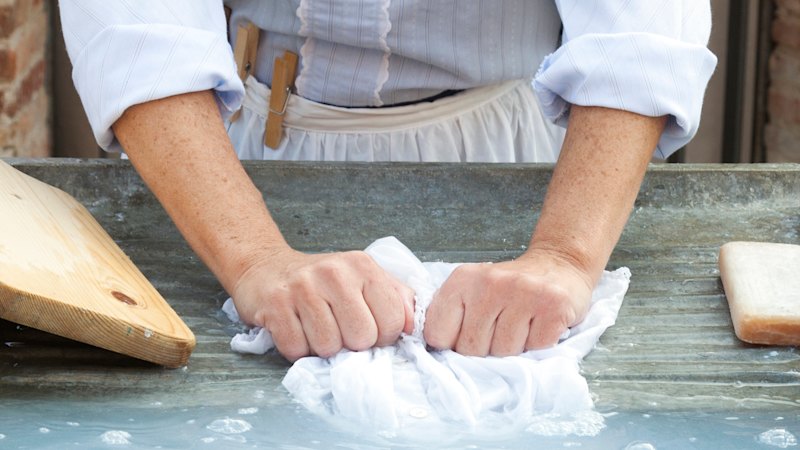
Not comfortable putting a beloved jumper in your machine? You can steal a page from those 19th century homemakers and handwash it. All you need is room-temperature water in a bucket or sink and enzyme-free detergent (or a quality shampoo for cashmere or wool).
Pause before reaching for the bleach …
Chlorine bleach will whiten fabrics, but it can also break down fibres, harm the environment and irritate sensitive skin. Go for oxygen bleach instead or a detergent enhanced with optical brighteners.
Loading
… and the fabric softener
Aficionados say that fabric softener makes clothes feel soft, smell good, and reduces wrinkles and static cling. And while that is true, you still probably don’t need to use softener. Richardson’s advice to use less detergent can make your clothes feel softer. Or, he says, you can add a bit of vinegar to your wash for the same effect, minus the heavy fragrance and the quats (quaternary ammonium compounds) in fabric softeners.
Don’t boil your clothes
Social media will try to tell you that boiling your clothes is a great way to get them extra clean. Don’t believe social media. The extreme temperatures can lead to shrinking, fading and colour loss, as well as damage to seams and elastic.
Skip the dryer
Your dryer can wreak havoc on your clothes. LeBoeuf largely avoids using it at home, with the exception of underwear and towels. Everything else hangs to dry. Air drying your clothes is also a great way to save energy. Or consider a heat pump dryer, which removes water from clothes without using heat.

For most items, line drying is less damaging to your clothes than using the dryer.Credit: Getty Images
Maintain your machines
You need to periodically clean your washing machine to keep it running at peak performance. It can be as simple as running the cleaning cycle on your washer if it has one (or the hot water setting if it doesn’t), with vinegar or a special cleaning tablet. And don’t forget to care for your dryer, paying particular attention to clearing the vent and ducts of lint.
Keep your socks from going missing
Where have all the missing socks gone? And do they stay there forever? They could be trapped in the door’s rubber seal or under the agitator, for example. To keep them together, toss your socks in a zip-up mesh laundry bag.
Use your washer for more than clothes
A quality washing machine is an investment. Get your money’s worth by using it to clean hard plastic toys, pet beds, pillows, reusable grocery bags and more.
Loading
Accept your laundry chair
For some of us, the most tedious part of doing the laundry is actually putting the clothes away. Enter the laundry chair. We’re here to tell you that it is perfectly acceptable to let your clean socks, pyjamas, towels, whatever gather here for days. Or weeks. Months, even!
Be courteous in public laundry spaces
No one likes the guy who leaves his stuff in the washer of the building’s shared laundry room long after the cycle ends. Don’t be that guy. Set an alarm for yourself or, better yet, stay on site to move your clothes promptly. And if you find yourself waiting on someone to move their clothes, ask an attendant, dorm staff or someone at your building’s front desk for help. Doing it yourself, no matter how long it’s been since the cycle ended, should be a last resort.
Washington Post
Make the most of your health, relationships, fitness and nutrition with our Live Well newsletter. Get it in your inbox every Monday.